The story
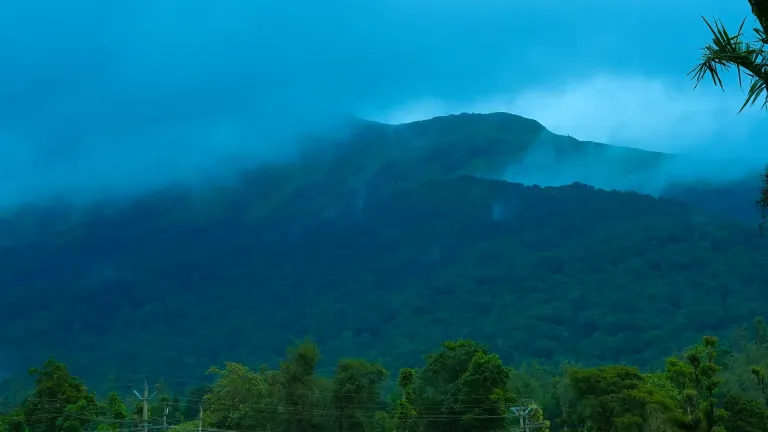
Cradled in a forest-ringed valley beneath the misty Brahmagiri peak, Thirunelli Temple is one of Kerala’s most ancient and atmospheric Vishnu shrines — a granite-pillared sanctuary reached through elephant country, where pilgrims come chiefly to remember their dead. Revered as the “Kashi of the South”, its sacred stream, the Papanasini, is believed to wash away sin and grant peace to departed souls.
The story of Thirunelli Temple
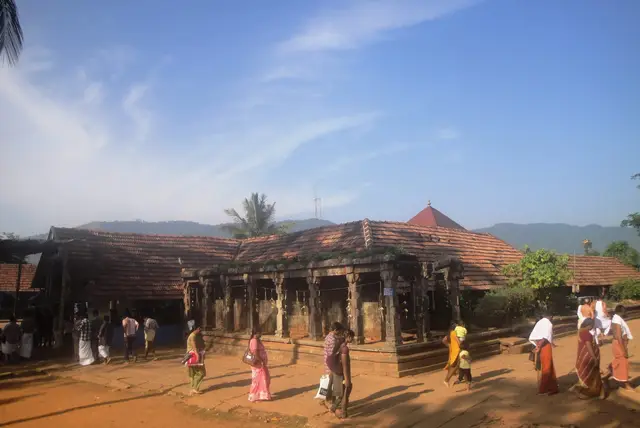
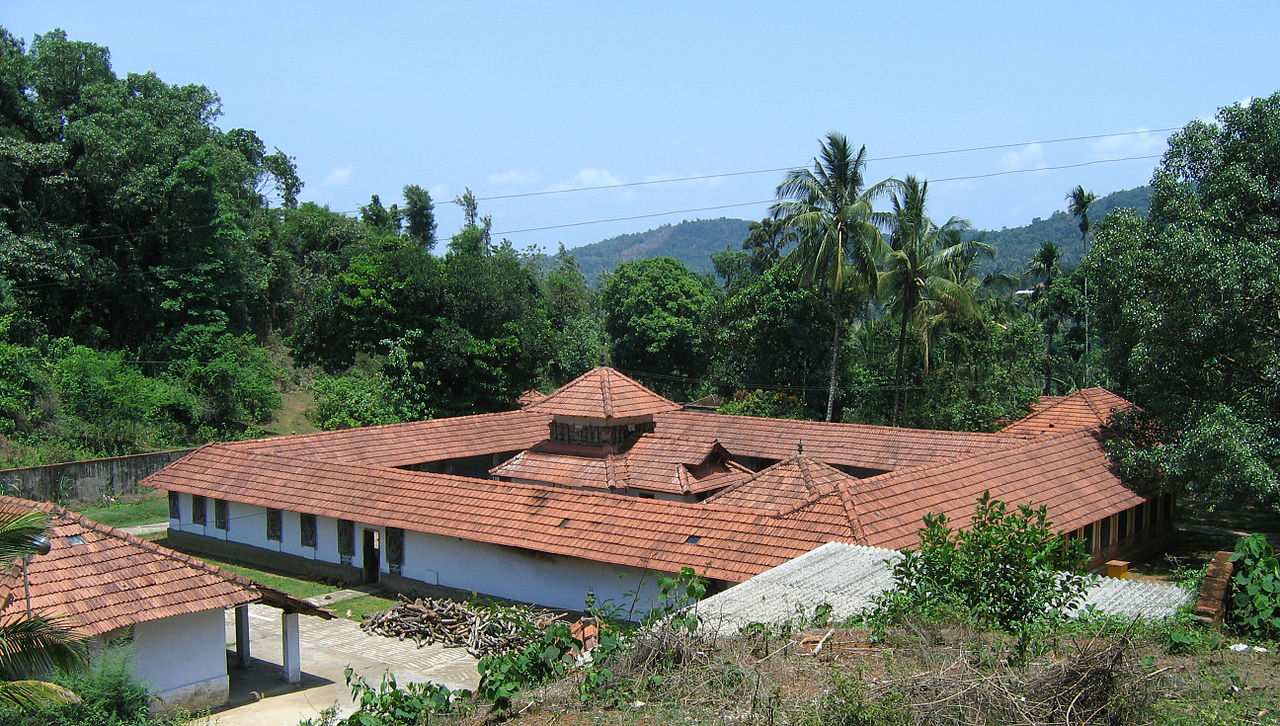
Set deep in the Brahmagiri hills of the Western Ghats, roughly 30–32 km from Mananthavady, Thirunelli feels less like a temple you visit than one you are drawn into. The road climbs through the forests of the Wayanad Wildlife Sanctuary, past teak and bamboo, before the valley opens and the grey stone shrine appears against a wall of green hills. At around 900 metres, wrapped in mist for much of the year, the setting is as much a part of the pilgrimage as the deity within.
The presiding deity is Maha Vishnu in his four-armed (Chaturbhuja) form, and the temple is counted among the revered Vaishnava shrines associated with the Puranas. Yet what sets Thirunelli apart from Kerala’s many Vishnu temples is its long, unbroken association with the rites of the dead. For centuries families have travelled here to perform pind-daan and bali tarpanam for departed ancestors, believing that the merit earned in this remote valley equals that of the great northern tirtha of Kashi (Varanasi) — hence its enduring title, “Dakshina Kashi”.
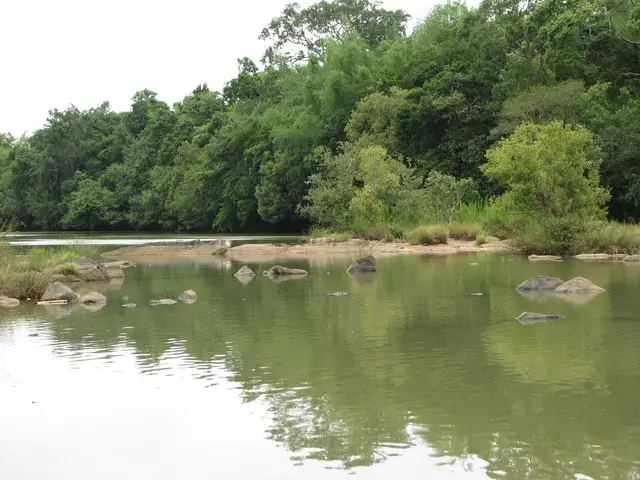
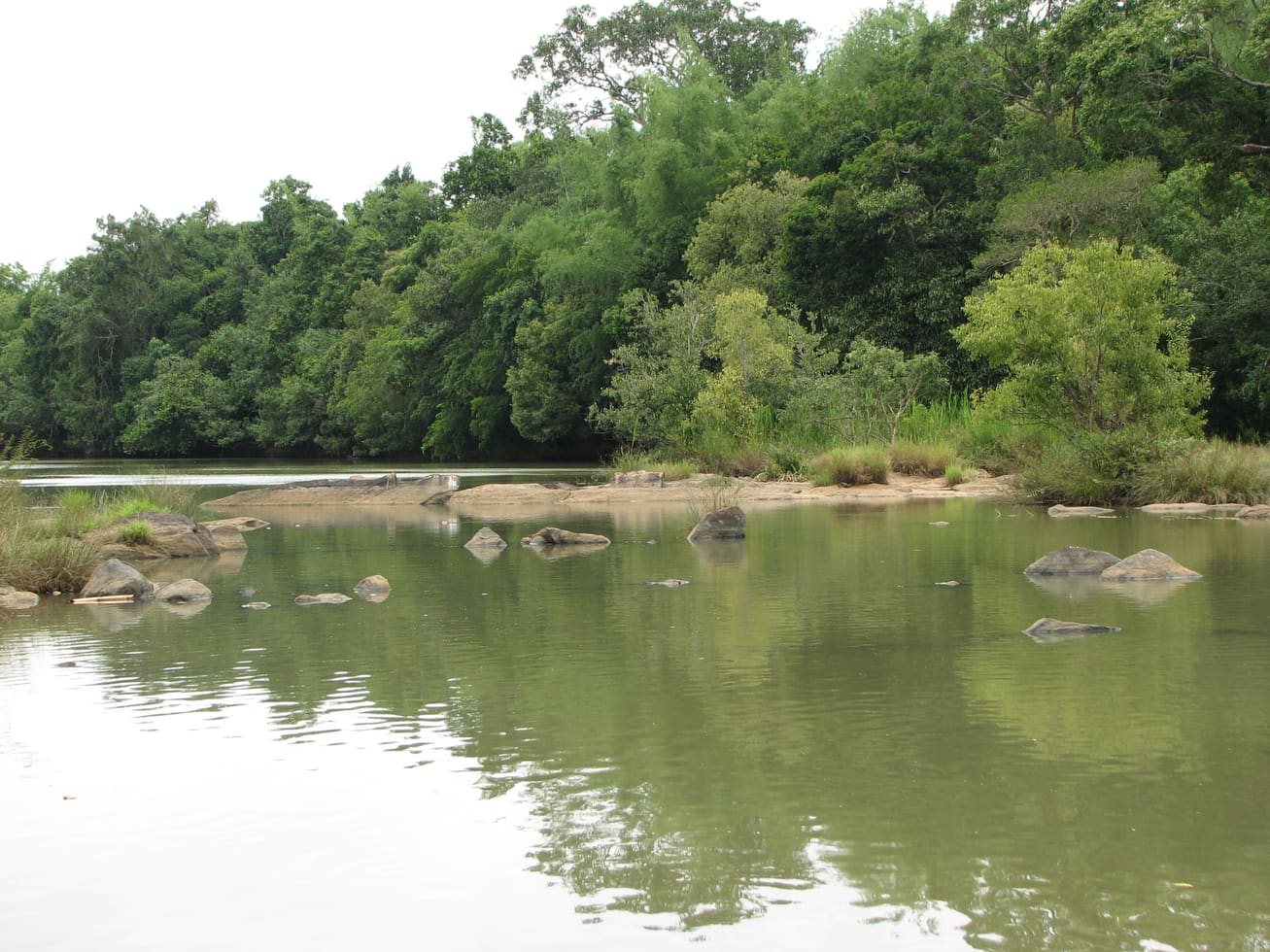
At the heart of that belief lies the Papanasini, a clear mountain stream that tumbles down from Brahmagiri a short walk from the temple. Its very name means “destroyer of sins”, and pilgrims bathe in its cold waters and offer rites for their forebears on the sacred rock beside it, known as the Pinnappara. The wider sacred geography — the Papanasini stream, the ritual waters of the Panchatheertham, and the shrine itself — is understood as a single spiritually charged landscape, a place where the living may settle their debts to the departed.
The temple is also admired for its austere, ancient architecture. Built largely of granite rather than Kerala’s more usual laterite and timber, its shrine is set on a raised platform ringed by rows of carved granite pillars, sheltered beneath a sloping roof. An old stone aqueduct, ingeniously cut, still carries water down from the hills into the temple — a small feat of early engineering that speaks to the antiquity and care lavished on this isolated site.
For the traveller, Thirunelli offers a rare combination of the sacred and the wild. There is little commercial bustle here — no crowded bazaar, few facilities — only the temple, the forest, the stream and the encircling peaks. Whether you come as a pilgrim performing ancestral rites or simply as a visitor moved by the silence, the place leaves a deep impression: a thousand-year-old shrine still standing where the mountains meet the sky.
Legend & myth
By tradition, Thirunelli’s origins are credited to Brahma, the creator. Legend tells that Brahma was travelling across the universe on his swan (hamsa) when he was struck by the beauty of the Brahmagiri valley and descended to rest. There, set within an amla tree — the nelli, or Indian gooseberry — he found an idol of Vishnu, which he recognised as the Lord himself. Taking it as an auspicious sign, he is said to have consecrated the shrine on that very spot.
From this story comes the temple’s name: “Thiru-nelli”, the sacred (thiru) gooseberry (nelli), commemorating the amla tree beneath which the idol was found. It is told AS legend, passed down through generations and echoed in Puranic tradition rather than as documented history.
Legend further holds that Vishnu blessed the site so that rites performed here for the departed — pitru-karma — would carry special power, releasing ancestral souls toward liberation. It is this divine sanction, the stories say, that made Thirunelli a place of ancestral rites and earned it the name “Kashi of the South”. Local sage and Parashurama traditions, common across Kerala’s sacred sites, are also woven into the temple’s remembered past.
History
Thirunelli is reckoned among the oldest surviving temples in this part of Kerala, with a history commonly held to span well over a thousand years. Its granite construction and archaic layout point to a considerable antiquity, and the shrine is remembered in Vaishnava tradition as a place of long-standing sanctity in the Wayanad highlands.
Scholars and local tradition trace the temple’s important patronage to the early medieval Chera period, and rulers associated with the Kerala Cheras — including figures such as Bhaskara Ravi Varman — are linked in tradition to its upkeep and endowments. Old inscriptions and the temple’s stone works are cited as evidence of this early, sustained royal support in what was then a remote frontier of the Chera realm.
Among the temple’s remarkable surviving features is its ancient stone aqueduct, which channels water from the surrounding hills into the shrine — a piece of early hydraulic craftsmanship that has drawn the attention of historians and visitors alike. The rows of dressed granite pillars and the raised sanctum likewise reflect an old building tradition uncommon in a region where timber and laterite usually dominate.
In the later history of Wayanad, Thirunelli lies within the landscape associated with Pazhassi Raja, the Kottayam prince who waged a long guerrilla resistance against the British in these very forests around the turn of the nineteenth century. The remote hills and valleys near Thirunelli formed part of the terrain of that struggle, binding the temple’s surroundings to one of Kerala’s most storied chapters of anti-colonial resistance.
In modern times the temple is administered under the Malabar Devaswom Board, which oversees its rituals, festivals and the great gatherings for ancestral rites. Despite its isolation, it remains a living shrine, drawing pilgrims from across Kerala and neighbouring states — especially on the new-moon (vavu) days set aside for offerings to the dead.
Why visit
To perform or witness ancestral rites at one of India’s most revered sites for pitru-karma — the “Kashi of the South”, where pind-daan and bali tarpanam are offered for departed souls on the sacred rock beside the Papanasini.
To bathe in or simply sit beside the Papanasini stream, the “destroyer of sins”, whose cold, clear waters tumble down from Brahmagiri and lie at the heart of the temple’s spiritual pull.
To see a genuinely ancient granite temple — its rows of carved stone pillars, raised sanctum and old stone aqueduct making it architecturally distinct from Kerala’s usual timber-and-laterite shrines.
For the sheer remoteness and beauty of the setting: a forest-ringed valley below the 900-metre Brahmagiri peak, reached through the Wayanad Wildlife Sanctuary, where mist, silence and green hills surround the shrine.
For the deity — Maha Vishnu in his four-armed form — worshipped in a shrine wrapped in Puranic legend, from Brahma’s consecration to the story of the idol found beneath the amla tree.
For travellers drawn to the wild as much as the sacred: the drive from Tholpetty through elephant country, the birdsong and forest air, and a rare chance to experience a major pilgrimage place with almost none of the usual crowds or commerce.