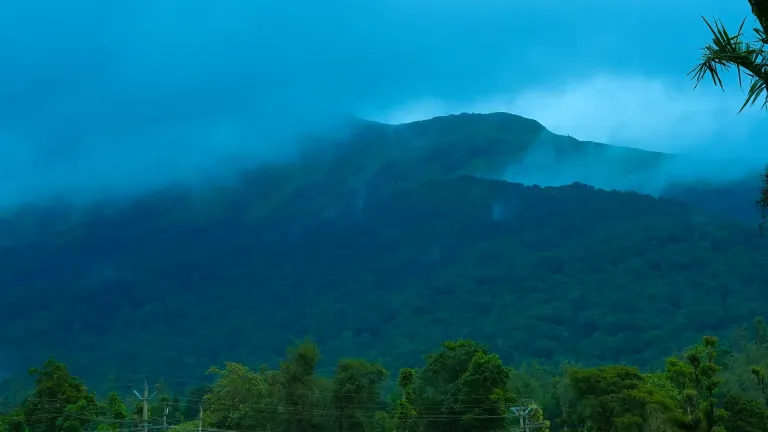
High on the roof of the Brahmagiri hills, where great blocks of rock pile into deep dark caves, lies Pakshipathalam — the ‘underworld of birds’, a hidden roost you can only reach on foot.
The story of Pakshipathalam
Pakshipathalam is not a place you drive to — it is a place you earn. At roughly 1,740 metres on the northern crest of the Brahmagiri hills, about 7 km northeast of Thirunelli, it sits at the very top edge of Wayanad where Kerala spills over into the forests of Karnataka. The name says everything: ‘pakshi’ is bird and ‘pathalam’ is the netherworld or underworld of Malayalam legend. Put together it means the underworld of the birds — a fitting name for a cluster of deep rock caves, tucked among tumbled boulders, where thousands of birds shelter in the cool dark.
The heart of the place is its geology. At the summit, colossal blocks of rock have heaped and locked together over ages, leaving crevices and hollows that plunge down into genuine caves — narrow, damp and pitch-black inside. These are the ‘pathalam’, the underworld chambers, and they are what make Pakshipathalam unlike any other viewpoint in Wayanad. You do not simply look at a scene; you scramble down between boulders into the cavities where the birds themselves live.
It is, above all, a birdwatcher’s pilgrimage. The caves and the surrounding shola-and-grassland belt shelter a large population of Western Ghats birds, and a rustic watchtower on the ridge lets you scan the canopy and the sky for rare species. Birders come hoping for the Asian fairy-bluebird, the Indian paradise flycatcher, the gold-fronted chloropsis (leafbird) and the emerald dove among many others. The best-known cave, Munikal, is famous as a night and dawn roost — and, by report, a haunt of the edible-nest swiftlet, the bird that builds its nest almost entirely from its own hardened saliva.
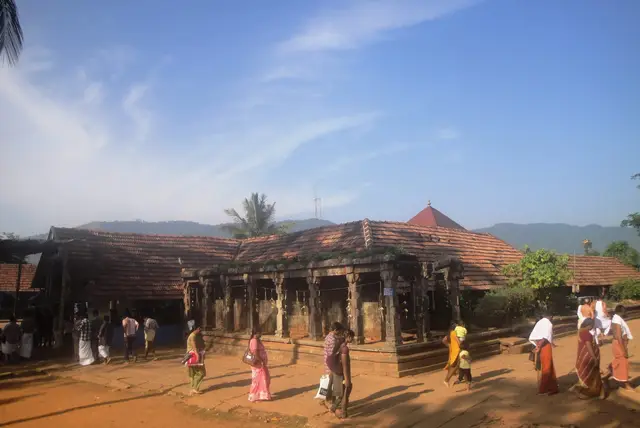
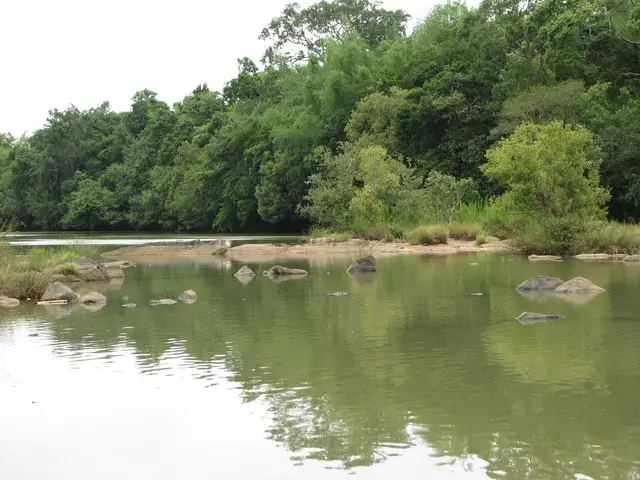
Getting there is a proper forest trek, not a stroll. The route runs from behind Thirunelli Temple and climbs for roughly 3 to 4 hours across a changing landscape — first moist deciduous forest, then rolling hillocks and open grassland, then slippery rock trails, and finally the boulder maze and the caves themselves. Depending on the path and the day, walkers cover somewhere in the region of 7 to 8 km of trail (some accounts cite a longer forest approach of around 17 km in total). It crosses the infant Papanasini stream, which rises in these hills, and passes named landmarks like Garudan Kunnu — a rock projection said to resemble an eagle — and Bhoothathan Kunnu.
Because this is protected forest deep inside elephant and tiger country, you cannot wander in alone. Entry needs prior permission from the Forest Department and, in practice, an accompanying guide; camping on the peak is not allowed, so every visitor must turn back and be off the mountain before dark. That regulation is part of what keeps Pakshipathalam wild — no resorts, no crowds, no road to the top, just the forest, the wind on the grassland and the birds calling from the rocks.
The reward is a sense of arriving somewhere genuinely remote. From the ridge the Brahmagiri range rolls away in blue folds toward Coorg, the grasslands hiss in the breeze, and far below the caves the whole of northern Wayanad seems to fall away. For anyone who wants their Wayanad wilder, quieter and harder-won than the tourist waterfalls, Pakshipathalam is the trek that delivers it.
Legend & myth
The caves carry an old tradition that gives the ‘pathalam’ name its deeper meaning. By local lore these deep rock hollows — and the Munikal or ‘sage’s rock’ cave in particular — were used in ancient times by munis, rishis and ascetics as places of meditation and penance, drawn to the silence and isolation of the high boulders. The story sits naturally beside neighbouring Thirunelli, one of Kerala’s most sacred pilgrimage temples, and the belief that saints of olden times retreated into these underworld caves is retold to this day, though it is offered as tradition and legend rather than documented history.
History
Pakshipathalam lies on the northern spur of the Brahmagiri hills, the range that forms the Kerala–Karnataka watershed above Wayanad; the Karnataka face of the same massif, reached from Irupu Falls in Coorg, is where the Brahmagiri name is more commonly used. On the Kerala side the site is administered as forest land near Thirunelli and Tholpetty in North Wayanad, and it is frequently described as a bird sanctuary and eco-tourism trek rather than a built attraction.
The altitude is consistently reported at about 1,740 metres above sea level, placing it among the higher accessible points in Wayanad. At that elevation the habitat shifts from the deciduous forest of the lower slopes to montane grassland and shola pockets, with the summit boulder-field and its caves forming the distinctive top.
Its ornithological reputation is the reason it is protected and permit-controlled. The deep rock caves and the surrounding forest support a large and varied bird population, and the endangered edible-nest swiftlet is among the species associated with the Munikal cave roost — a genuinely unusual feature, since that bird’s saliva-built nests are the same type prized elsewhere in Asia. A simple watchtower has been provided on the ridge to aid observation without disturbing the roosts.
Access has long been regulated by the Forest Department. Visitors need prior permission (arranged via the department’s offices around Thirunelli/Tholpetty/Appapara, with vehicles and guides available through the District Tourism Promotion Council), and the trek is guided because it runs through prime wildlife habitat. Camping on the peak is prohibited and the area is typically closed through the dry pre-monsoon months, roughly February to April or May, when the risk of forest fire is high.
The wider landscape is part of the tribal and forest heartland of North Wayanad, close to the Tirunelli–Kutta forest belt and the Brahmagiri Wildlife Sanctuary across the state line, an ecologically sensitive corridor for elephants, tigers and Western Ghats endemics — which is exactly why the caves have stayed a foot-only, guide-only wilderness rather than a developed viewpoint.
Why visit
Genuine deep rock caves — you climb down among giant boulders into the birds’ ‘underworld’, not just a viewpoint.
A serious Western Ghats birding destination: fairy-bluebird, paradise flycatcher, leafbird, emerald dove and the rare edible-nest swiftlet.
A real guided forest trek through deciduous jungle, grassland and rock — earned, not driven to.
A ridge-top watchtower with sweeping views across the Brahmagiri hills toward Coorg.
Remote, permit-controlled and uncrowded — one of the wildest, quietest corners of Wayanad.
Pairs perfectly with the sacred Thirunelli temple and the Papanasini stream at the foot of the trail.