A drowned valley turned wildlife refuge — here elephants drink at the edge of a sprawling reservoir while your boat drifts silently between wooded, mist-wrapped inlets.
The story of Idukki Wildlife Sanctuary
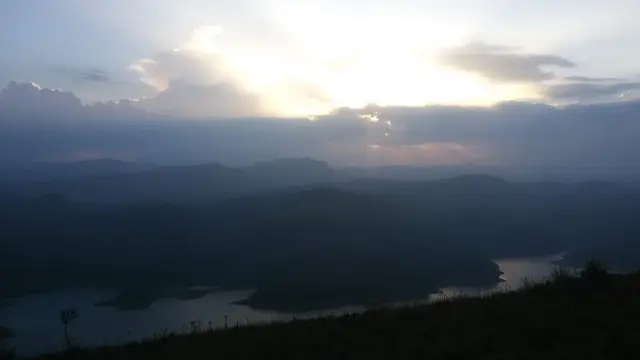
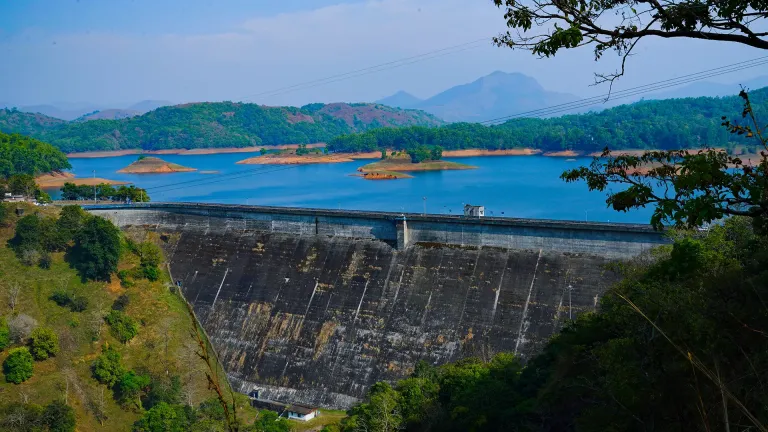
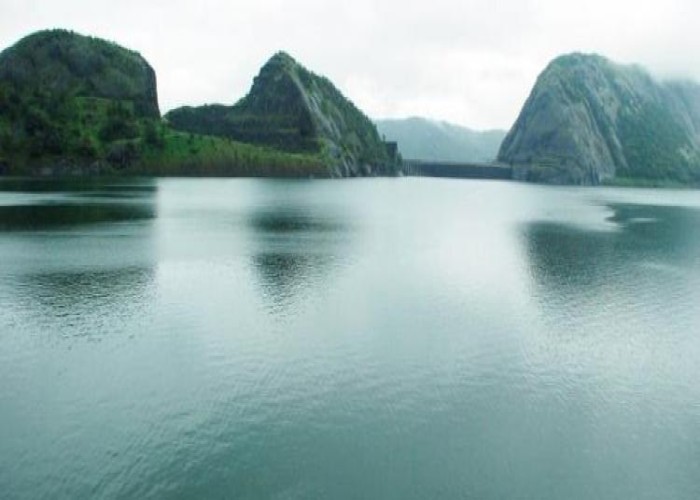
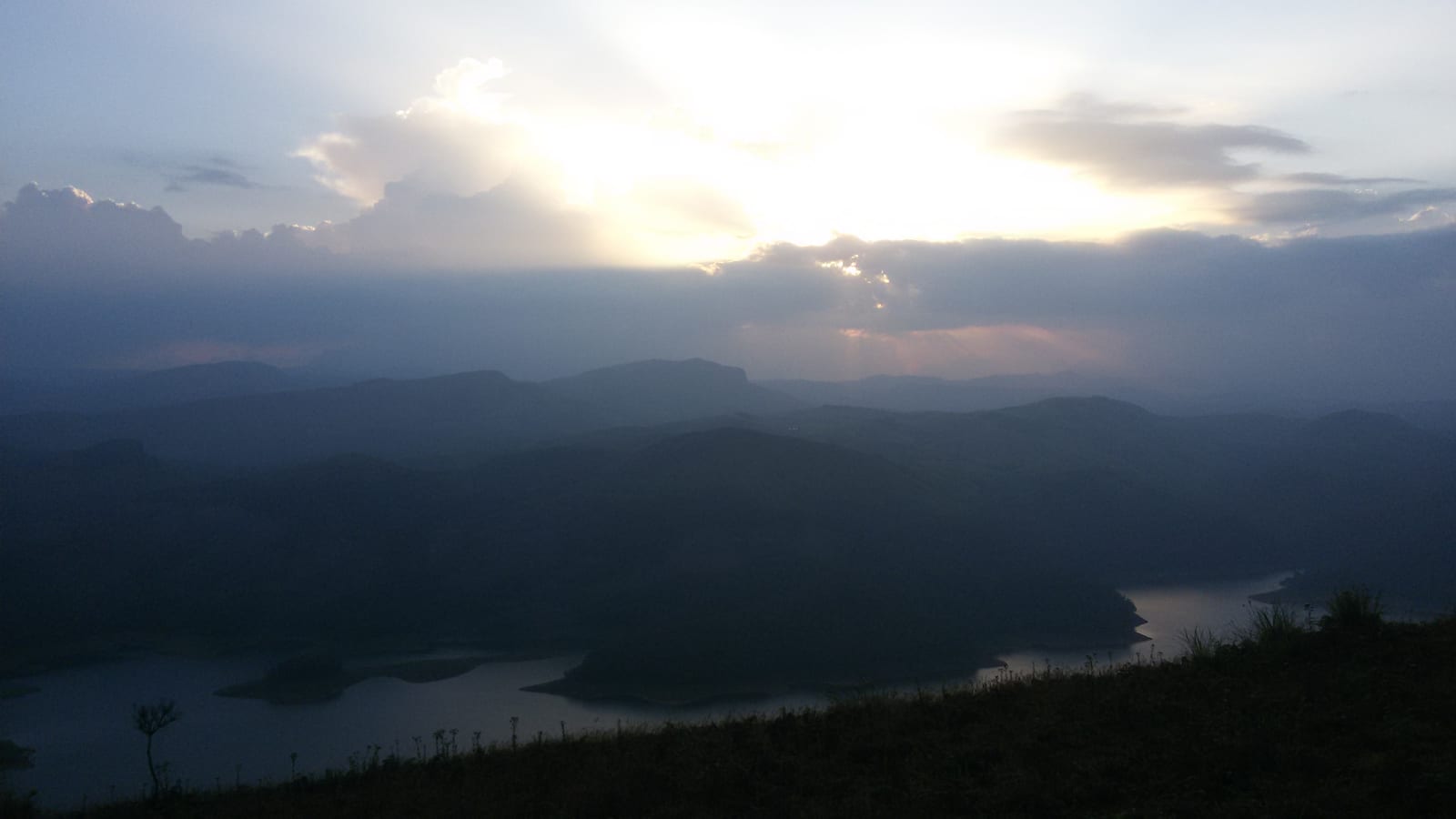
Idukki Wildlife Sanctuary wraps itself around the catchment of the Idukki reservoir, a vast sheet of blue-green water pooled behind Asia’s celebrated arch dam. Unlike the classic dry safari park, this sanctuary is defined by water — the reservoir’s many arms reach deep into the folded High Range hills, and the forest tumbles right down to the waterline. The result is a landscape of drowned valleys, wooded promontories and quiet coves that feels more like a flooded rainforest than a conventional jungle.
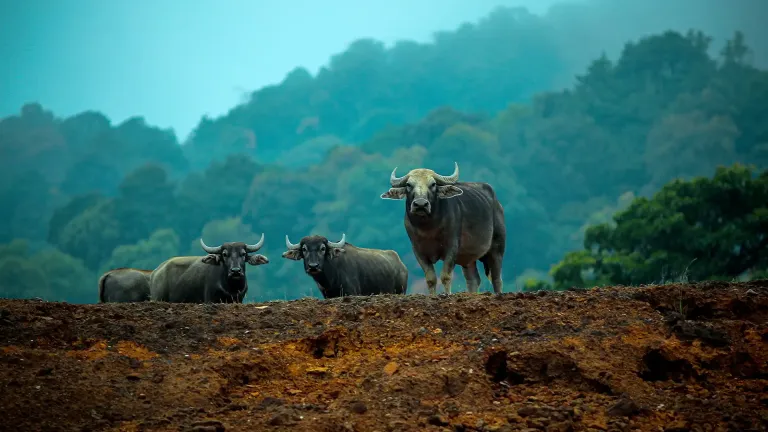
The signature experience here is boating. Gliding across the reservoir, you slip past submerged treelines and steep green shoulders of hill, scanning the banks for movement. Herds of elephants come down to the water to drink and bathe; gaur (the massive Indian bison) graze the clearings; sambar and barking deer melt in and out of the tree cover. Because so much of the sanctuary is only reachable by water, wildlife here is less harried and more at ease than in road-heavy parks — the silence between the dip of the oars is part of the magic.
The forest itself is a mosaic of tropical evergreen and moist deciduous woodland stitched together with rolling grassland. Teak, rosewood and Ceylon ironwood rise over a tangle of undergrowth, and the terrain climbs steeply — from about 450 metres at the water’s edge to the sanctuary’s high point at Vanjur Medu, over 1,270 metres up. This altitude spread is why the sanctuary packs in such variety, from lowland riverine species to cool, cloud-brushed ridge tops.
Birdlife is a genuine highlight. More than 160 species have been recorded, and a patient morning can turn up the great Indian hornbill sailing between canopy trees, the jewel-toned Malabar trogon, jungle fowl scratching in the leaf litter, and kingfishers stationed over the shallows. Butterflies are abundant too — surveys have logged well over a hundred species, among them Kerala’s state butterfly, the Malabar banded peacock. Bring binoculars; the reflected light off the reservoir makes for wonderful viewing conditions.
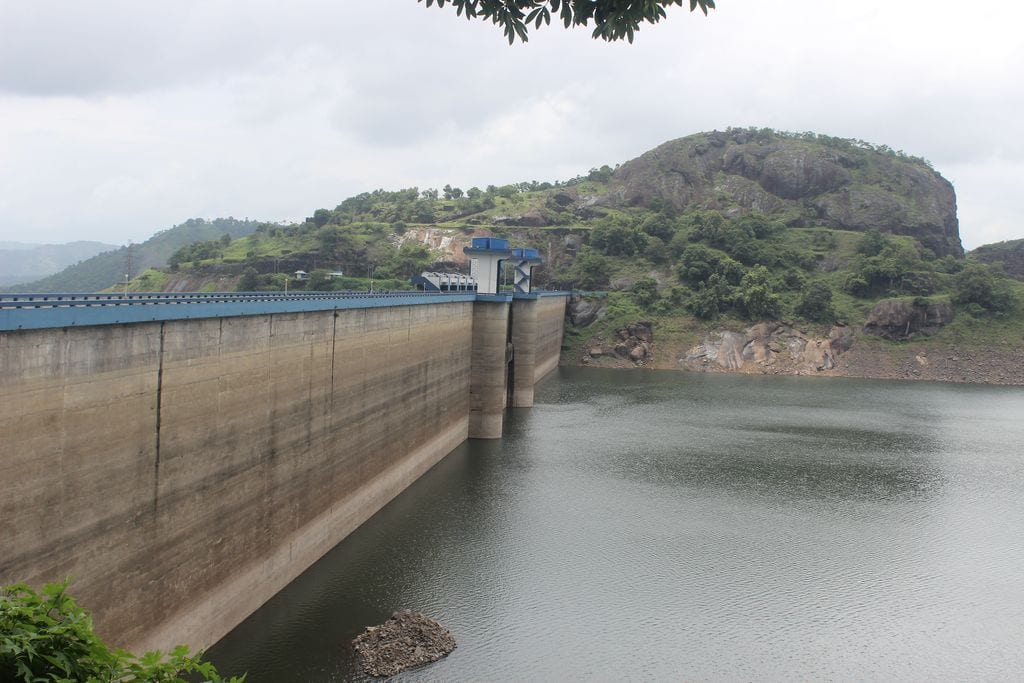
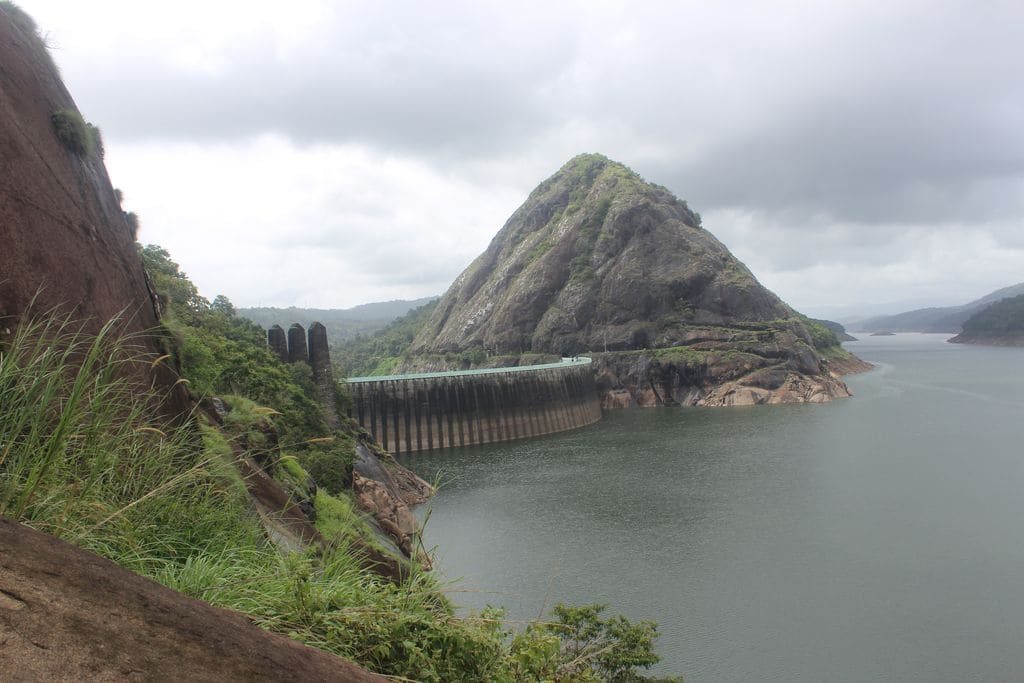
Rising on either side of the dam gorge are the two granite hills that give the whole area its identity — Kuravanmala and Kurathimala. These twin peaks, and the deep gorge the Periyar carved between them, are the reason the great dam sits where it does, and they loom over the northern edge of the sanctuary like guardians. Their silhouettes are woven into local legend and lend the wooded reservoir its distinctive, storybook backdrop.
Perhaps the best thing about Idukki Wildlife Sanctuary is how uncrowded it remains. Overshadowed by nearby Periyar and Eravikulam, it draws a fraction of the visitors, so a day spent here — a boat ride, a short guided forest walk, an hour of birdwatching — feels like having a slice of the High Range to yourself. Pair it with the arch dam, the viewpoint at Kalvari Mount and the district capital at Painavu, and it makes for one of Idukki’s most rewarding and least hurried outings.
Legend & myth
The twin hills that frame the sanctuary — Kuravan and Kurathi — carry a much-loved local legend. As the story goes, a tribal man, Kuravan, and his wife, Kurathi, once caught sight of Sita bathing in the river and, for the transgression, were turned to stone by Lord Rama. The couple, who had never in their lives been apart, begged not to be separated. Moved by their devotion, Rama blessed them: they would stand forever together, as two hills on either side of the Periyar. Generations later, when the great arch dam rose across the gorge and joined the two hills for good, local people embraced it as the quiet fulfilment of that ancient promise — Kuravan and Kurathi bound together at last.
History
Idukki Wildlife Sanctuary was formally notified on 9 February 1976, carved out of the forest tracts surrounding the newly created Idukki reservoir. Its fortunes are tied directly to one of independent India’s landmark engineering projects — the Idukki hydroelectric scheme — which dammed the Periyar river deep in the High Range and flooded a valley to create the reservoir at the sanctuary’s heart.
The reservoir is held back by a cluster of dams, chief among them the Idukki arch dam, wedged into the narrow gorge between the Kuravanmala and Kurathimala hills, together with the Cheruthoni and Kulamavu dams. When these were commissioned in the mid-1970s, the rising waters transformed the geography of the area, and the encircling forest was set aside for protection — giving the sanctuary its unusual water-dominated character.
The sanctuary spans the taluks of Thodupuzha and Udumbanchola in Idukki district. Figures vary by source: the protected area is commonly cited at around 70 sq km of forest land wrapped around the reservoir, while the fuller notified extent — forest plus the roughly 33 sq km water body — is put at about 105 sq km. Elevations run from about 450 metres at the waterline to over 1,270 metres at Vanjur Medu, the highest point.
Ecologically the sanctuary protects a blend of tropical evergreen and moist deciduous forest with patches of grassland, home to elephants, gaur, sambar, barking deer, wild boar, dhole, jungle cats, Nilgiri langur and Indian giant squirrel, alongside more than 160 bird species and a rich butterfly fauna. It forms part of the wider Western Ghats landscape, one of the world’s recognised biodiversity hotspots.
The sanctuary is managed by the Kerala Forest Department (Wildlife Wing), which oversees protection, boating access and visitor movement from its offices in the Painavu–Cheruthoni area, the administrative heart of Idukki district that sits within the forest itself.
Why visit
Boat across a vast reservoir with forest tumbling down to the waterline — a rare water-based way to see wildlife.
Good odds of spotting elephants and gaur drinking at the banks, plus sambar and deer in the clearings.
Serious birdwatching — 160-plus species including the great Indian hornbill and Malabar trogon.
Far quieter than Periyar or Eravikulam, so it feels uncrowded and unhurried.
A storybook backdrop of twin granite hills, Kuravan and Kurathi, steeped in local legend.
Easily combined with the Idukki arch dam, Kalvari Mount viewpoint and Painavu town.