A wafer-thin wall of concrete curving 168.91 metres into the sky, wedged so tightly between two granite hills that the Periyar has nowhere to go but up — Idukki Arch Dam is one of Asia’s tallest arch dams and a place you can only see on a handful of days each year.
The story of Idukki Arch Dam
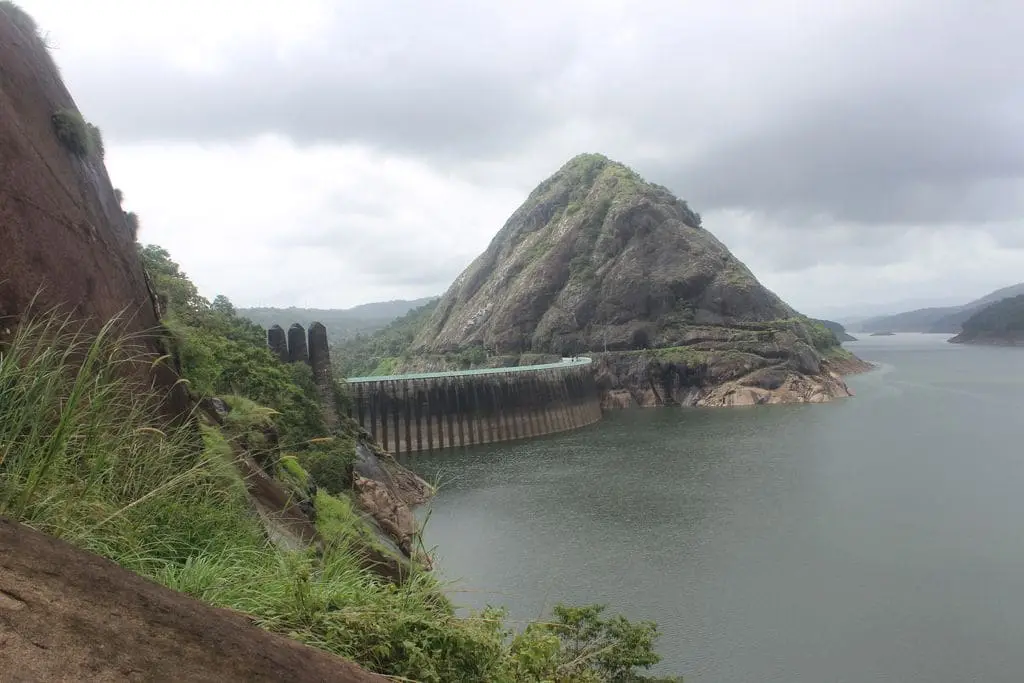
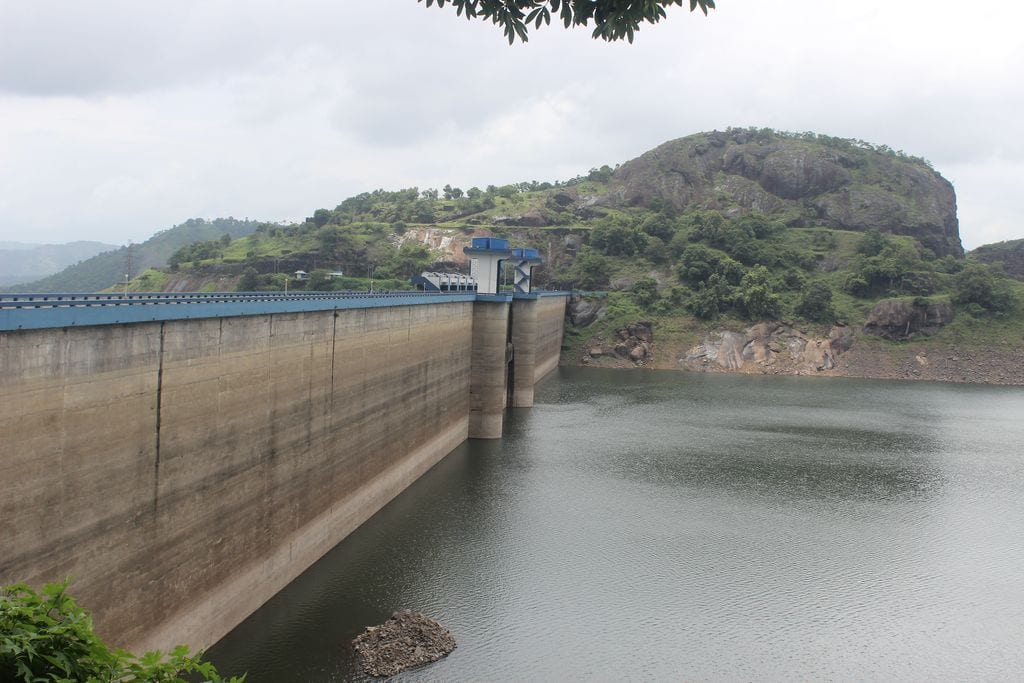
The road from Cheruthoni climbs through cardamom-scented hills, and then, quite suddenly, the forest parts and the arch appears — a pale, impossibly slender crescent of concrete strung between two dark granite shoulders of rock. Rising 168.91 metres (about 554 feet) and stretching some 365 metres across, the Idukki Arch Dam is a double-curvature parabolic thin arch dam, which is engineering-speak for a structure that curves in two directions at once, like the inside of an eggshell. It holds back the Periyar not by sheer bulk but by cleverness, transferring the colossal weight of the reservoir sideways into the living rock of the two hills that grip it.
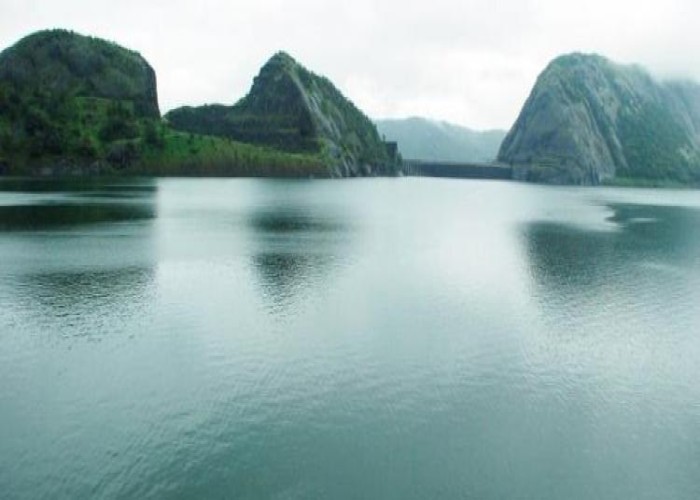
Those two hills have names, and a story. To the visitor’s eye they are simply the granite jaws of a gorge, but locally they are Kuravan and Kurathi — a tribal husband and wife turned to stone — and the dam takes its very shape from the tight natural chokepoint they form. It is precisely because the Periyar squeezes through this narrow rock throat that engineers could get away with such a thin, daring wall; a wider valley would have needed a fatter, heavier dam. Standing at the top, you look down a dizzying drop into the gorge on one side and out across a vast, still sheet of water on the other.
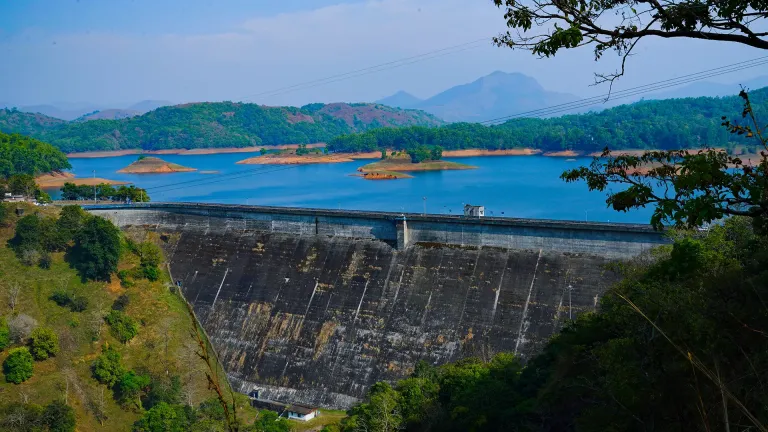
That sheet of water is one of India’s largest reservoirs, spreading over roughly 60 square kilometres and drowning entire valleys behind three linked barriers. Idukki Arch Dam does not work alone: it is the centrepiece of the Idukki Hydroelectric Project, teamed with the gated Cheruthoni Dam next door and the Kulamavu Dam a little further off, the three together sealing the high plateau into a single giant basin. From here the trapped water is not spilled but sent plunging down through a mountain to a hidden powerhouse, spinning turbines that light much of Kerala.
The engineering drama is matched by the drama of getting to see it at all. For most of the year the arch itself is off-limits — access to the dam top is restricted for security reasons, and this is not a place you can simply turn up to on a random Tuesday. The dam opens to the public only on select occasions, most famously during the Onam and Christmas holiday seasons, when crowds finally get to walk (or, these days, be driven in buggy vehicles) across the crest of one of the tallest arch dams on the continent.
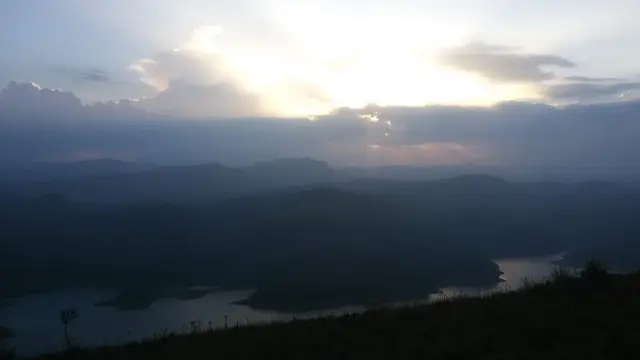
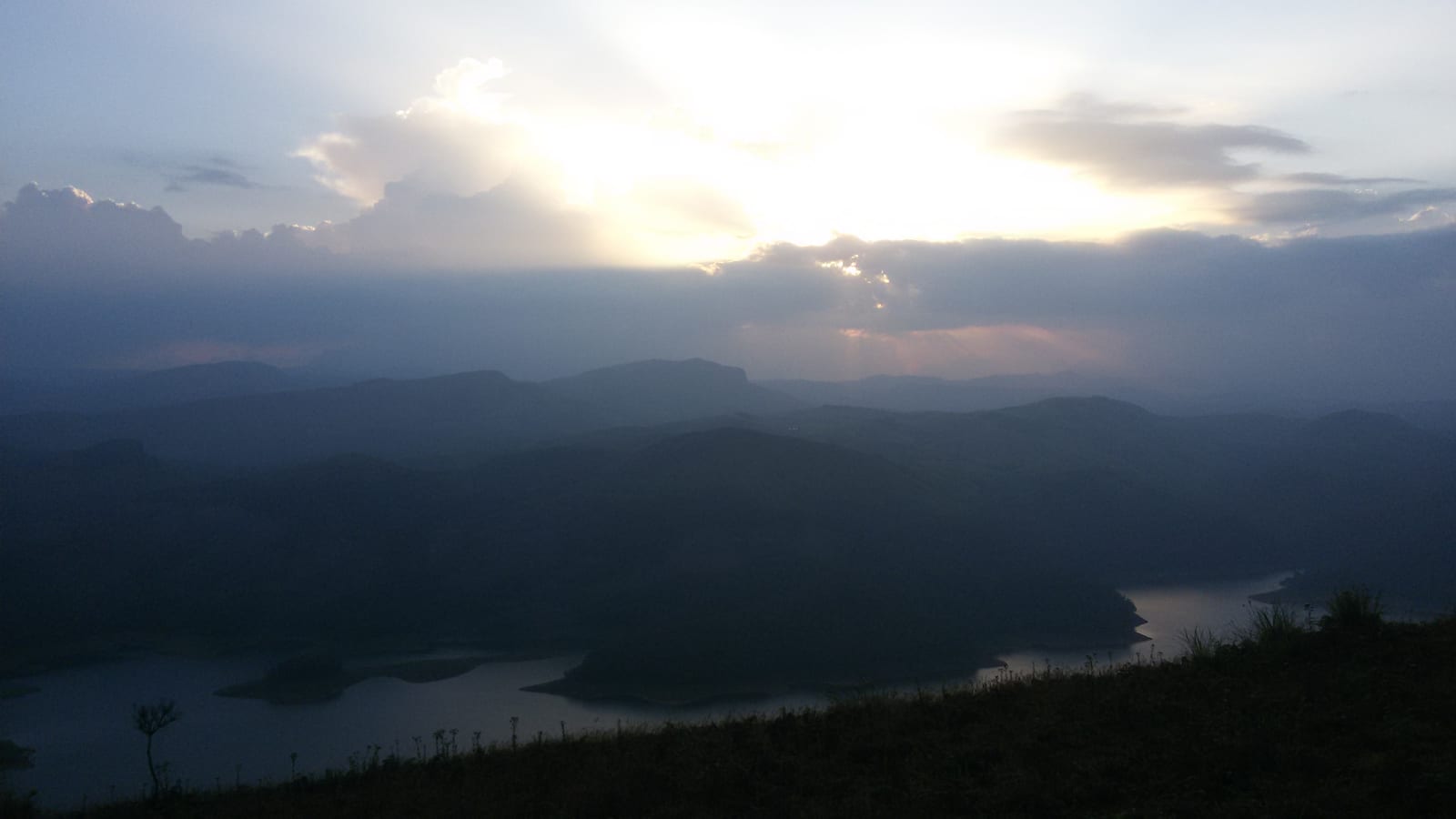
When it is open, the reward is a view that few dams in the world can offer: the thin white arc of the wall, the emerald reservoir cradled among forested ridges, mist burning off the water in the early morning, and the sheer vertical plunge into the Periyar gorge below. Boating on the reservoir and the nearby hill-view park are generally accessible more regularly than the dam top itself, so many visitors come for the water and the panoramas even when the crest is closed.
Set beside the twin settlements of Painavu and Cheruthoni — the quiet administrative heart of Idukki district — the dam is best folded into a wider high-range day: the pilgrim viewpoint of Kalvari Mount a short drive away, the Cheruthoni barrage with its dramatic gates, and the endless green corrugations of the Western Ghats rolling to the horizon. It is a monument to both nature’s geology and human nerve, and the fact that you can only catch it on chosen days somehow makes the arch feel all the more like a hidden marvel.
Legend & myth
The two hills that clasp the dam — Kuravan and Kurathi — carry a much-loved local legend, and it is worth knowing before you stand between them. As the tradition is told, Kuravan and Kurathi were a devoted tribal couple, husband and wife, who lived in these forests. One day, so the story goes, they happened to glimpse the goddess Sita bathing in the Periyar during Lord Rama’s forest exile, and for this trespass they were turned to stone. Distraught at the thought of being parted — for the couple had never in their lives been apart — they begged for mercy. Moved by their devotion, Rama is said to have blessed them so that they would remain together for all time, and set them down as the two great rock hills that now stand on either bank of the river, eternally facing one another. The gorge between them, folklore holds, is the narrow space the couple were left to share — and it is exactly in that gap that the modern arch dam was raised, so that Kuravan and Kurathi still stand together, now bound by a wall of concrete as well as by legend. (This is a traditional local legend, recounted here as folklore rather than history.)
History
The story of the dam begins not with engineers but with a tribesman. The narrow gorge between Kuravan and Kurathi is remembered as having been pointed out by Chemban Kolumban, a member of the local Oorali (Malayaraya) tribal community whose deep knowledge of these dense forests made him an indispensable guide. According to the widely retold account, in the early 1920s Kolumban led the outsiders to the very spot where the Periyar squeezes between the two hills — the site that would eventually anchor the dam. A memorial to Kolumban stands near the dam today in acknowledgement of that role, though the precise details of the encounter, as with much oral history, are told in slightly varying forms.
The idea of harnessing the Periyar here is usually traced to around 1919, credited to an early survey report (often attributed to an Italian engineer named Jacob) on the power potential of the river. The proposal was carried forward in 1932, when W. J. John submitted a report to the then Government of Travancore on the feasibility of building a dam at Idukki for power generation. For decades the scheme remained on paper, too vast and remote for the resources of the day, and it was only after Independence that it moved towards reality.
Construction of the great arch finally began on 30 April 1969, undertaken with substantial Canadian assistance. The Government of Canada backed the project with loans and grants, and Canadian consulting engineers — the firm known as SNC (Surveyer, Nenniger and Chênevert, later part of SNC-Lavalin) — provided the technical expertise for the daring thin-arch design, with construction carried out by Indian contractors. The result, when it topped out, was a structure standing 168.91 metres tall, celebrated as Asia’s first arch dam and among the tallest arch dams on the continent.
The reservoir began filling in the early 1970s, and the first units of the associated power station went into trial operation on 4 October 1975. The completed Idukki Hydroelectric Project — the arch dam together with the Cheruthoni and Kulamavu dams — was formally dedicated to the nation by Prime Minister Indira Gandhi in February 1976. It remains owned and operated by the Kerala State Electricity Board.
Crucially, the arch dam does not itself house the machinery. The water it stores is carried through the mountains to the Moolamattom power station, one of India’s notable underground powerhouses, built deep inside the rock and equipped with Pelton-type turbines for a total installed capacity of around 780 MW. That hidden powerhouse, fed by the water the thin white arch holds back, has for decades been one of the largest sources of hydroelectric power in Kerala — the quiet engine behind the spectacle.
Why visit
See one of Asia’s tallest arch dams — a 168.91 m wall thin as an eggshell, curving between two granite hills.
Witness a rare, restricted marvel: the dam top opens to the public only on select days, mainly the Onam and Christmas seasons.
Take in sweeping views of a vast reservoir cradled among the forested ridges of the Western Ghats.
Feel the vertigo of the Periyar gorge plunging away beneath the crest of the arch.
Connect with living folklore — the legend of Kuravan and Kurathi, the stone couple whose hills hold up the dam.
Pair it with Cheruthoni, Painavu, boating on the reservoir and the pilgrim heights of Kalvari Mount for a full high-range day.