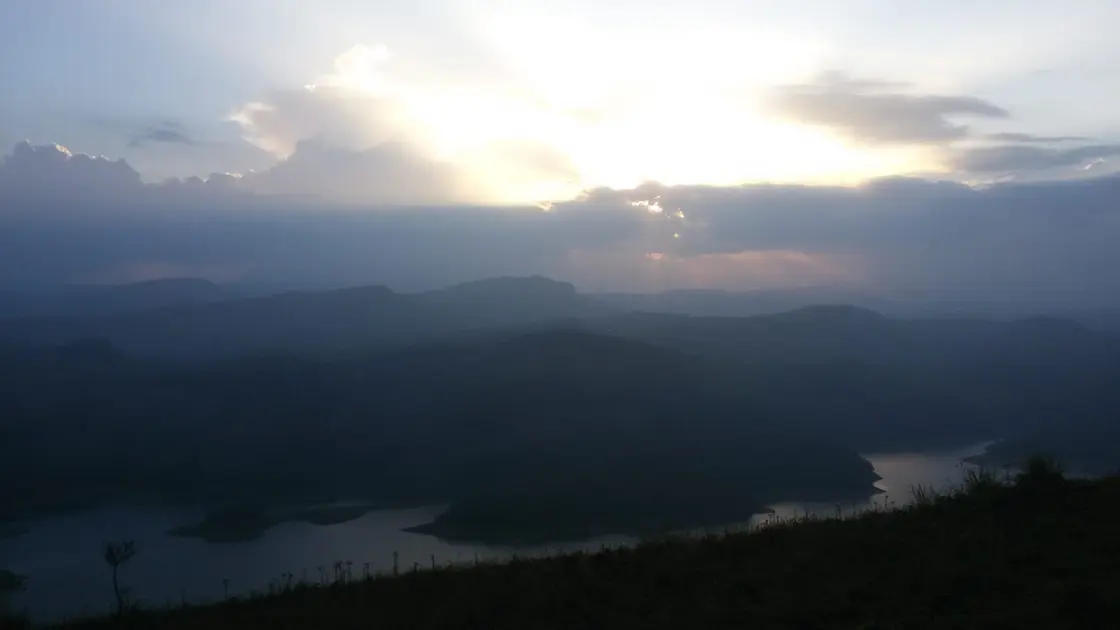
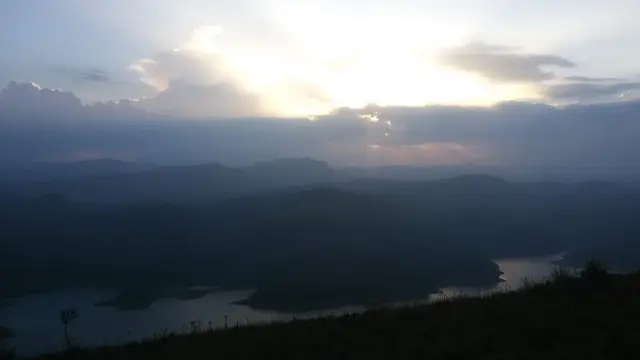
A cross-crowned hilltop where the vast blue sprawl of the Idukki reservoir curls between the Western Ghats — one of the High Range’s most soul-stirring sunset perches.
The story of Kalvari Mount
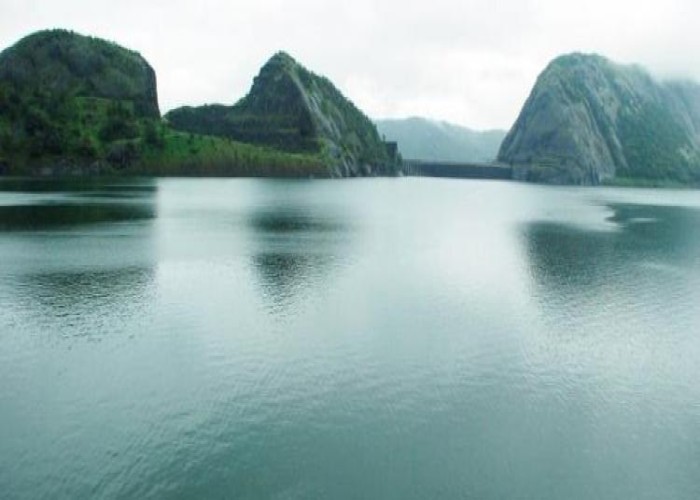
Kalvari Mount — also spelled Calvary Mount and known locally as Kalliyanathandu — is a breezy hillock rising out of the folded green ridges near Painavu and Cheruthoni in Idukki district. It is one of those places that rewards the last stretch of a winding ghat drive with a view that seems to open all at once: the land simply falls away, and the enormous silver-blue Idukki reservoir spreads out below in wide, wandering curves, its inlets pushing deep into the hills like fingers of water reaching into the forest.
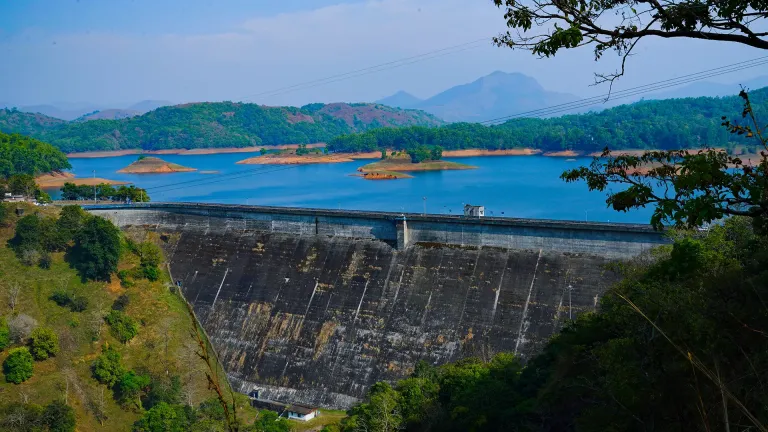
The panorama is the whole reason to come. From the summit railings the reservoir is said to be visible in a long sweep — from the Idukki side out towards Ayyappancovil — while on the other flank you look down over the small High Range villages of Kamakshi and Mariyapuram tucked among tea and cardamom slopes. On clear days the hill layers stack into the distance and slowly fade to mist, and the historic Idukki Arch Dam and the Kuravan–Kurathi hills that cradle it can be picked out across the valley.
It is an unmistakably Christian place. A tall cross stands on the crown of the hill, and a series of small crosses marks the Stations of the Cross climbing the slope, so that the ascent itself echoes the biblical Way of the Cross for which the mount is named. Even outside pilgrimage season the crosses, the quiet, and the huge sky give the spot a contemplative, almost hushed feeling that sets it apart from the busier dam-side viewpoints nearby.
The mount sits at a modest height (sources variously describe it as a low hillock and cite differing elevation figures — treat any single number with caution), but its position on the lip of the reservoir basin is everything. Because the water lies below and the horizon is open to the west, both sunrise and sunset burn spectacularly here, the golden light skidding across the reservoir’s surface. Lucky visitors have reported spotting herds of elephants moving or bathing in the shallows far below — a reminder that this is still wild High Range country.
Getting to the top is part of the appeal. You can drive up much of the way, but many visitors prefer to walk the final ascent on foot, following the crosses uphill through the cool air. Facilities are simple — viewing platforms, railings and a parking area — so this is a place for slow looking rather than commerce, best paired with the neighbouring Idukki Arch Dam, Cheruthoni and Kulamavu circuit that together make up the classic Idukki reservoir day out.
Because it is quieter and less commercialised than the marquee dam viewpoints, Kalvari Mount has become a favourite with photographers, road-trippers and pilgrims alike — a genuine High Range secret that pairs a big, cinematic landscape with a gentle spiritual atmosphere, all within a short drive of the Idukki dam township.
Legend & myth
The hill is named for Calvary (Golgotha), the site of the Crucifixion of Jesus, and by tradition it functions as a Christian pilgrimage centre. During the season of Lent — and especially around Good Friday — devotees gather to walk the Way of the Cross, making a prayerful, processional ascent of the hillock past the crosses set along the slope, re-enacting Christ’s final journey. The devotion mirrors the wider heritage of the High Range’s settler-farming Christian community, who cleared and cultivated these hills through the twentieth century.
History
Kalvari Mount owes its modern fame to water. For much of its life it was a secluded, little-visited hillock in the Idukki high ranges; it rose to prominence only after the construction of the Idukki hydroelectric project transformed the valley below into an immense reservoir, giving the hilltop its now-celebrated panorama.
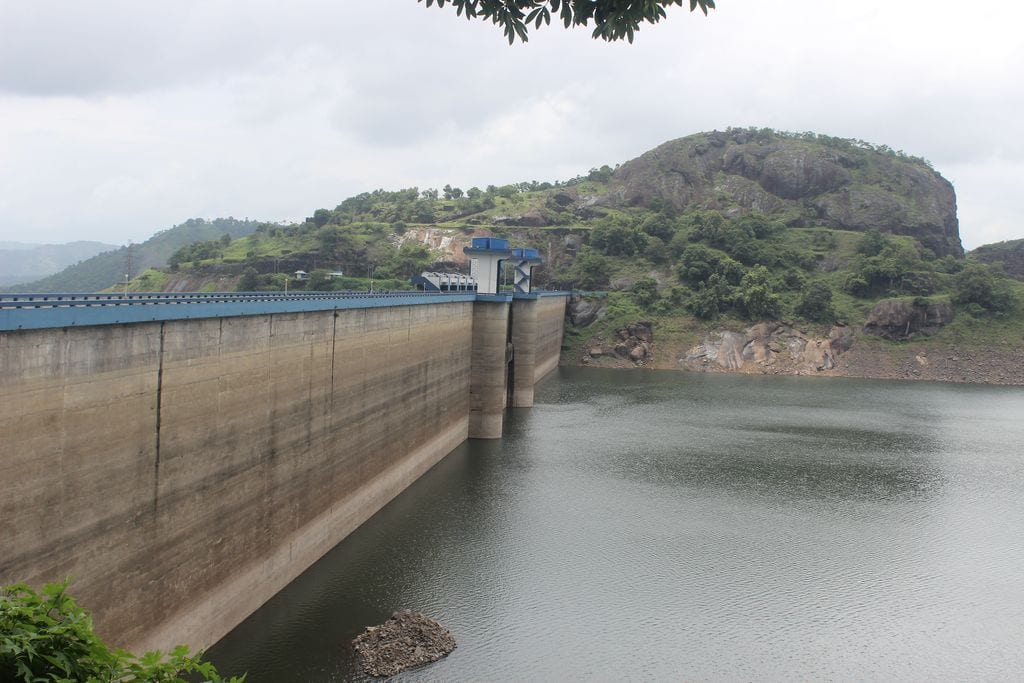
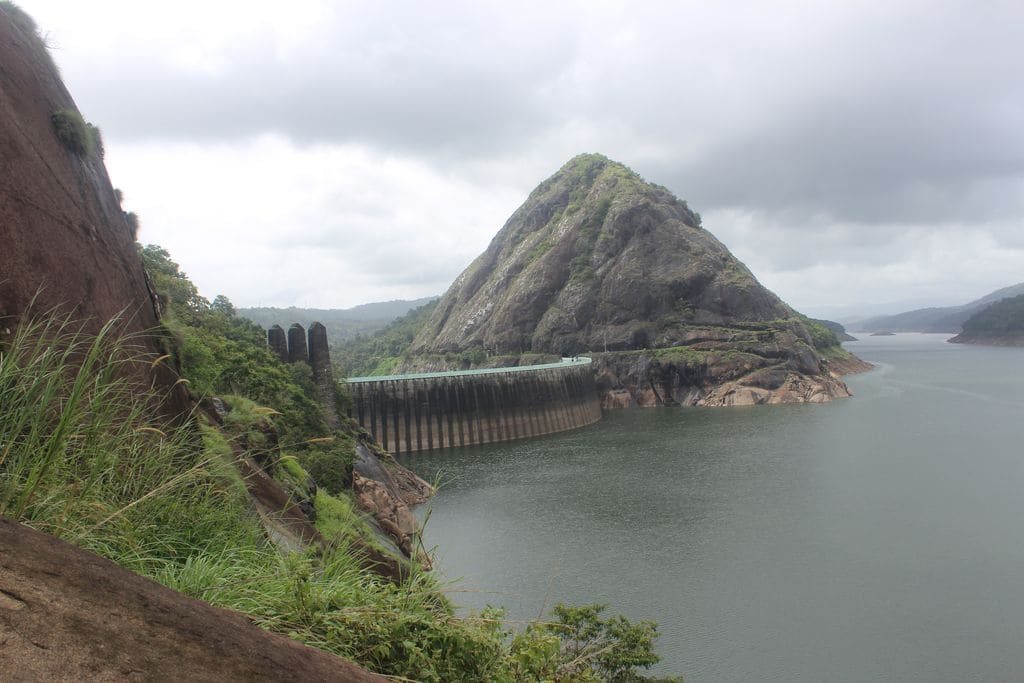
That reservoir is the work of the Idukki Arch Dam, one of independent India’s landmark engineering feats — a 168-metre-class double-curvature arch dam wedged between the Kuravan and Kurathi hills across the Periyar river. Built with Canadian assistance and commissioned in the mid-1970s, it was among the first arch dams of its kind in Asia and remains a centrepiece of Kerala’s power generation. The rising waters behind it flooded the deep river valley and created the sprawling lake that Kalvari Mount now overlooks.
The Christian character of the site reflects the settlement history of the High Range itself. Through the mid-twentieth century, waves of migrant farmers — many of them Syrian Christians from central Travancore — moved up into Idukki’s forests to cultivate cardamom, pepper, rubber and other hill crops, carrying their faith and church-building traditions with them. A cross planted on a commanding hilltop, and a Way of the Cross laid out on its slope, fits naturally into that devotional landscape.
As Idukki opened up to tourism on the back of the dam and reservoir, viewpoints around the basin — Kalvari Mount among them — were gradually developed with simple platforms, railings and parking so travellers could take in the view safely. Today the mount is promoted by Kerala Tourism and the district tourism body (DTPC Idukki) as one of the reservoir’s scenic and pilgrimage highlights.
It remains an evolving, low-key destination rather than a heavily built-up attraction, valued precisely for its combination of a big man-made lake, untamed Ghat scenery and quiet religious heritage. Because it lies within the wider Idukki dam-and-reservoir zone, exact access and any photography or approach restrictions can shift with local rules — always worth checking on the ground.
Why visit
Sweeping panoramic views over the vast Idukki reservoir and its island-dotted inlets.
One of the High Range’s finest sunrise and sunset perches, with golden light spilling across the water.
A quieter, less commercialised alternative to the crowded dam-side viewpoints.
A distinctive cross-topped pilgrimage hill with a Way of the Cross walk to the summit.
Easy to combine with the Idukki Arch Dam, Cheruthoni and Kulamavu on a single reservoir day trip.
A real chance of spotting elephants and other wildlife in the waters and forest far below.