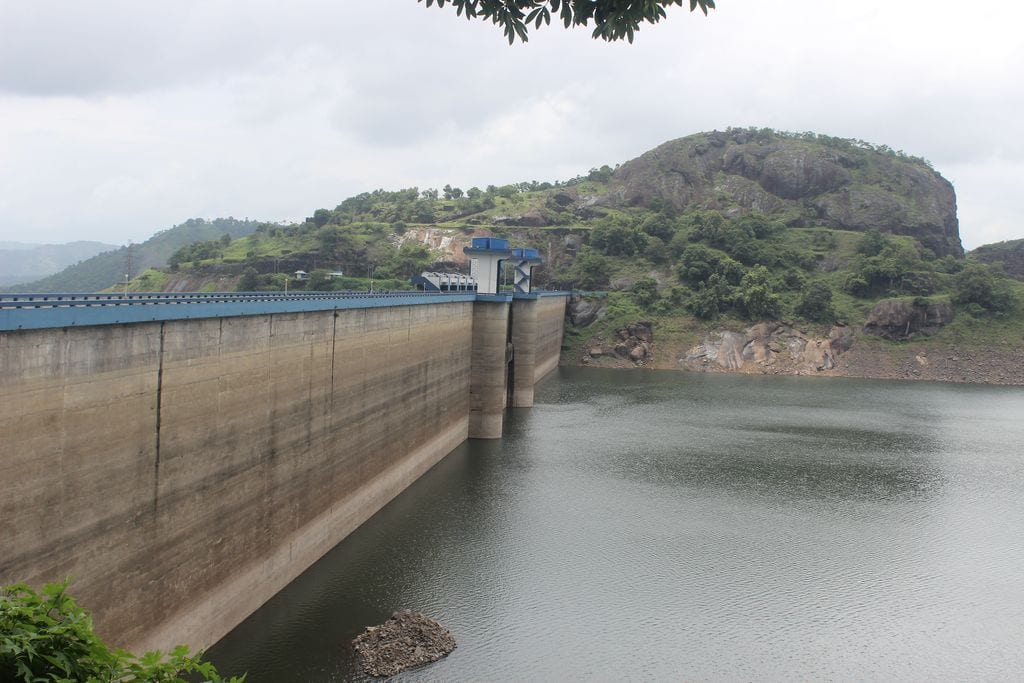
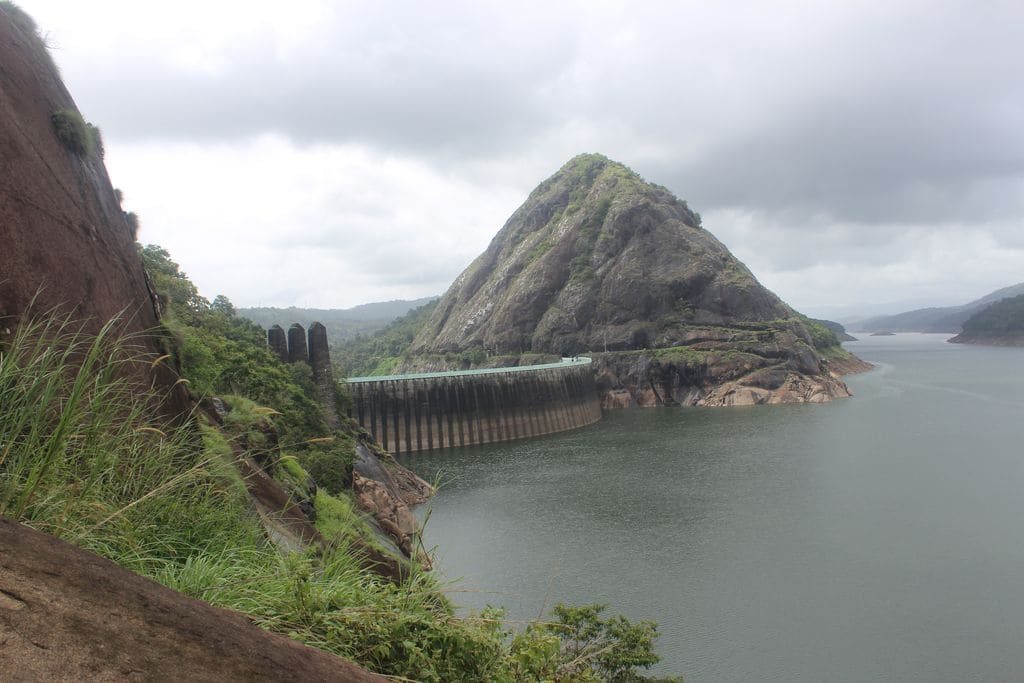
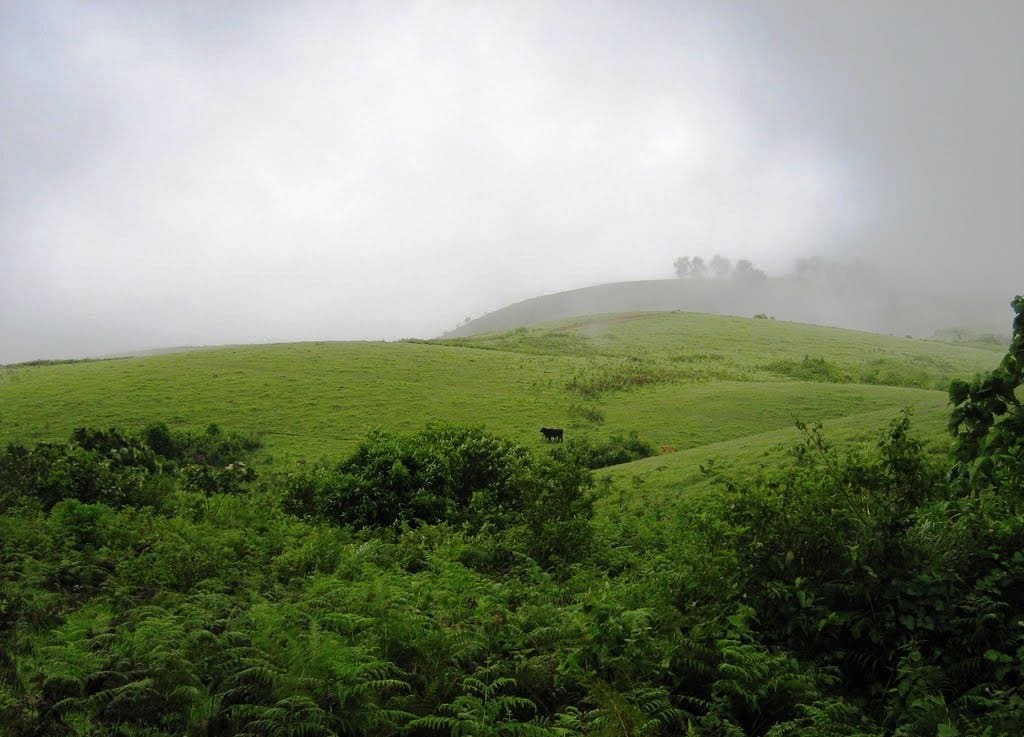
Perched near the top of the ghats at around 3,000 ft, Nadukani is the balcony where the Idukki High Range leans out to survey the whole green sweep of the plains below — its very name means “to see the land”.
The story of Nadukani Viewpoint
Nadukani sits on the climbing road that lifts you from Thodupuzha up into the Idukki High Range, in the belt around Kulamavu and Moolamattom on the way towards Painavu and the Idukki dam. The name says exactly what it is: in Malayalam “nadu” is the country or land and “kani/kanuka” is to see — so Nadukani is, quite literally, the place from which you see the land. Stop the car, walk out to the edge, and the reason becomes obvious in a single breath — the hill simply falls away and hands you the plains.
At the heart of the spot is a distinctive circular, two-storey pavilion capped with a dome-shaped roof, a small watch-tower of a building that lets you climb up and take in the panorama from a proper height. It is not a grand monument — it is a working viewpoint, tidy and unfussy, ringed by benches, a little garden and shaded rest-spots, with parking below and a small children’s play area that makes it an easy family halt rather than a hard climb.
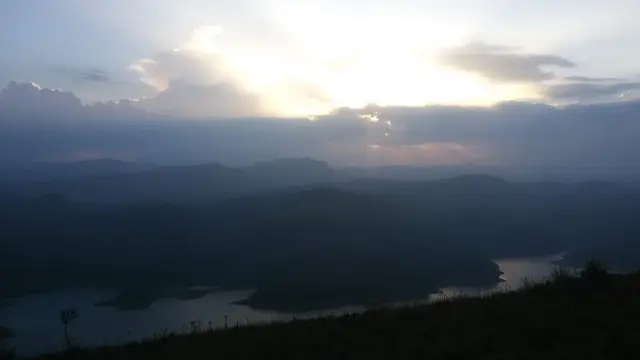
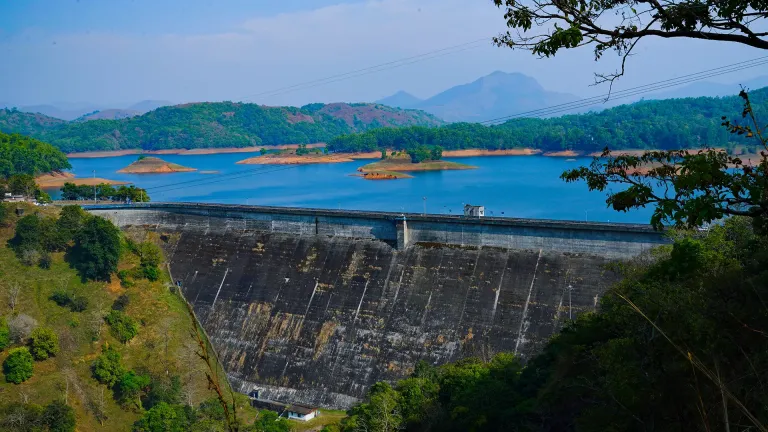
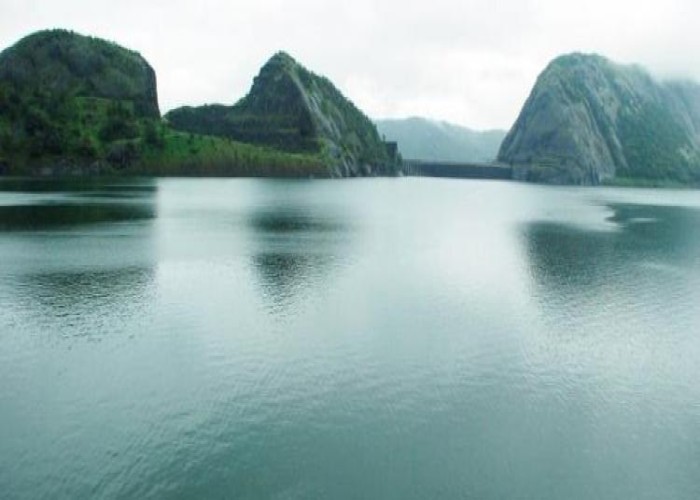
The view is the whole point, and on a clear day it is genuinely big. From the deck you look out over the shining thread of the Muvattupuzha River, the little town of Moolamattom in its bowl of green, the broad sheet of the Malankara Reservoir catching the light, and beyond them ridge upon blue ridge of the Western Ghats fading into the distance. Locals like to say you get a bird’s-eye sweep across two districts at once — the highland edge of Idukki spilling down towards the lowlands of Ernakulam.
The character of the place changes with the light and the season. In the clear post-monsoon months the visibility is long and hard-edged, every ridge and reservoir crisp. In the monsoon and its shoulders the whole scene turns theatrical — cloud pours up the slope, mist swallows the valley and then tears open to reveal a slice of river or a distant hill, and you find yourself watching weather move below you rather than above you.
Sunset is when Nadukani earns its reputation. As the day cools, the sky over the plains softens into pink and orange, the reservoir turns to hammered metal, and the ghats settle into deepening blue — it is one of those unhurried High Range evenings that make people linger far longer than they planned. Because the surroundings are still relatively uncommercialised, the air stays clean and the crowd stays gentle, and the loudest sound is usually the wind and a hornbill somewhere in the trees.
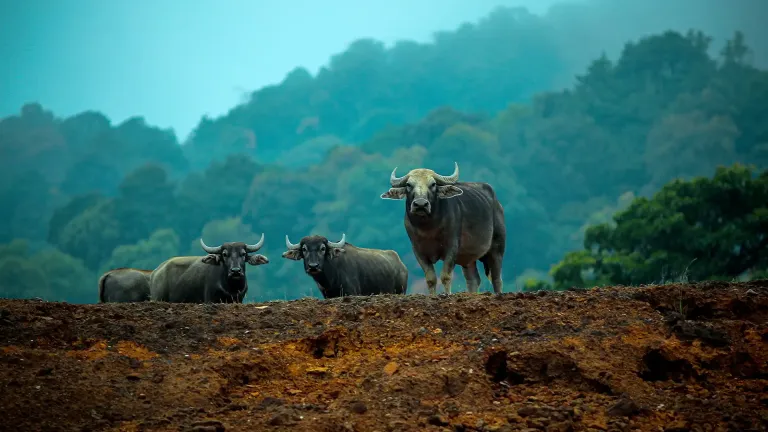
For all its calm, Nadukani sits on a wild edge. The forested slopes below run towards the Idukki Wildlife Sanctuary, and the hill is genuinely part of that country — hornbills, jungle myna, sambar deer and the occasional wild elephant all belong here, and the surrounding forest offers short walks and trekking for those who want more than the view. It is best treated as a rest-and-wonder halt on a High Range road trip: come for twenty minutes, and quietly give it an hour.
History
A note on names first, because it matters: there is more than one “Nadukani” in Kerala — a well-known one near Nilambur in Malappuram, and others elsewhere — so directions can get muddled online. The place described here is firmly the Idukki-district Nadukani, the hilltop viewpoint and pavilion in the Thodupuzha–Idukki belt near Kulamavu and Moolamattom, overlooking the Malankara Reservoir. Where sources disagree on fine detail, the safe, verified picture is that of an Idukki High Range viewpoint built and maintained around the region’s great hydro-electric project.
The signature circular pavilion is widely reported to have been built in 1966 by the Kerala State Electricity Board (KSEB), during the era when the Idukki Hydro-Electric Project was transforming this corner of the High Range. That timing is telling: the same decades that dammed the Periyar at Idukki and Cheruthoni, and raised the reservoirs and power houses of the region, also produced roadside lookouts like this one along the ghat routes that served the project.
Nadukani’s outlook is bound up with that hydro landscape. The Malankara Reservoir it overlooks is itself part of the water story of the High Range — the Moolamattom power house area, fed by water dropping from the Idukki system, lies in the valley below, and the broad reservoir is a made lake as much as a natural one. In that sense the viewpoint is a window onto engineered Kerala as well as wild Kerala: the plains, the river, the dam-fed water and the forest ridges all in one frame.
Today the spot functions as a maintained tourist viewpoint with a modest entry ticket, parking, benches, a small garden and a children’s play area, and it appears on Idukki district tourism itineraries as a standard High Range halt alongside the Idukki arch dam, Cheruthoni, Kulamavu and Moolamattom. It is not a heavily developed resort attraction; much of its appeal is precisely that it remains a simple, relatively quiet roadside lookout rather than a commercialised complex.
Because it is a viewpoint rather than a shrine or a historic town, its recorded “history” is genuinely thin beyond the pavilion and the hydro-project context — much of what circulates online is descriptive rather than archival, and some distance and detail figures conflict between sites. Treated honestly, Nadukani is best understood as a mid-20th-century High Range lookout, tied to the Idukki power project, whose real significance is experiential: the view it frames of the plains, the reservoir and the Western Ghats.
Why visit
One of the Idukki High Range’s great balcony views — plains, river, reservoir and blue ridges in a single sweep.
A genuinely memorable sunset spot, with the sky over the lowlands turning pink and orange.
The distinctive circular two-storey pavilion you can climb for a higher, wider panorama.
An easy, family-friendly halt — parking, benches, a small garden and a children’s play area, not a hard trek.
Monsoon-season drama: cloud and mist rising up the slope and tearing open over the valley.
A natural pairing with the Idukki arch dam, Cheruthoni, Kulamavu and Moolamattom on a High Range road trip.