Behind a weathered seafront palace in Kannur lies the durbar hall of Kerala’s only Muslim royal dynasty — a house where a woman could be crowned queen and rule the Arabian Sea.
The story of Arakkal Museum
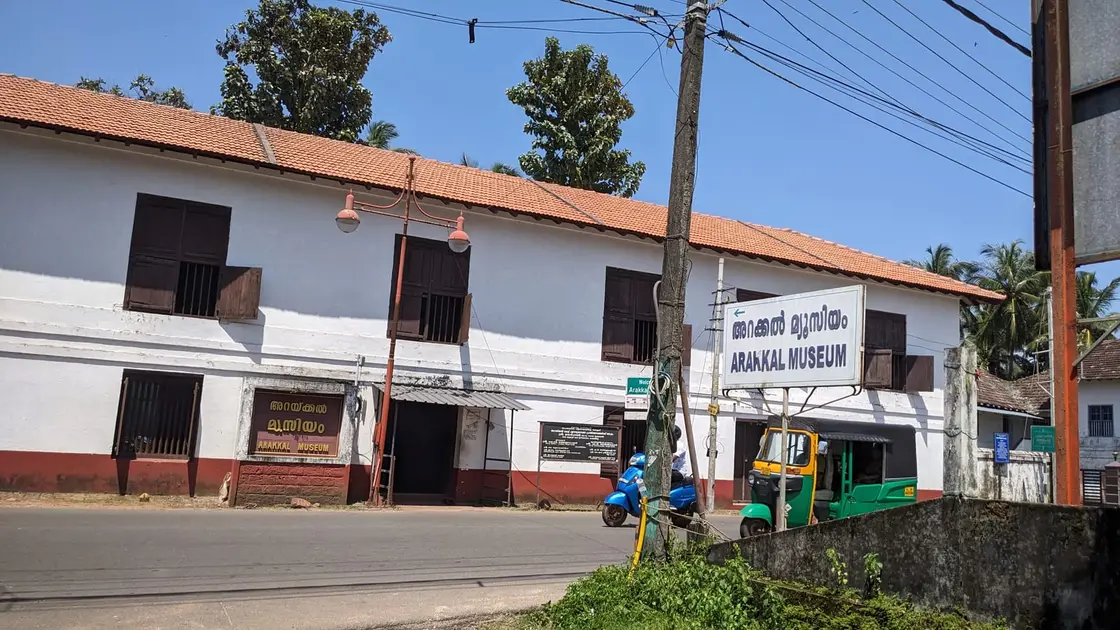
The Arakkal Museum occupies a wing of the Arakkalkettu, the rambling ancestral palace of the Arakkal Ali Rajas at Ayikkara, a breeze-blown coastal pocket of Kannur city just inland of St Angelo Fort and Mappila Bay. When the Government of Kerala restored the old durbar hall — the royal court — and opened it to the public in 2005, it turned one of the state’s most unusual stories into something you can walk through. This was the seat of the only Muslim royal family Kerala ever produced, and, remarkably, a dynasty in which a woman could hold the throne in her own right.
Step inside and the palace itself becomes an exhibit. The architecture is unmistakably Malabar — polished wooden floors that creak underfoot, deep verandahs, and double-shuttered windows fitted with panes of coloured glass that throw pools of red and green light across the boards. The main residence was traditionally ringed by mosques, a reminder that this was a devout court as much as a political one. Members of the present-day Arakkal family still live within the larger complex, so the museum sits inside a place that is genuinely, quietly alive.
The collection is small but intimate, the kind of assemblage that rewards slow looking. On display are the family’s ceremonial seal, royal copies of the Holy Quran, swords and daggers from the household armoury, and a brass telescope and navigational odds and ends that speak to a family whose power came from the sea. There are wooden grain-storage chests known as pathaayam, heavy antique furniture, oil lamps, and even vintage telephones — humbler objects that trace the dynasty’s long slide from a maritime power into a private household.
What gives the place its charge is the human story pressed into these ordinary things. The Arakkal followed marumakkathayam, the matrilineal system of inheritance widespread in old Malabar, in which lineage and property passed through the female line — from a man to his sister’s son rather than to his own children. The eldest member of the family, whether man or woman, became head and ruler. A male ruler took the title Ali Rajah; a female ruler was the Arakkal Beevi. In an age when queens regnant were rare almost everywhere, the Beevi could command an army, sign treaties and rule islands.
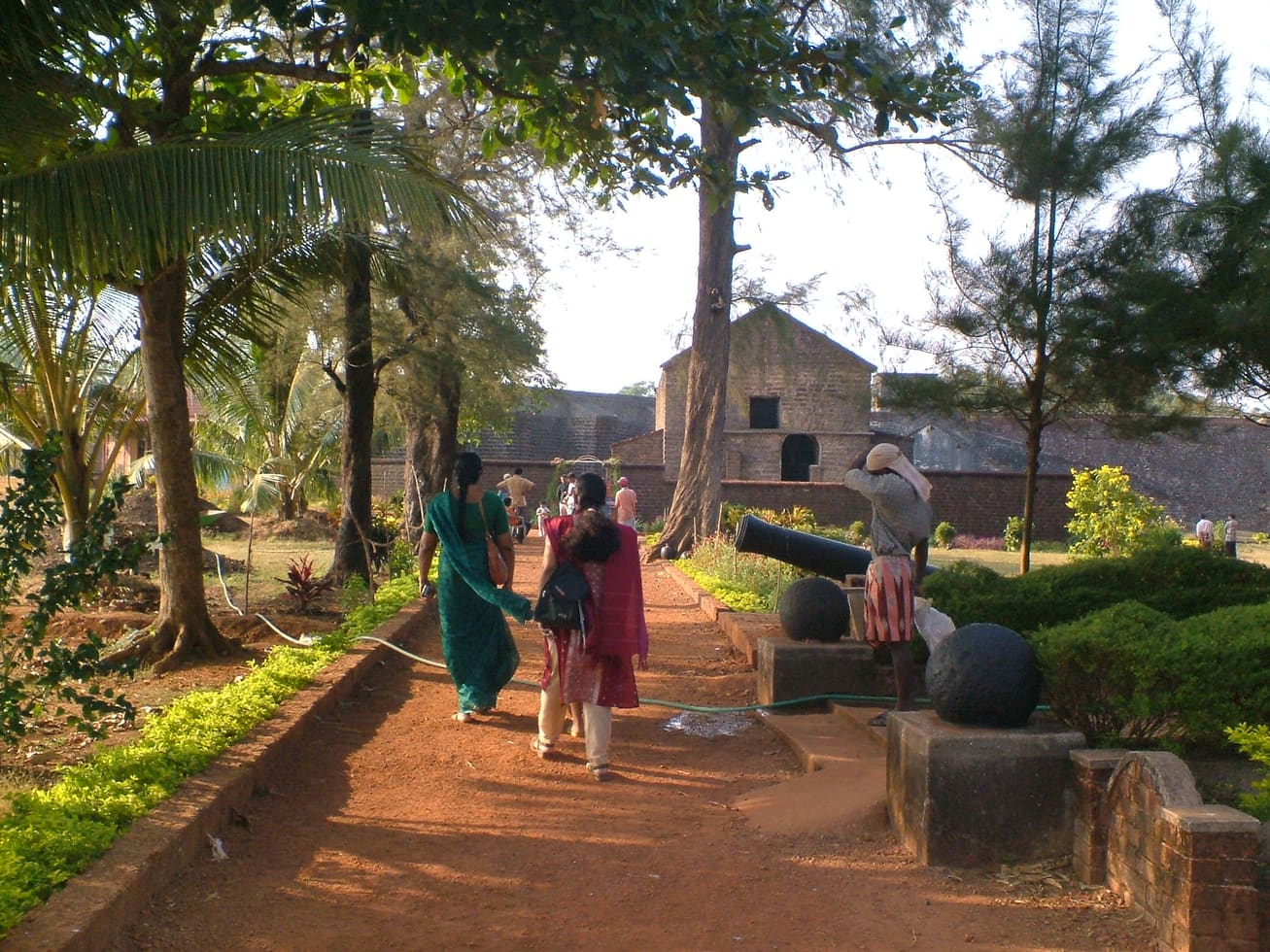
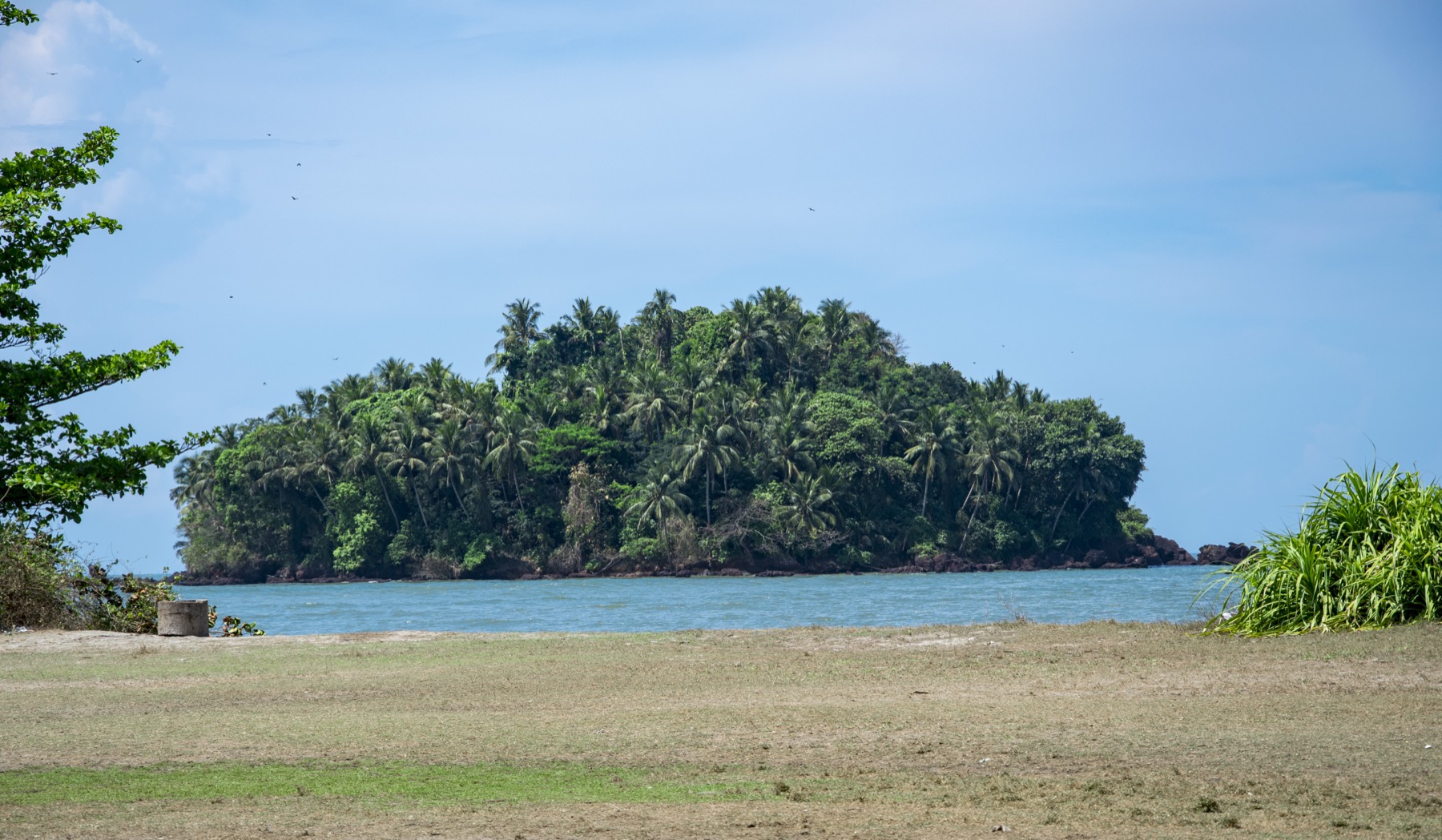
The seafront setting is part of the experience. The palace faces the Arabian Sea, and from Ayikkara you are only a short walk from St Angelo Fort’s laterite ramparts and the fishing boats of Mappila Bay. Standing at the edge of the old court, it is easy to picture the vantage the Ali Rajas once held — looking out at the waters they taxed, traded across, and once ruled as far as the distant Lakshadweep archipelago.
For all its modest scale, the museum lands as more than a display of heirlooms. It is a rare, tangible record of a syncretic Malabar in which Islamic tradition and Kerala’s matrilineal custom fused into something found nowhere else in India — a Muslim court where the crown could pass to a queen.
Legend & myth
Local tradition offers more than one romantic account of how the dynasty began, and the museum’s story is inseparable from them. The best-loved version tells of a Kolathiri (Chirakkal) princess who was rescued from drowning — or from danger — by a Muslim man of Arakkal; the two married, she embraced Islam, and from this union sprang the ruling line, established under the patronage of the Kolathiri rajas. A second tradition names the founder as Arayankulangara Nair, a minister of the Kolathiris who converted to Islam and rose to become the first Ali Rajah. A grander legend still traces the family’s Islam back to the conversion of the last Chera emperor by the missionary Malik ibn Dinar. Historians treat these as competing origin stories rather than settled fact, but together they capture how the Arakkal saw themselves — born where the Kolathiri kingdom, the sea and Islam met.
History
The Arakkal kingdom is generally dated to the mid-sixteenth century, around 1545, and rose at Kannur (Cannanore) under the overlordship of the neighbouring Kolathiri (Chirakkal) rajas, from whom the family originally held its lands and privileges. Whatever the truth of the origin traditions, the Ali Rajas emerged as the leading Muslim power on the Malabar coast, their authority rooted as much in trade and religion as in territory.
Their real strength was maritime. Commanding the harbour at Kannur, the Arakkal built what historians describe as a Muslim thalassocracy — a sea-based power — dominating coastal commerce, including the lucrative import of horses from West Asia, and extending their reach across the water. Most strikingly, they controlled much of the Lakshadweep archipelago, including islands such as Agatti, Kavaratti, Androth, Kalpeni and Minicoy, held under arrangements that traced back to the Kolathiri rulers.
The dynasty’s distinctive marumakkathayam succession meant the throne could pass to a woman, and several Arakkal Beevis ruled in their own name. The eighteenth century, however, drew the family into the violent contest for Malabar. The Arakkal aligned with the Mysore sultans, Hyder Ali and Tipu Sultan, during their campaigns in the region — a connection that brought both power and peril. Tradition records the ordeal of Junumabi Beevi, remembered as the twenty-third ruler, whose forces were overwhelmed and whose court at Kannur was besieged in the 1790s as Mysore’s fortunes collapsed.
With the defeat of Tipu Sultan and the rise of British paramountcy, the Arakkal star fell. The English East India Company and the British Raj steadily stripped the family of authority: the kingdom’s independent power was broken in the nineteenth century, and by around 1870 the British had effectively seized control at Kannur. In 1905 the Ali Rajah formally surrendered the family’s remaining rights over the Lakshadweep islands to the British in return for a pension and the honorific title of Sultan.
Thereafter the Arakkal declined from a ruling house into a private family, its ceremonial insignia — sceptre, sword and the trappings of sovereignty — passing out of use in the early twentieth century. What survives is the palace at Ayikkara and the heirlooms now gathered in the durbar-hall museum: the physical memory of a dynasty that was, uniquely in Kerala, both Muslim and matrilineal, and that once ruled a stretch of coast and a scatter of islands from this house by the sea.
Why visit
See the durbar hall of Kerala’s only Muslim royal dynasty — a genuinely one-of-a-kind story.
Discover a matrilineal court where a woman, the Arakkal Beevi, could rule as sovereign.
View royal copies of the Holy Quran, the family seal, swords, a telescope and antique furniture up close.
Walk a living Malabar palace with coloured-glass windows and creaking wooden floors, still home to the family.
Stand on the seafront the Ali Rajas once commanded, moments from St Angelo Fort and Mappila Bay.
A quick, inexpensive and richly atmospheric stop that anchors a half-day of Kannur’s coastal heritage.