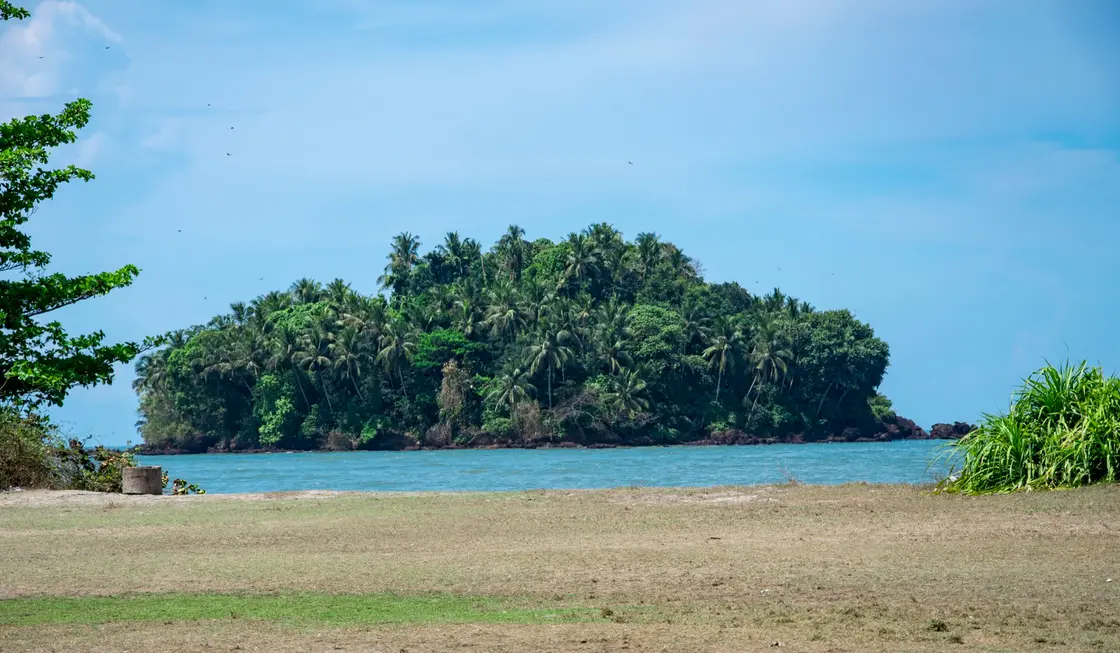
A five-acre emerald of coconut palm and thicket that floats just offshore near Thalassery — reachable, when the tide draws back, by a walk across the wet sand.
The story of Dharmadam Island
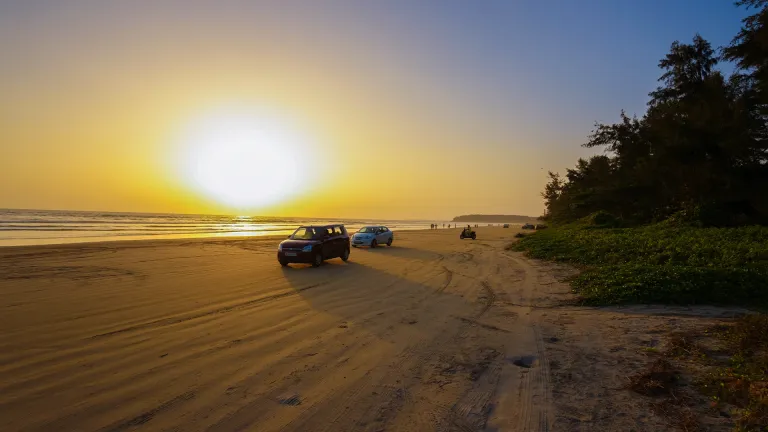
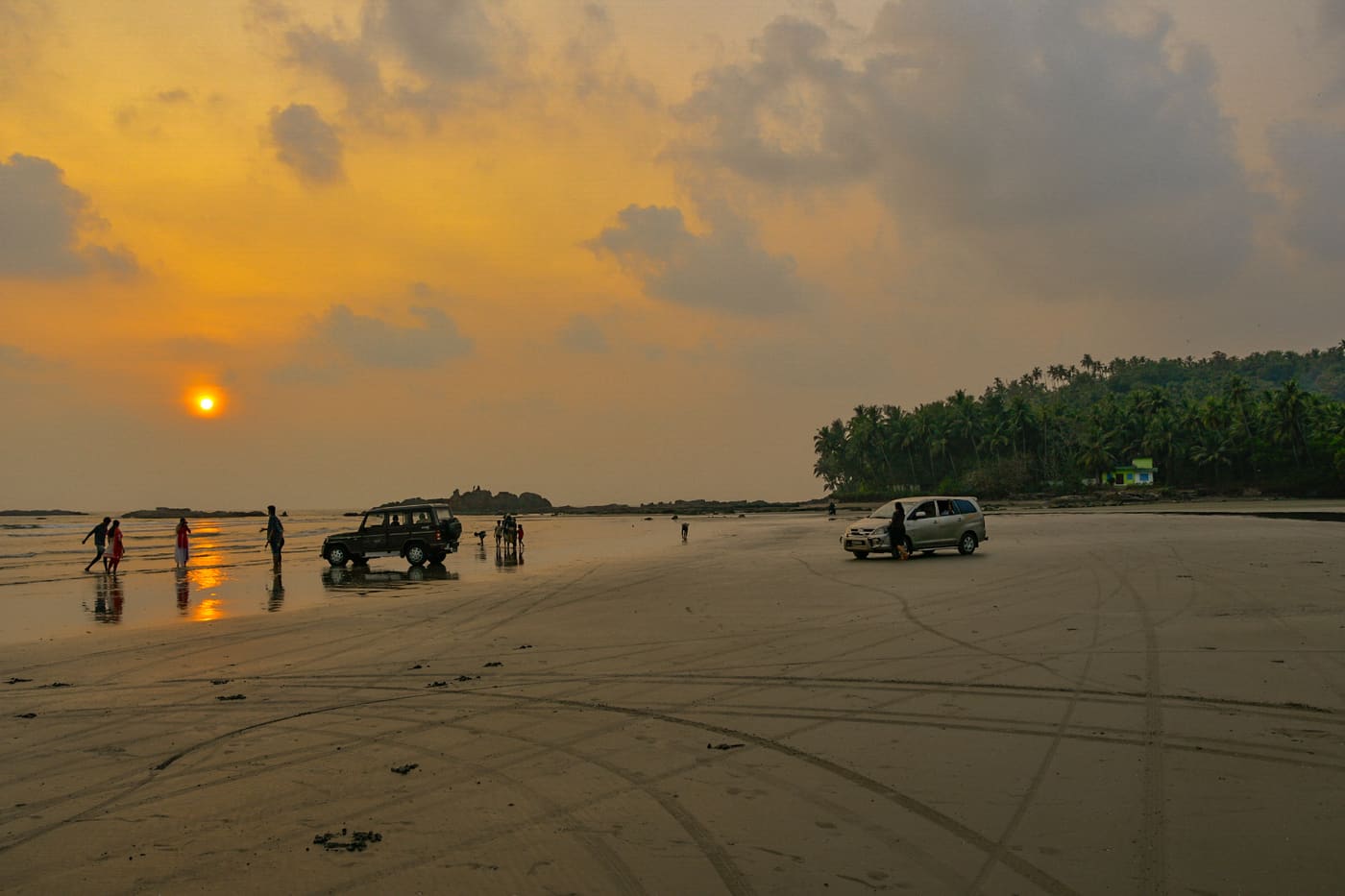
Look out from the northern end of Muzhappilangad — India’s famous drive-in beach — and you cannot miss it: a low, densely wooded islet crouched perhaps a hundred metres off the Dharmadam shore, so smothered in coconut palms and green scrub that locals simply call it Pachathuruth, the Green Island. It is tiny, barely five acres (about two hectares), yet it holds the eye precisely because it looks like a secret the coastline is keeping — a self-contained little world of shade and leaf ringed by bright water.
The magic of Dharmadam is in its tides. For most of the day the island sits marooned in shallow sea and river, but when the water pulls back at low tide a pale ribbon of sandbar surfaces, and it becomes possible to walk out to it through ankle-to-knee-deep water. That crossing — bare feet on rippled sand, the island growing closer with every step — is the whole romance of the place. It is also its warning: the sea returns, and the window is short.
Water surrounds it on every side, but not all the same water. Two rivers — the Anjarakandy and the Thalassery (Dharmadam) puzha — reach the coast here, so the island sits in a brackish meeting-place where river current and Arabian Sea swell mingle. On three sides it is river; on the fourth, open sea. Stand on the sandbar at the confluence and you can watch fresh water and salt water braid together, a quiet estuarine drama that draws fish, and the migratory birds that come to feed on them.
Set foot ashore — where permitted — and the light changes. The canopy of coconut palms and bushes throws deep shade, and the undergrowth is famously tangled: locals speak of medicinal herbs among the greenery, and of the nanchu, a poison tree traditionally used in fishing. There are no shops, no crowds, no built-up promenade; the pleasure is the plainness of it, the sense of stepping onto a scrap of coast that time and traffic forgot.
That secrecy is real in another sense, too. Dharmadam Island is privately held ground, and you cannot simply wander across and treat it as your own — entry is restricted and generally needs prior permission. So for many visitors the island is best enjoyed as a view and a walk to the water’s edge: the palm-fringed silhouette from the Muzhappilangad drive-in sands, the sandbar at low tide, the estuary shimmering, the sun sinking behind the treeline.
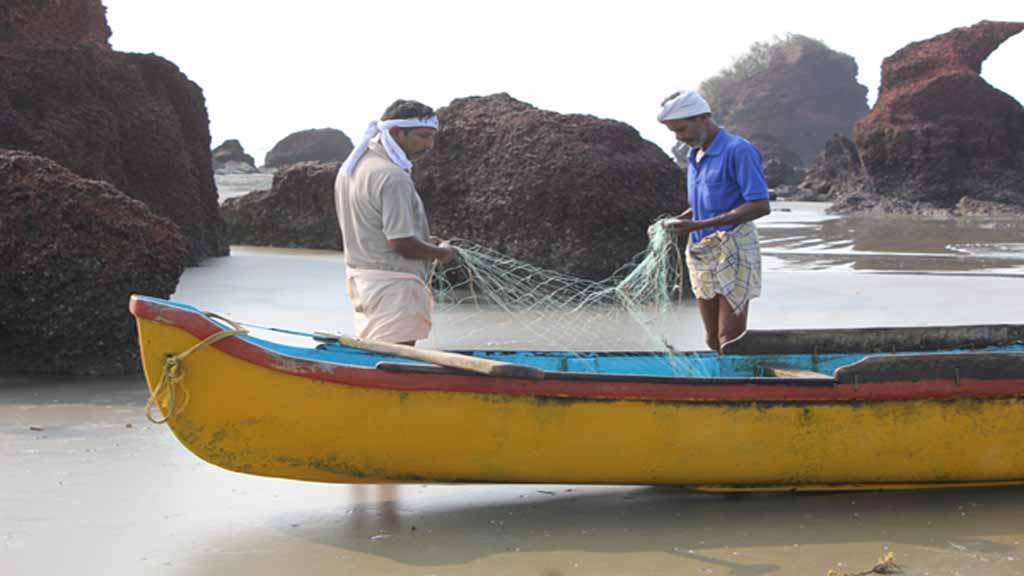
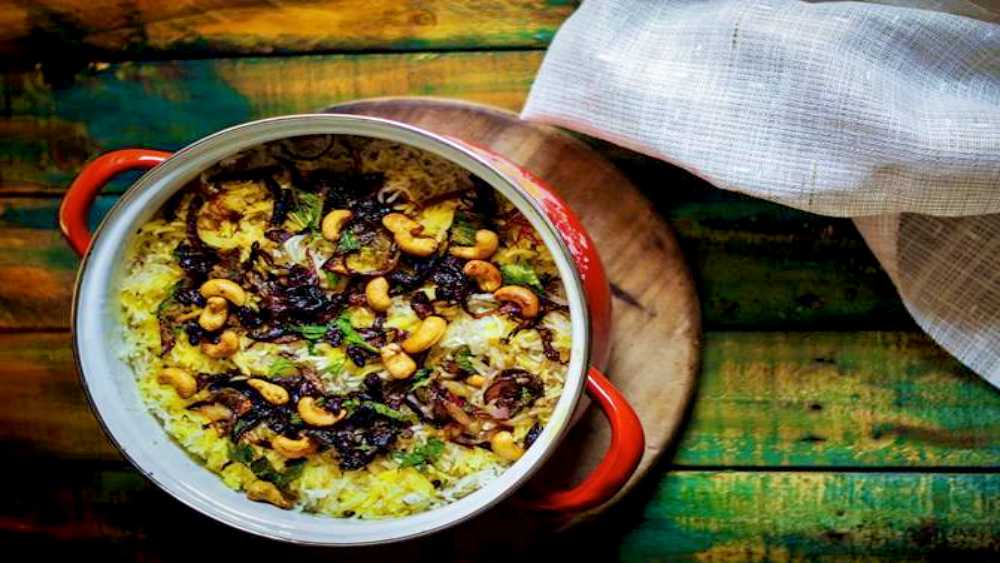
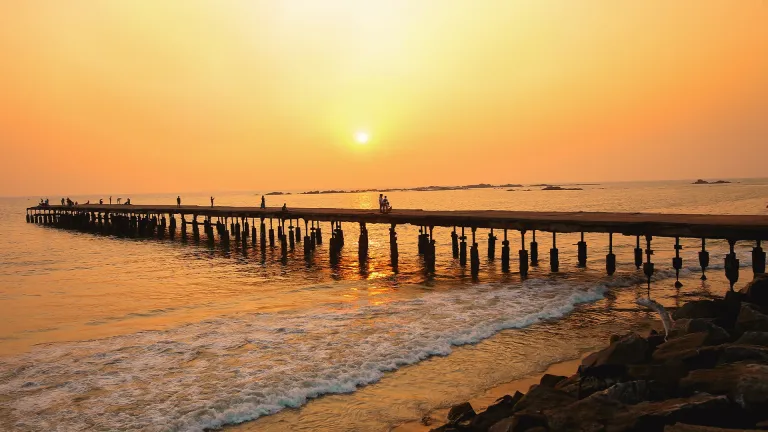
It rewards the unhurried. Come in the cool months, time your visit to a falling tide, bring a camera and no expectations, and pair it with Thalassery just down the road — the old fort, the fishing pier, the town that gave the world Malabar biryani. Dharmadam is not a place you conquer; it is a place you glimpse, walk toward, and let the returning sea gently send you home from.
Legend & myth
The island’s name carries an old and evocative tradition. Dharmadam was known in earlier times as Dharmapattanam, and local and popular history hold that this was once a Buddhist stronghold — the very word Dharma pointing back to that faith’s presence on this coast. Tradition tells that Buddha images were unearthed in the area, and the name is often read as a memory of a vanished Buddhist settlement, a hint of Kerala’s ancient and largely lost Buddhist past woven into an otherwise unremarkable strip of shore.
History
The historical thread most often pulled here is the name itself. Dharmadam derives from the older Dharmapattanam, and the district’s own tourism accounts describe this as having been a Buddhist centre in antiquity, with Buddha images reportedly excavated from the locality. How grand that settlement was is uncertain and hard to verify, but the name-origin and the tradition of a Buddhist past are consistently repeated in accounts of the place.
The coast around Dharmadam surfaces repeatedly in medieval and colonial records under a shifting set of names, which tells you it mattered to traders. Jewish and Arab sources of the twelfth century are said to have recorded it as Dahfattan; the Portuguese later rendered it as Darmapatao (Darmapatam), and the British as Dharmapatam — the same place refracted through the languages of everyone who came to trade on the Malabar coast.
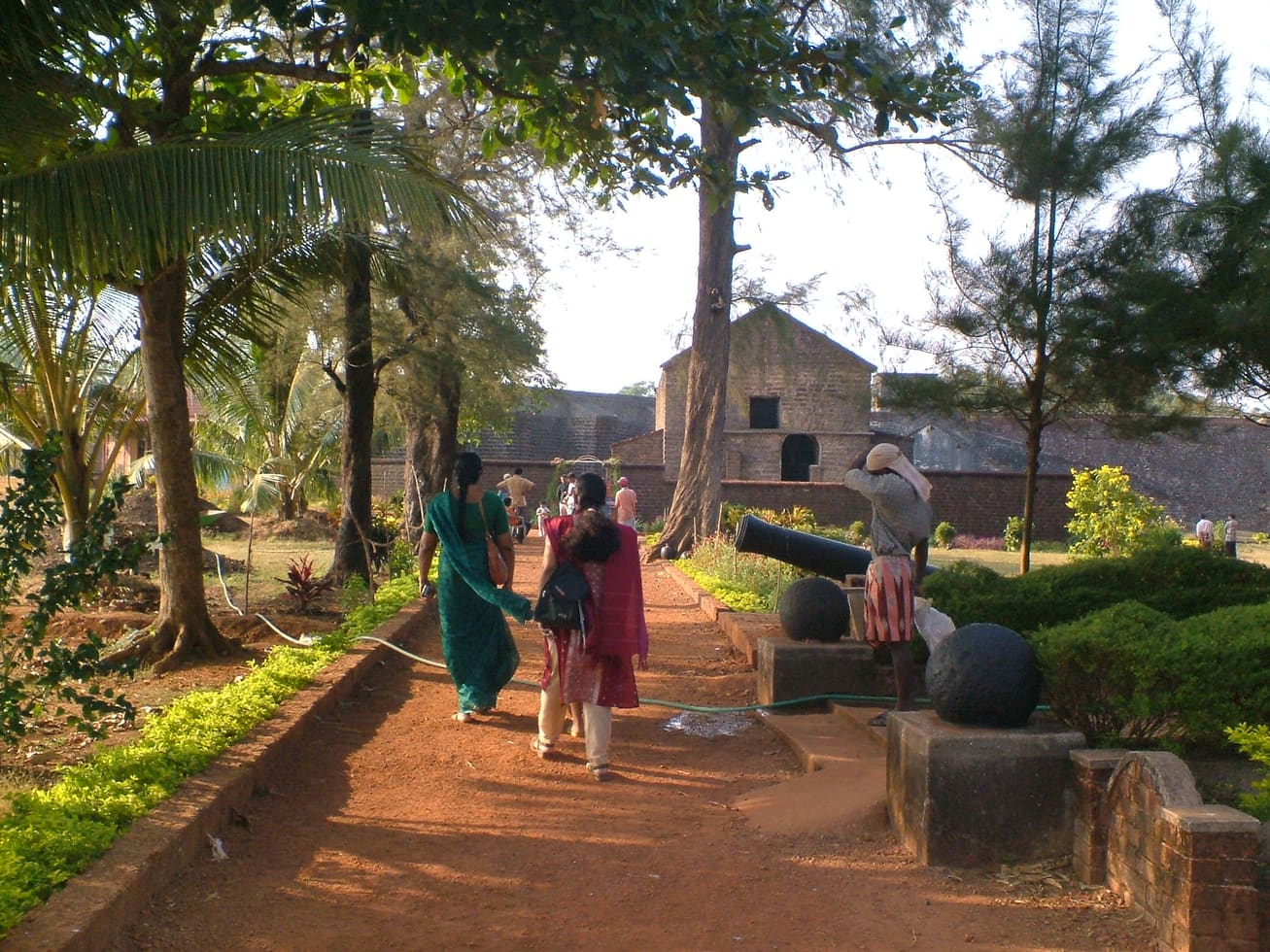
That trading context is inseparable from neighbouring Thalassery (Tellicherry), which grew into one of Malabar’s key ports and a hub for pepper, spices and, under the British East India Company, a fortified trading post. Dharmadam Island sits in the shadow of that history, a stone’s throw from the town whose fort, pier and spice trade shaped this whole stretch of the northern Kerala coast.
In modern times the island has been treated as a tourism asset. It has long been noted as private property, but reports describe the Government of Kerala moving to develop its tourism potential from the late 1990s, with the District Tourism Promotion Council (DTPC) associated with its management — details that are worth confirming locally, as accounts vary and access remains restricted on the ground.
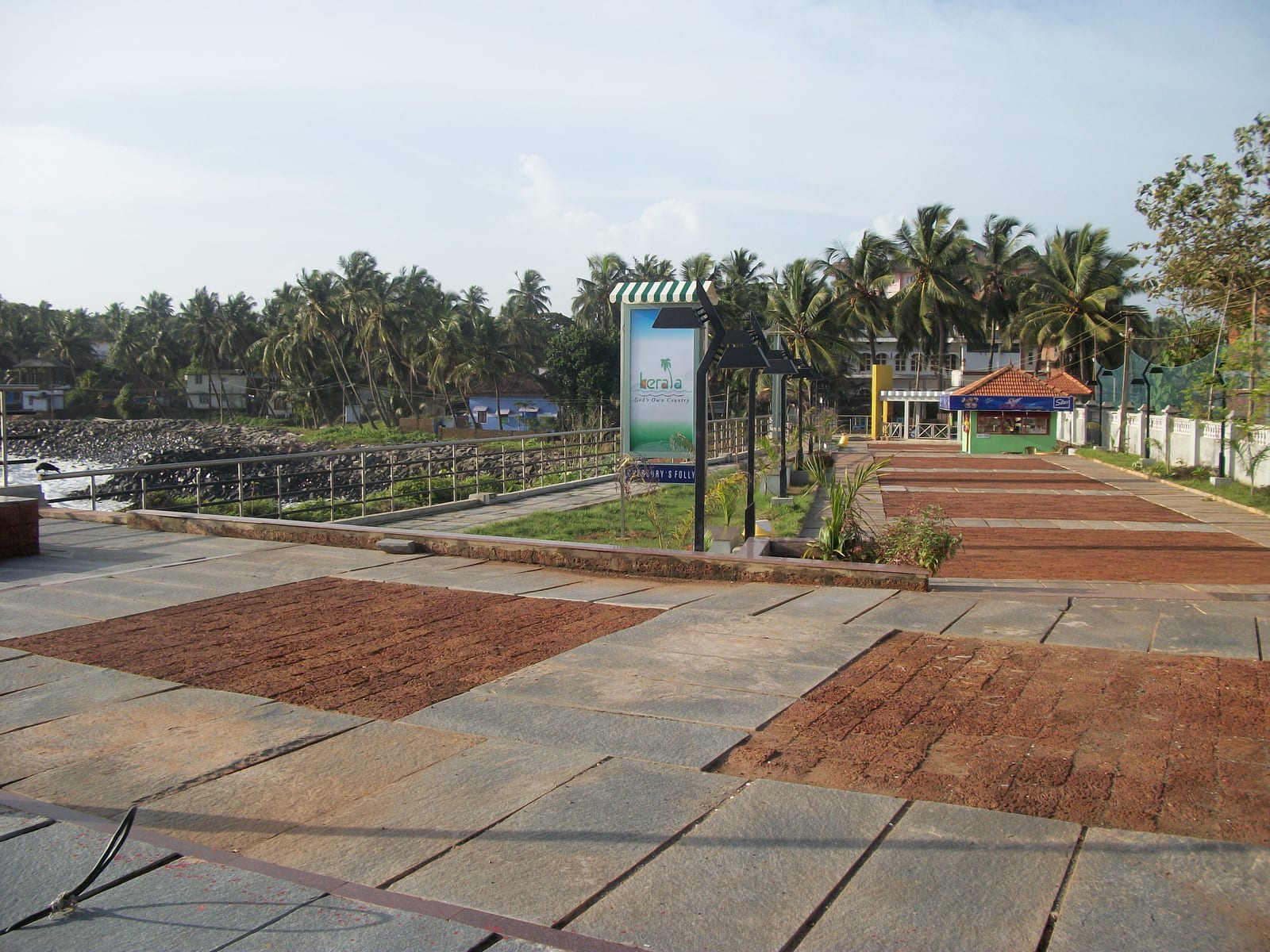
Development has been fitful. A tourist facility on the island reportedly opened around 2013 but was then neglected for years, and more recently a large integrated tourism project for the Dharmadam–Muzhappilangad stretch — including nature-hub and elevated-walk ideas — has been announced. Because these plans and the island’s exact access arrangements keep changing, treat anything about entry, ownership and facilities as provisional and check on the spot before you go.
Why visit
One of Kerala’s most photogenic little islands — a five-acre cushion of coconut palm you can actually walk out to at low tide.
The rare thrill of a tidal sandbar crossing — bare feet, shallow water, the island drawing closer with each step.
A genuine river-meets-sea estuary, where the Anjarakandy and Thalassery rivers braid into the Arabian Sea.
Right beside Muzhappilangad, India’s celebrated drive-in beach, so the island view comes bundled with a legendary stretch of sand.
A whisper of Kerala’s ancient Buddhist past in the name Dharmapattanam — history you can stand next to.
Easy to fold into a Thalassery day — fort, fishing pier and the birthplace of Malabar biryani are minutes away.