Payyambalam Beach is Kannur’s best-loved public shoreline — a broad, clean sweep of golden sand backed by a landscaped garden park, presided over by Kanayi Kunhiraman’s monumental “Mother and Child” sculpture, and famous for some of the finest sunsets on Kerala’s Malabar coast.
The story of Payyambalam Beach
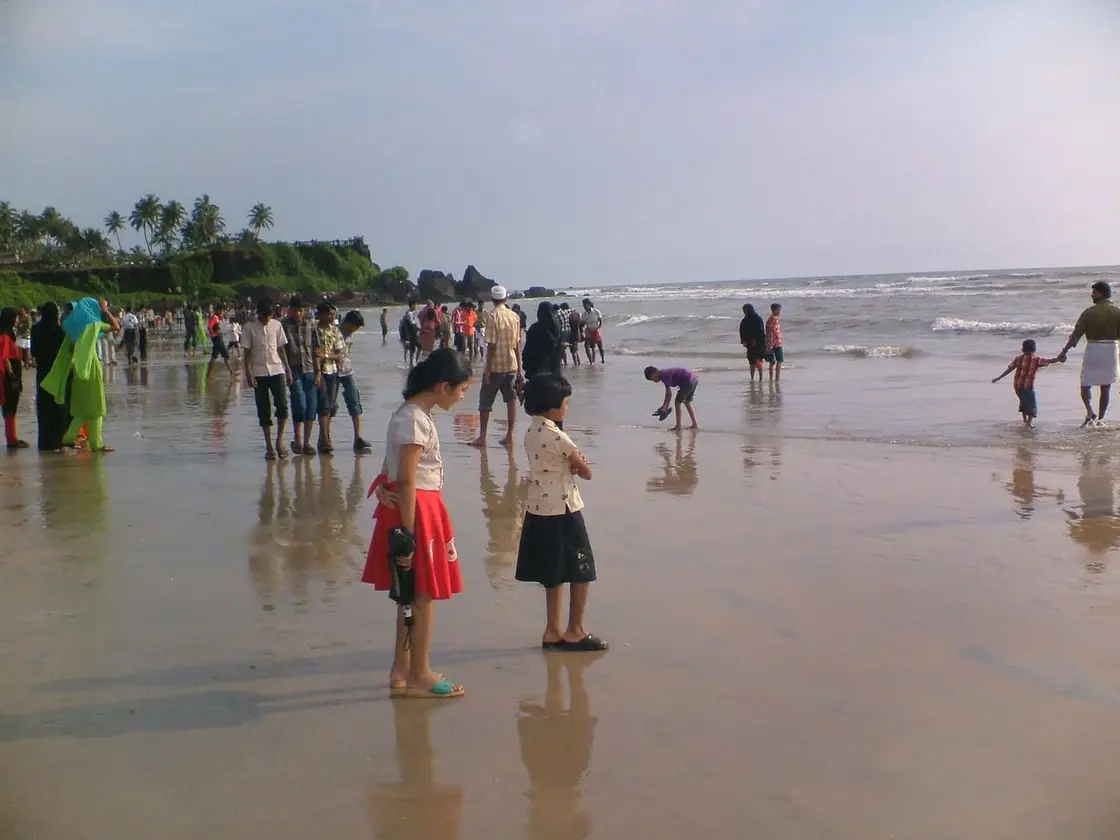
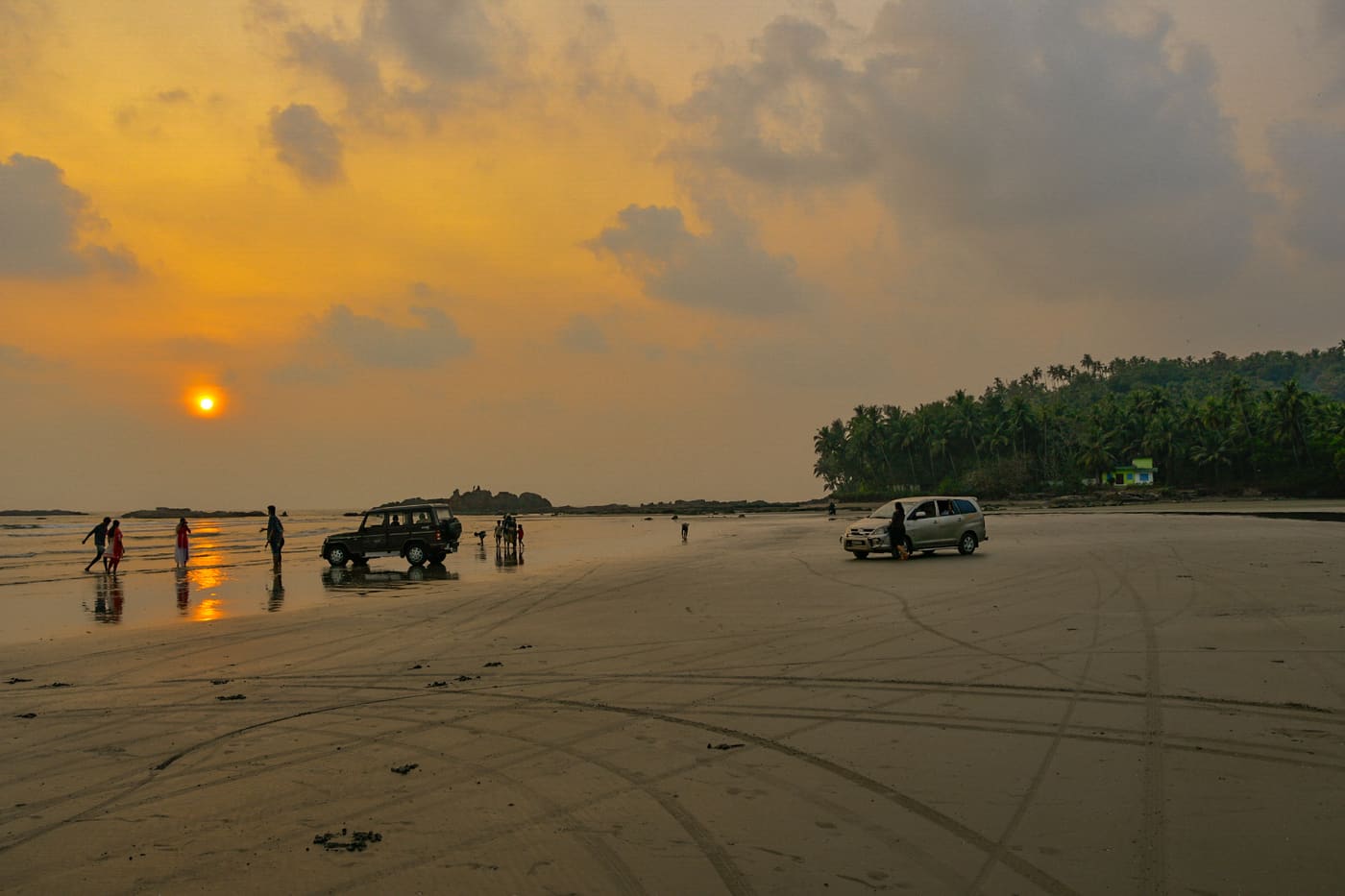
Just a short drive from the heart of Kannur town, Payyambalam unspools as a long, unbroken arc of soft sand where the Arabian Sea rolls in with an easy, roaring rhythm. Unlike many Kerala beaches hemmed in by fishing harbours or rocky outcrops, Payyambalam keeps a wide, open horizon, and that expanse is precisely what draws families, joggers, courting couples and solitary sunset-watchers here every single evening.
The beach is known first and foremost for how well it is kept. A landscaped garden and manicured lawns run alongside the sand, threaded with walking paths, shaded seating and children’s play areas, so that a visit here feels as much like a stroll through a seaside park as a day at the beach. Locals treat it as the town’s open-air living room — a place to walk off a heavy lunch, let the children run, or simply sit and watch the light change over the water.
Rising over the garden is the landmark that gives Payyambalam its face: the huge sculpture of a mother cradling her child, carved by the celebrated Kerala sculptor Kanayi Kunhiraman. Standing near the entrance to the beach, the “Mother and Child” is a tribute to the universal tenderness between parent and infant, and it has become the single most photographed image of the shoreline — a silhouette that every visitor seems to pause beneath.
Payyambalam is also a place of quiet remembrance. Set among the gardens are memorials and samadhis of some of Kannur’s and Kerala’s most cherished public figures — the pioneering journalist Swadeshabhimani Ramakrishna Pillai and the towering Communist leader A. K. Gopalan (widely known as AKG) among them, with other statesmen of the region honoured nearby. The result is an unusual blend: a carefree seaside park that doubles as a solemn ground of state memory.
As the afternoon fades, the beach fills up. Vendors set out roasted corn, cut fruit, ice cream and hot Malabar snacks; children fly kites; and the whole crowd drifts towards the water’s edge for the main event — the sunset. When the sun sinks into the Arabian Sea and the sky turns through orange, rose and deep violet, Payyambalam earns its reputation as one of the north Kerala coast’s great places to watch the day end.
Its cinematic good looks have not gone unnoticed. The beach has stood in as a filming location for Malayalam and Tamil cinema and for advertisements, its clean sands and dramatic skies making an easy frame. For most who come, though, the appeal is simpler still: a safe, open, well-tended stretch of shore where the sea, the garden and a famous sculpture come together in a single, unhurried evening.
History
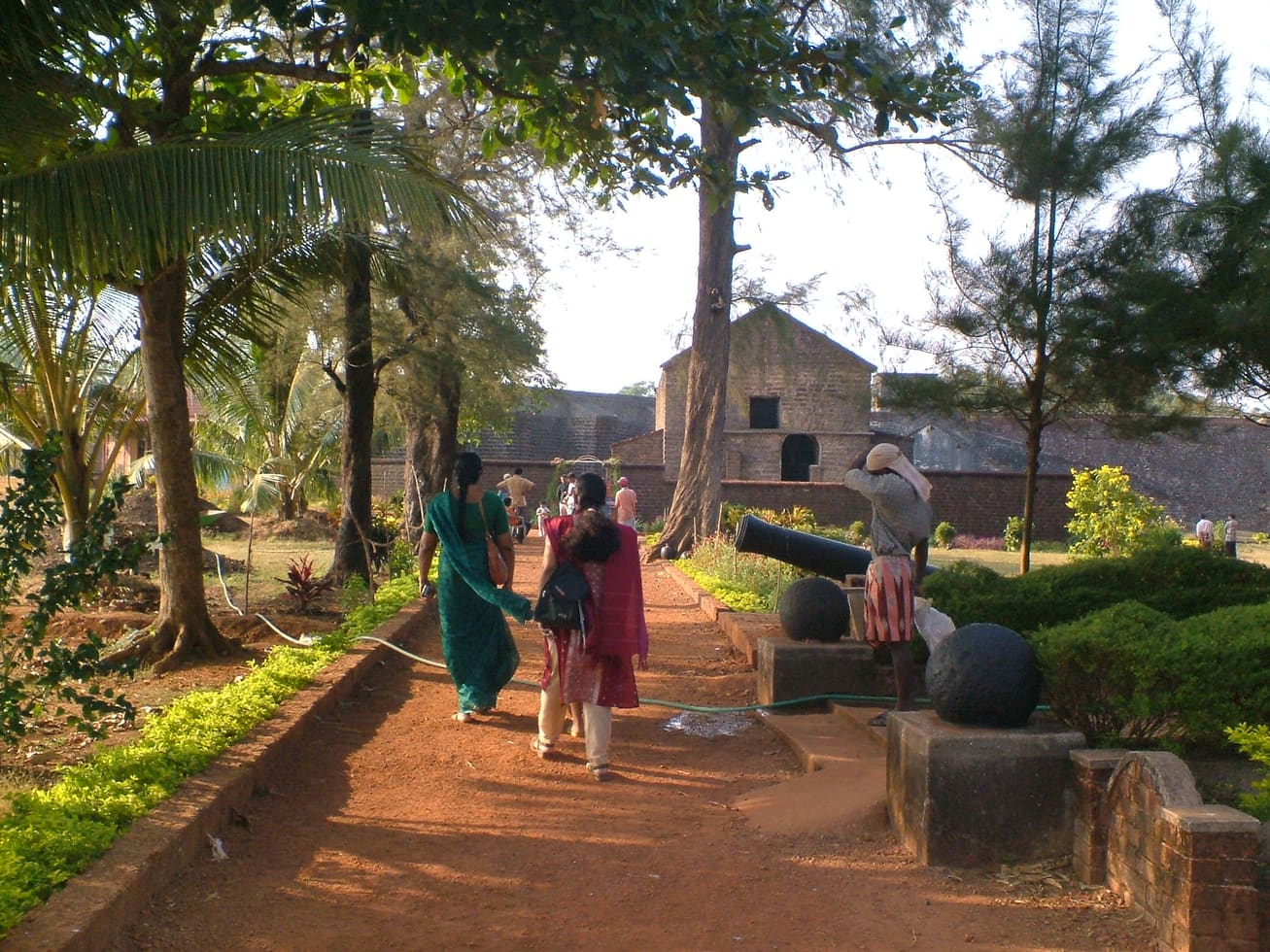
Payyambalam lies on the outskirts of Kannur, a city whose coast has been shaped for centuries by seafaring, trade and colonial contest — the nearby St Angelo Fort, raised by the Portuguese in the early sixteenth century and later held by the Dutch and the British, is a reminder of how prized this stretch of the Malabar shore once was to competing European powers.
The beach itself rose to prominence in the modern era less as a port and more as a public amenity. Over recent decades it was developed and landscaped into a maintained beach park, with gardens, lawns, pathways and family facilities added to what had been an open shoreline, turning it into Kannur’s premier recreational space.
Its civic character was sealed when the grounds beside the beach became a place of memorial. The mortal remains of the reformist journalist Swadeshabhimani Ramakrishna Pillai and of the Communist leader A. K. Gopalan were laid to rest here, and statues and samadhis honouring other prominent Kerala personalities followed — anchoring the beach in the region’s political and cultural memory.
The commissioning of Kanayi Kunhiraman’s “Mother and Child” sculpture gave the beach its defining artistic landmark. Kanayi, one of Kerala’s most eminent modern sculptors, is celebrated across the state for monumental public works, and his figure at Payyambalam lifted the shoreline from a simple picnic spot to a recognised cultural site.
Today Payyambalam is promoted by Kerala Tourism as one of Kannur’s signature attractions, and continues to serve the townspeople as it has for generations — a clean, watched-over public beach where recreation, remembrance and art share the same few hundred metres of sand.
Why visit
For the sunsets — Payyambalam’s wide, open horizon over the Arabian Sea makes it one of the finest places on the north Kerala coast to watch the sun go down.
For the “Mother and Child” sculpture by Kanayi Kunhiraman, the beach’s iconic landmark and its most photographed sight.
For a genuinely clean, broad and well-kept shoreline — one of the best-maintained public beaches in Kerala, safe and comfortable for families.
For the landscaped garden and beach park alongside the sand, with lawns, shaded seating, walking paths and children’s play areas.
For the memorials and samadhis of Kannur’s celebrated leaders, which give the beach an unusual layer of history and civic meaning.
For an easy, unhurried evening close to Kannur town — corn and ice-cream vendors, sea breeze, kite-flying and long walks on firm sand.