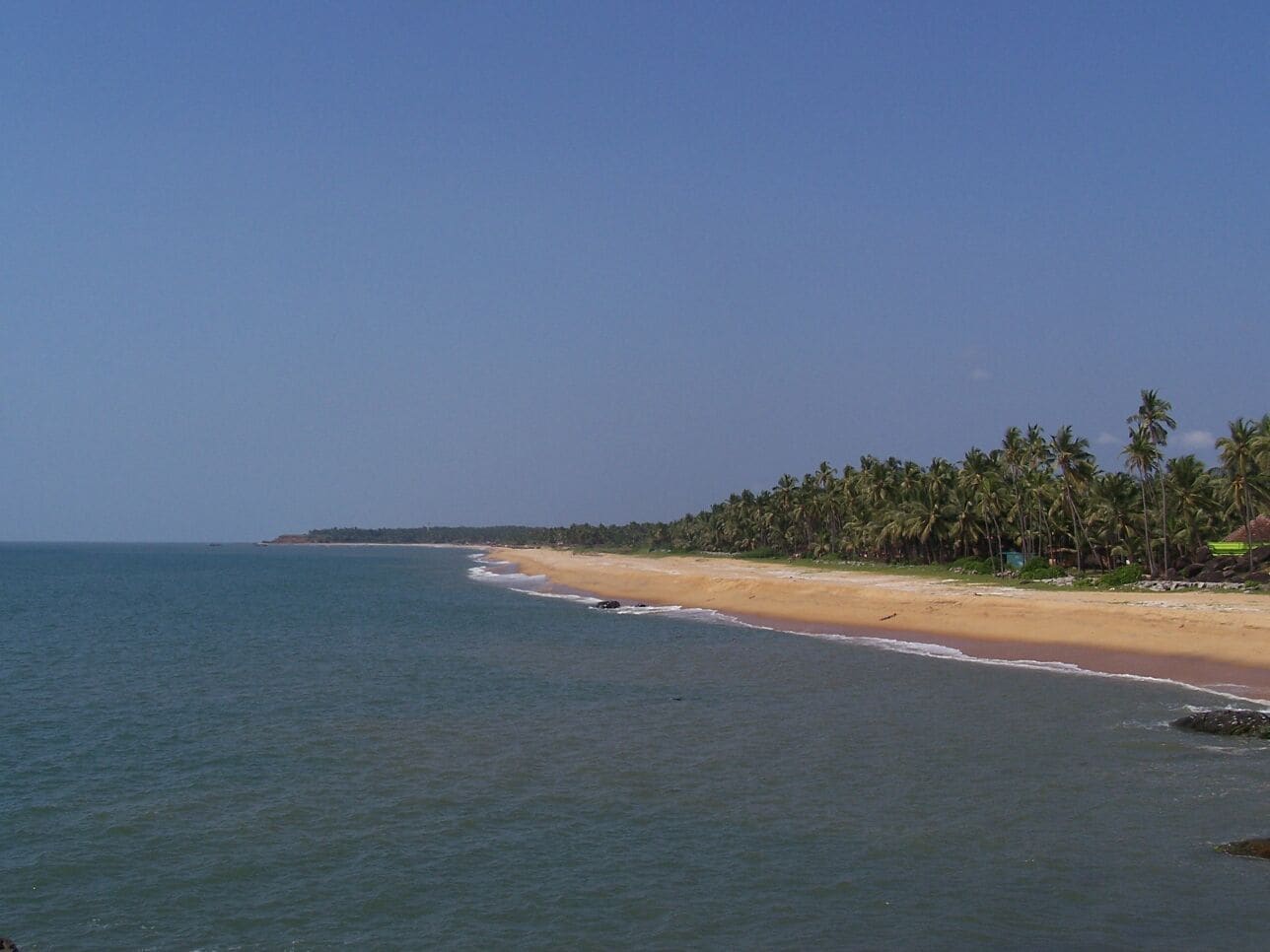
Bekal Beach is the golden crescent of sand that curls around the great laterite promontory of Bekal Fort in Kasaragod district, north Kerala — a landscaped, illuminated stretch on the Arabian Sea famed for its casuarina groves, laterite Theyyam sculptures and the storybook sunset that made it a Malayali film icon.
The story of Bekal Beach
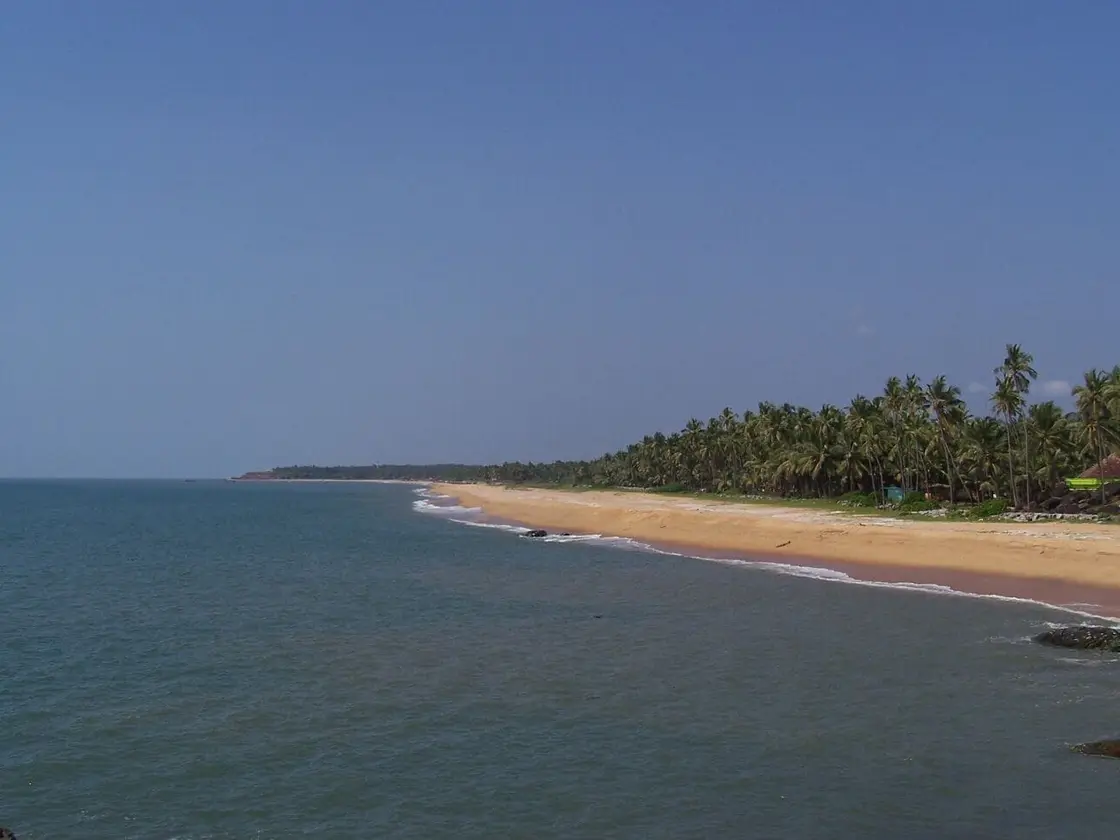
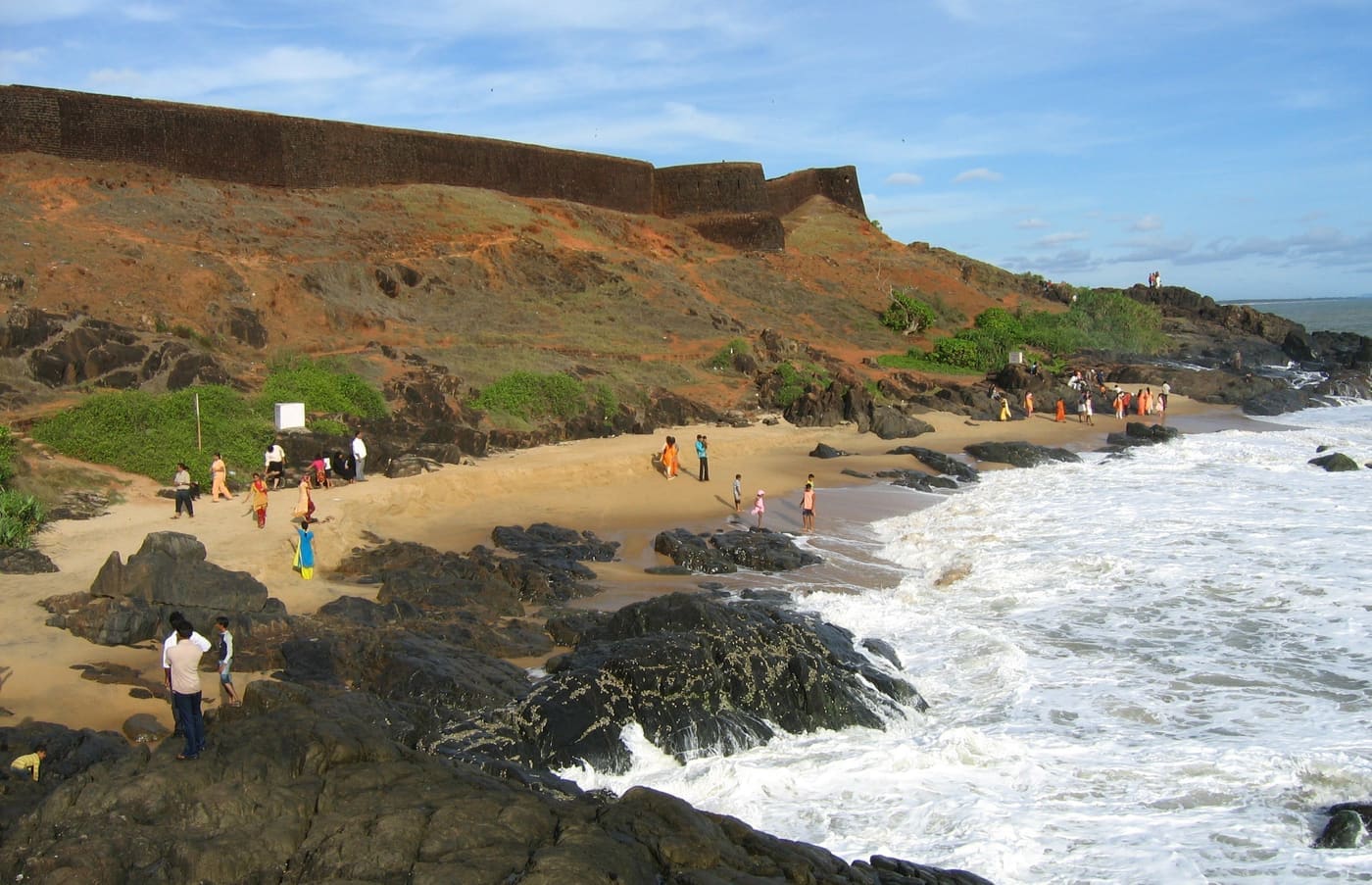
Some beaches are just sand and sea; Bekal is a beach with a fortress for a backdrop. As you walk the shoreline, the vast reddish-brown ramparts of Bekal Fort — one of the largest and best-preserved coastal forts in Kerala — rise from the headland to your north, its laterite walls glowing amber in the late-afternoon light while the Arabian Sea rolls in on your left. It is this rare pairing of monument and surf that gives Bekal Beach its distinctive character among Kerala's coastline.
The beach here has been deliberately shaped for wandering. The Bekal Resorts Development Corporation (BRDC) laid out the landscaped Bekal Beach Park along the fine coastal line, lining it with casuarina groves and threading a walkway through it so visitors can stroll the shore and drink in the panoramic view of the fort. Shaded multi-sheds and traditional resting pavilions locally called eru madams let you pause and simply let the sea breeze do its work — this is a beach engineered for slow, unhurried afternoons rather than crowds and commotion.
Look closely and you will find the beach doubles as an open-air gallery of north Kerala's own culture. BRDC installed sculptures of Theyyam — the fierce, painted ritual dance-deities of the Kasaragod-Kannur belt — carved from the region's characteristic laterite stone, and raised a shed whose walls carry murals painted by artisans from Nilambur. It is a quietly clever touch: the art roots the beach firmly in its own soil, so that even a casual visitor leaves with a hint of the Theyyam country they have wandered into.
For a whole generation of film lovers, though, Bekal means one thing: the song. Mani Ratnam shot the aching duet Tu Hi Re (Uyire in its Tamil version) for his 1995 film Bombay on this very promontory — Arvind Swamy and Manisha Koirala moving across the rain-washed ramparts and shoreline to A. R. Rahman's melody, filmed by cinematographer Rajiv Menon. That rain-drenched sequence of green, stone and sea turned Bekal into a place people came to feel rather than merely to see, and the association endures to this day.
As the afternoon tips over, the beach quietly fills for its main event. Bekal faces due west into the open Arabian Sea, so the sunset here is uninterrupted — the sky reddening behind the silhouetted fort and the water, with the beach illumination flickering on as dusk settles. Families spread out on the sand, children drift toward the play park, and photographers jockey for the frame where fort, sea and sky line up. Few Kerala sunsets come with so grand a stage.
Bekal is also a gateway rather than a full stop. A short hop south lie the calm waters of Kappil Beach, where the Kappil river slips into the sea, and the languid backwaters around Nileshwar, where houseboats glide between coconut-fringed banks. Combined with the fort on the headland, they make Bekal Beach the natural base for a slow, unspoiled corner of Kerala that most of the tourist rush still overlooks.
History
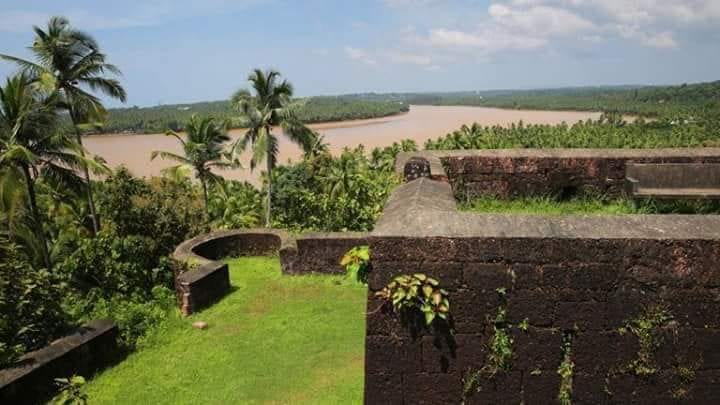
The story of Bekal Beach is inseparable from the fort that towers over it. The great circular laterite fortress on the headland is generally attributed to Shivappa Nayaka of the Keladi (Bednore) dynasty around the mid-17th century, though some accounts suggest an older fortification stood here earlier. Built for coastal defence, it was engineered with tiers of gun ports — the upper openings for long-range fire and the lower ones to strike ships that had drawn in close — commanding the very stretch of sea the beach now faces.
In the later 18th century the fort and its coast passed to the Mysore rulers Hyder Ali and Tipu Sultan, who used Bekal as an important military base on this frontier of their domain. The tall observation tower that still stands within the fort is associated with Tipu Sultan's period, a vantage point built to watch both land and the approaches from the Arabian Sea.
After Tipu Sultan's defeat by the British in the Fourth Anglo-Mysore War in 1799, the fort and surrounding territory came under the control of the East India Company, and Bekal eventually fell within the Madras Presidency's administration through the colonial era. The fort today is a protected monument under the Archaeological Survey of India, which conserves the ramparts that form the beach's dramatic backdrop.
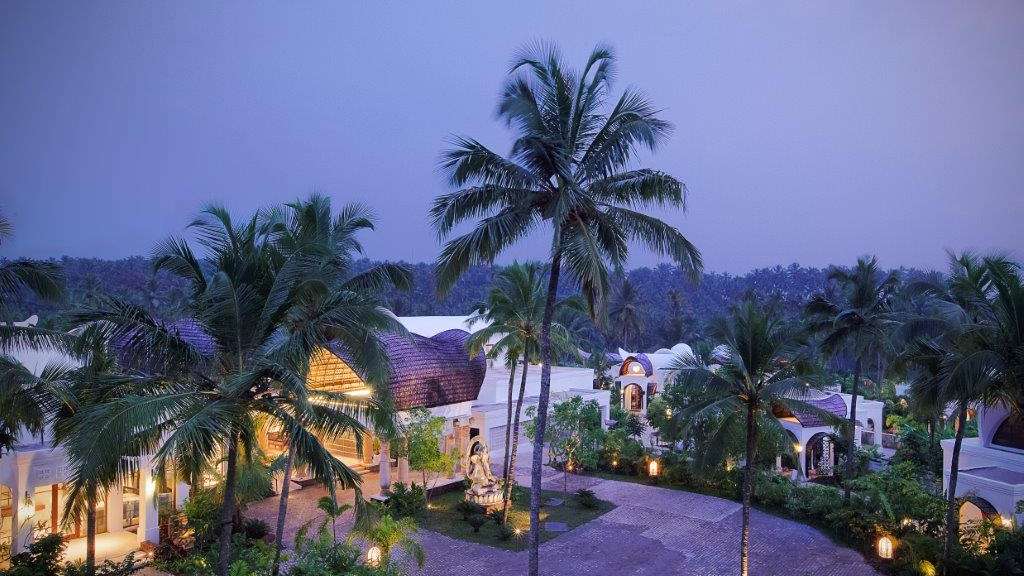
The beach itself, as a designed visitor destination, is a far more recent creation. The Bekal Resorts Development Corporation (BRDC) was established in 1995 to develop Bekal as an international-standard beach tourism destination, working on eco-friendly lines across a large tract of the Bekal coast. It was under this programme that the landscaped Bekal Beach Park, its walkway, casuarina planting, resting sheds, children's play area and evening illumination were laid out along the shore beside the fort.
The beautification drive also gave the beach its cultural signature — the laterite Theyyam sculptures and the Nilambur-artisan murals that BRDC installed to root the modern beach park in the ritual and artistic heritage of the Kasaragod region.
Why visit
The signature Kerala view: a broad Arabian Sea beach with the immense laterite ramparts of Bekal Fort rising directly behind it — a fort-and-surf pairing you will not find on any other Kerala shore.
One of Kerala's great west-facing sunsets, with the sun sinking into the open sea behind the silhouetted fort and the beach illumination coming alive at dusk.
The landscaped Bekal Beach Park — casuarina groves, a seaside walkway, shaded eru madam pavilions and a children's play area — designed for relaxed, unhurried strolling rather than crowds.
The laterite Theyyam sculptures and Nilambur-artisan murals that turn the beach into an open-air showcase of north Kerala's ritual and folk-art culture.
Cinematic pilgrimage: this is the setting of the beloved Tu Hi Re / Uyire song from Mani Ratnam's Bombay (1995), a draw for film lovers across south India.
A perfect base for exploring nearby Kappil Beach and the Nileshwar backwaters, making Bekal the anchor of a quiet, still-unspoilt corner of Kerala.