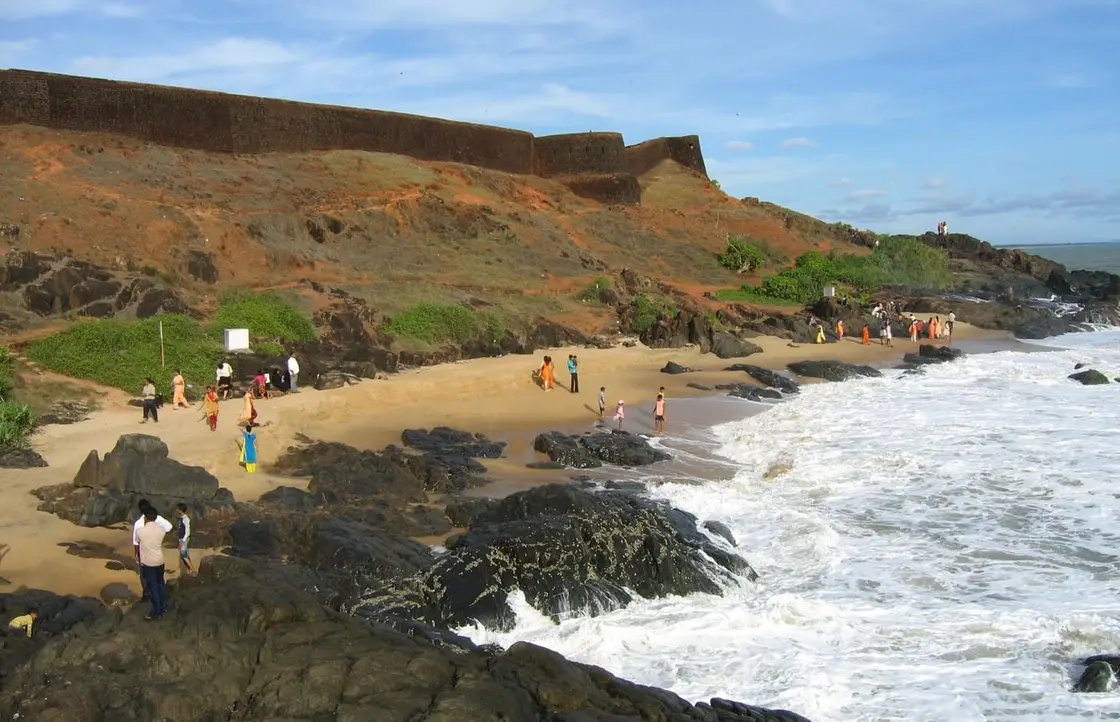
Bekal Fort is the largest and best-preserved fort in Kerala — a vast keyhole-shaped shell of laterite blocks spread across a headland that juts into the Arabian Sea in Kasaragod district. There are no palaces or grand halls inside; its genius is defensive geometry, and its reward is the sea itself, seen from ramparts that curve for close to half a kilometre above the surf. Made famous nationwide by the 'Uyire' song sequence in Mani Ratnam's 1995 film 'Bombay', it draws travellers as much for its cinematic sunsets and the adjoining Bekal beach as for its four centuries of layered history.
The story of Bekal Fort
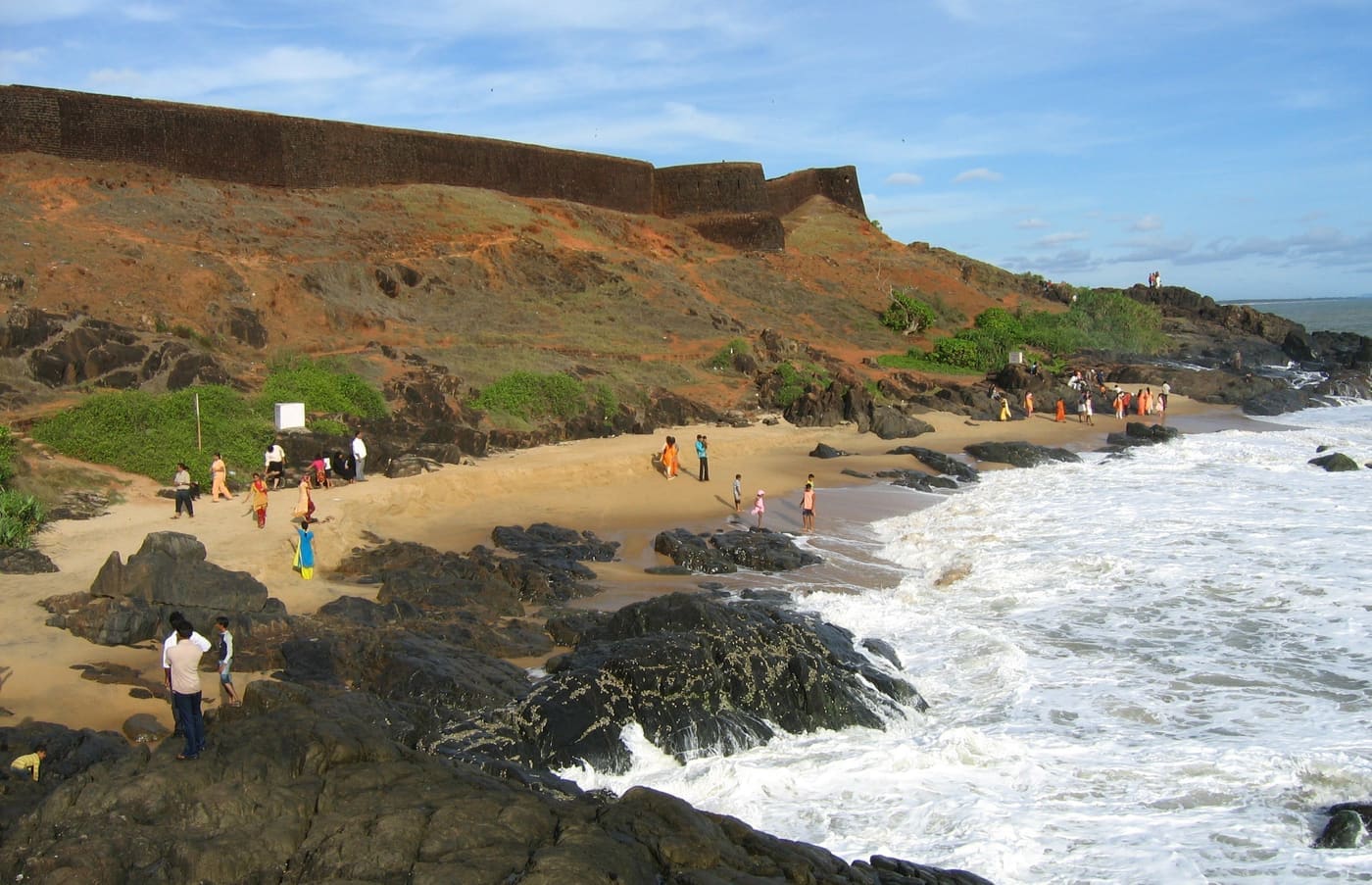
Approach Bekal from the land side and the fort keeps its secret. What you first meet is a plain outer wall and a modest gateway; only once you climb onto the ramparts does the shape reveal itself — a great keyhole of laterite laid over a rocky promontory, with the wall sweeping in a long curve around the seaward edge. Covering roughly 40 acres, it is comfortably the biggest fort in Kerala, and unlike hill forts built to loom over a landscape, Bekal was built to watch the water. Almost every important structure looks out to sea, because the sea was where danger, and trade, came from.
The single most photographed feature is the observation tower on the seaward bastion — a squat, circular platform reached by a flight of steps, from whose top the whole coastline unrolls: the ramparts below, the surf breaking against the headland, and the beach curving away to the south. It is generally credited to Tipu Sultan's period, raised for keeping watch over the approaches by sea. On a clear evening the tower is where everyone gathers, cameras up, as the light turns gold over the Arabian Sea.
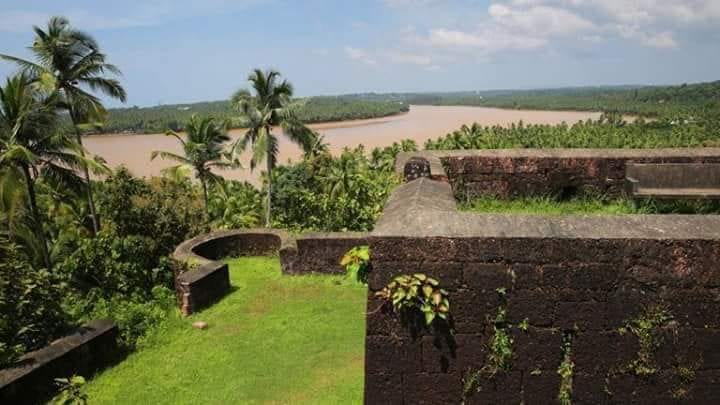
Walk the ramparts and the fort's military mind shows itself in detail. The laterite walls are pierced with rows of narrow slits and wider embrasures — the lower openings angled for muskets and cannon at attackers near the base, the upper ones for firing at those further off, a layered field of fire that left few blind spots. Zig-zag steps climb to the bastions, and a broad walkway runs along the top of the wall. Set into the ground within the fort is a deep water tank fed to sustain a garrison through a siege, and the remains of a magazine where ammunition was stored. A tunnel is said to run from the fort towards the south, its mouth now closed — long believed to have been an escape or supply route for defenders (traditionally described; unverified).
For a whole generation of Indians, Bekal is first of all a film location. In 1995 Mani Ratnam shot the 'Uyire, Uyire' song from 'Bombay' here, with A. R. Rahman's music carrying images of the fort's curving walls and the sea beyond into cinemas across the country. The sequence turned an obscure Kasaragod ruin into a recognisable landmark almost overnight, and the ramparts are still walked by visitors humming the tune. Other films and countless music videos have used the same sweep of wall and water since.
Sunset is Bekal's headline act. Because the whole seaward wall faces west across open ocean, the fort catches the last light full-on — the laterite glowing orange, long shadows thrown across the ramparts, and the tower silhouetted against a burning sky. Evenings draw the biggest crowds, and the wide walls give everyone room to find a spot. Come an hour before the light goes to claim a place on the seaward bastion.
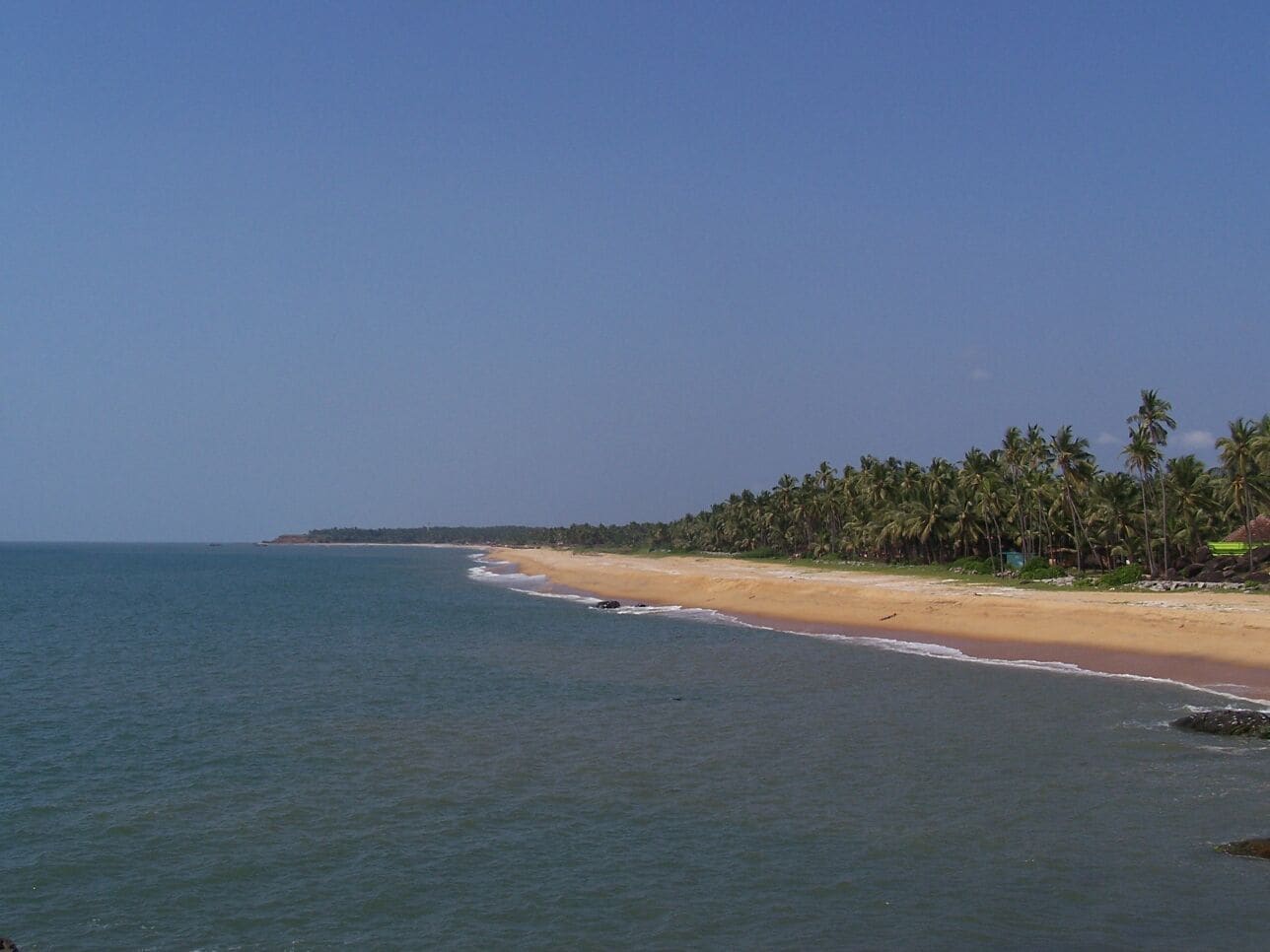
Just outside the walls lies Bekal beach, a broad stretch of sand where the fort's headland meets the sea — a natural companion to the climb, with a landscaped promenade and views back up at the ramparts. Together the fort and beach make an easy half-day: the ruins for history and the long sea view, the sand for a walk once the heat eases. The site is exposed and largely treeless, so the walls bake in the afternoon; the reward for timing your visit for late afternoon is both cooler stone and the best light of the day.
History
Bekal Fort as it stands today was built by the Keladi (Ikkeri) Nayaka dynasty of coastal Karnataka in the mid-17th century. Construction is generally attributed to Shivappa Nayaka around 1650, with several accounts noting that work was begun under Hiriya Venkatappa Nayaka and completed in Shivappa Nayaka's reign. The Nayakas raised it as a coastal stronghold to guard their territory and the lucrative spice trade of the Malabar coast against rivals and seaborne threats.
The headland itself had strategic value long before the Nayakas. Local tradition and some historians hold that the site lay within the domain of the Kolathiri Rajas and passed through earlier hands before the Keladi Nayakas fortified it in laterite; the fort's origins are sometimes traced to this pre-Nayaka period (traditionally described — dates before 1650 are uncertain).
In 1763 Hyder Ali of Mysore captured Bekal, and the fort became a significant military station for the Mysore rulers. Under his son Tipu Sultan it served as a base during campaigns in Malabar, and the seaward observation tower is commonly credited to this Mysore period, built to watch the coast for approaching ships.
After Tipu Sultan was killed at Srirangapatna in the Fourth Anglo-Mysore War in 1799, Bekal passed to the British East India Company. It became an administrative and military centre for the surrounding region under Company and later British rule, before the area was eventually organised into the Bekal taluk of South Canara.
Within the walls, several original features survive: a deep water tank with flights of steps down to it, cut to store water for a besieged garrison; the remains of a powder magazine; and the openings and bastions of the fort's defensive scheme. The fort is today a protected monument, and the surrounding headland and beach have been developed as a major tourism destination for Kasaragod and north Kerala.
Why visit
The largest and best-preserved fort in Kerala — a genuinely impressive 40-acre laterite headland fort you can walk almost end to end.
The seaward observation tower and ramparts give a sweeping, unbroken view of the Arabian Sea and the coastline curving away to the south.
One of Kerala's finest sunset spots: the whole seaward wall faces west, so the fort catches the last light full-on.
The 'Uyire' song location from Mani Ratnam's 1995 'Bombay' — an instantly recognisable spot for a generation of film-lovers.
Adjoining Bekal beach and promenade make it an easy fort-and-sea half-day rather than a single monument stop.
Layered history you can read in the stone — Keladi Nayaka defences, a Mysore-era watchtower, and a British-period afterlife, all on one headland.