The story
At Thalankara in Kasaragod town stands a mosque said to be among the very first raised on Indian soil — a tiered, timber-carved shrine that tradition ties to Malik Ibn Dinar, the traveller-saint remembered as one of the earliest bearers of Islam to the Malabar coast, and believed by many to be buried in its very grounds.
The story of Malik Deenar Mosque
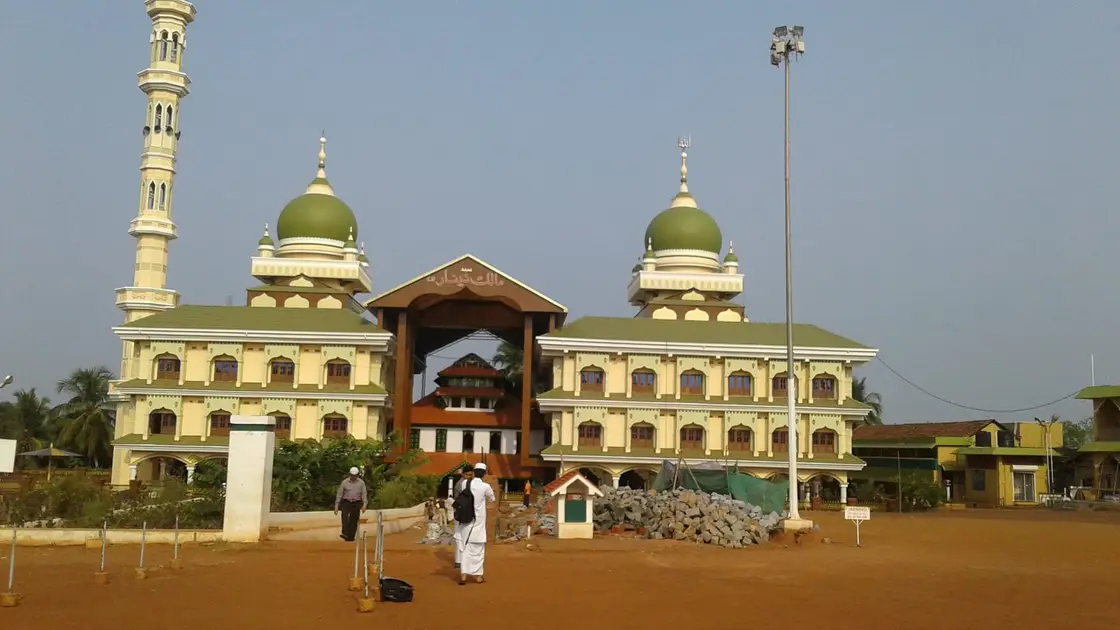
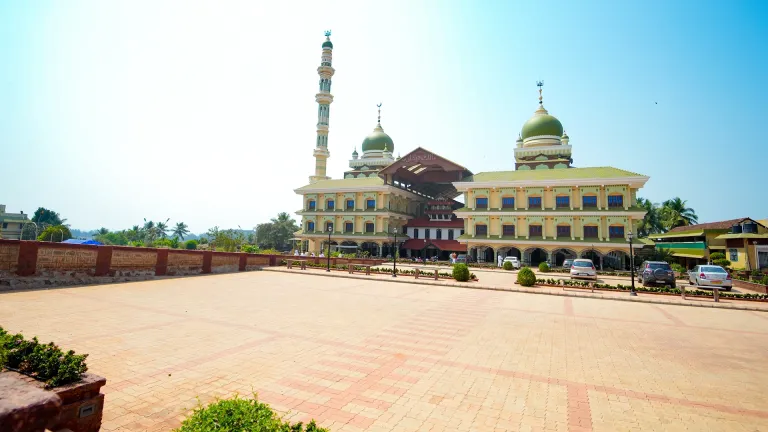
The Malik Deenar Grand Juma Masjid rises quietly in the Thalankara (also spelt Thalangara) neighbourhood of Kasaragod town, in Kerala’s northernmost district. To the traveller it may first read as a handsome, whitewashed mosque with domes and a minaret; but locals will tell you that beneath the later stonework lies one of the oldest continuously venerated Muslim places of worship in India, wound tightly around the memory of Malik Ibn Dinar (Malik Deenar) and his companions.
Malik Ibn Dinar is remembered in Islamic tradition as a Tabi‘i — a member of the generation that followed the Prophet Muhammad’s Companions. He is said to have belonged to a group of early Muslim travellers and traders who reached the Malabar coast in the seventh century AD and, alongside their commerce, carried the new faith into the port towns of what is today Kerala and coastal Karnataka. In this telling, the Kasaragod mosque is not an isolated shrine but one link in a chain of early mosques planted by Malik Ibn Dinar and his followers along the coast (traditional account — dating and details are debated by scholars).
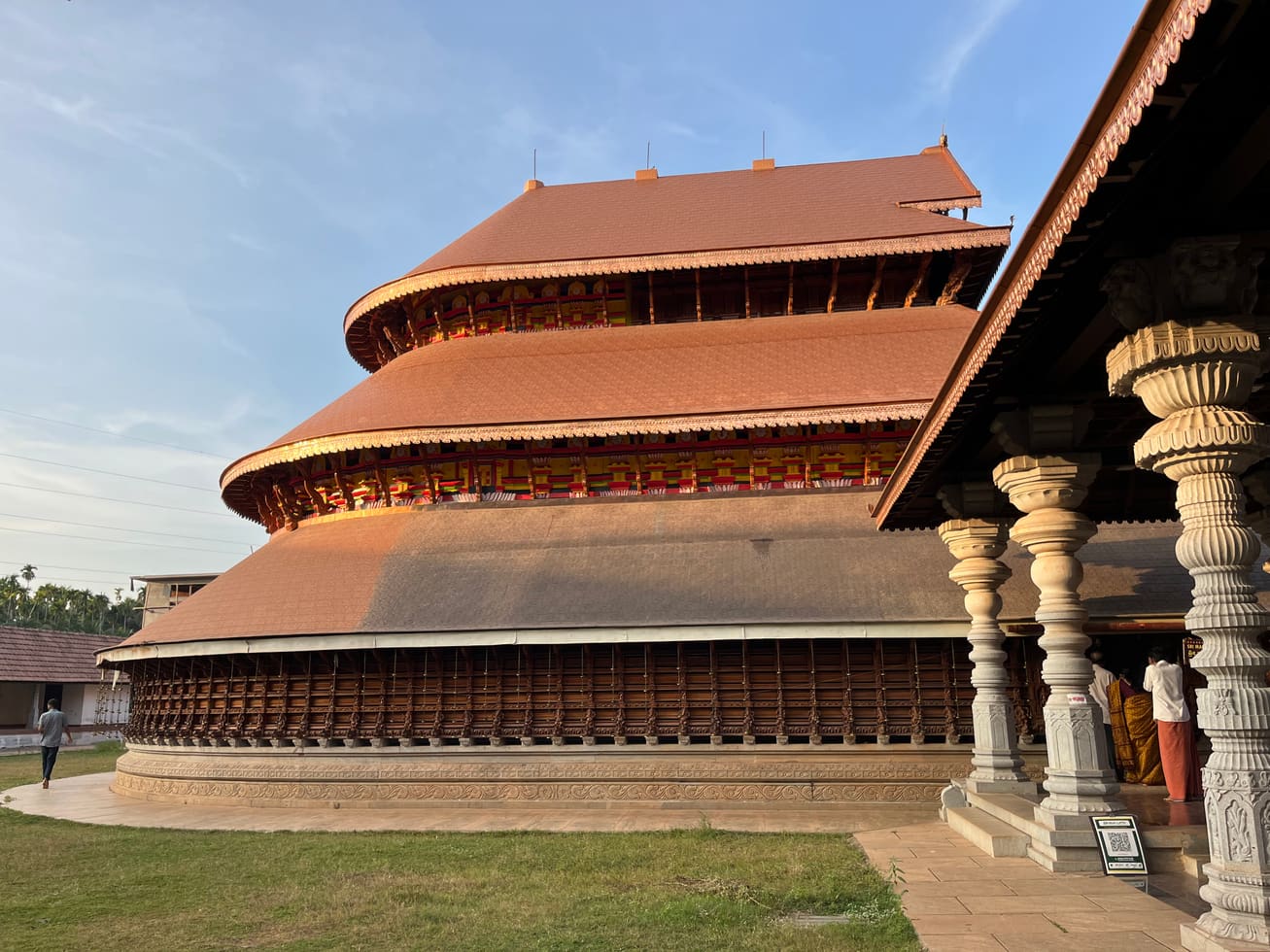
The building the pilgrim sees today is layered. Older descriptions recall a humble original structure with a thatched or tiled roof, later rebuilt on a grander scale in the region’s distinctive idiom — a two-storeyed timber edifice with tiered, sloping roofs and gables, its massive beams and pillars carved with Arabic inscriptions. This blend of Kerala temple-and-palace carpentry with Islamic devotional purpose gives the mosque its unusual character, quite unlike the domed skyline most visitors associate with mosques elsewhere (indicative — confirm details on site).
What draws pilgrims above all is the mazar — the tomb within the complex. By long tradition it is revered as the resting place of Malik Deenar himself, making the mosque a major ziyarat (pilgrimage) destination for Muslims across South India and beyond. Some historians, however, hold that the grave is that of a descendant — variously named as Malik Ibn Muhammad — and that the burial of Malik Ibn Dinar himself is uncertain. Roampedia repeats this as devotional tradition rather than settled fact; the accounts genuinely differ (traditional/contested — verify locally).
The mosque remains a living place of worship, not a museum. Five daily prayers, the Friday congregation and the rhythms of the Islamic calendar continue here as they have for centuries. The most vivid moment in its year is the annual Uroos (Urs), a commemoration of Malik Ibn Dinar’s arrival and legacy, when the shrine fills with visitors, flags, recitation and communal feeding (dates vary with the Islamic calendar — confirm before travelling).
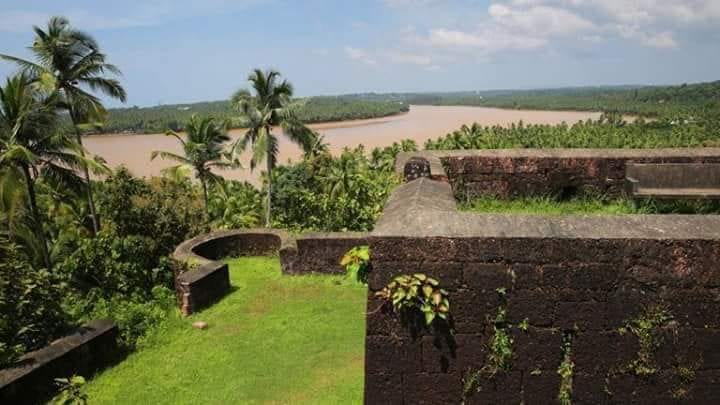
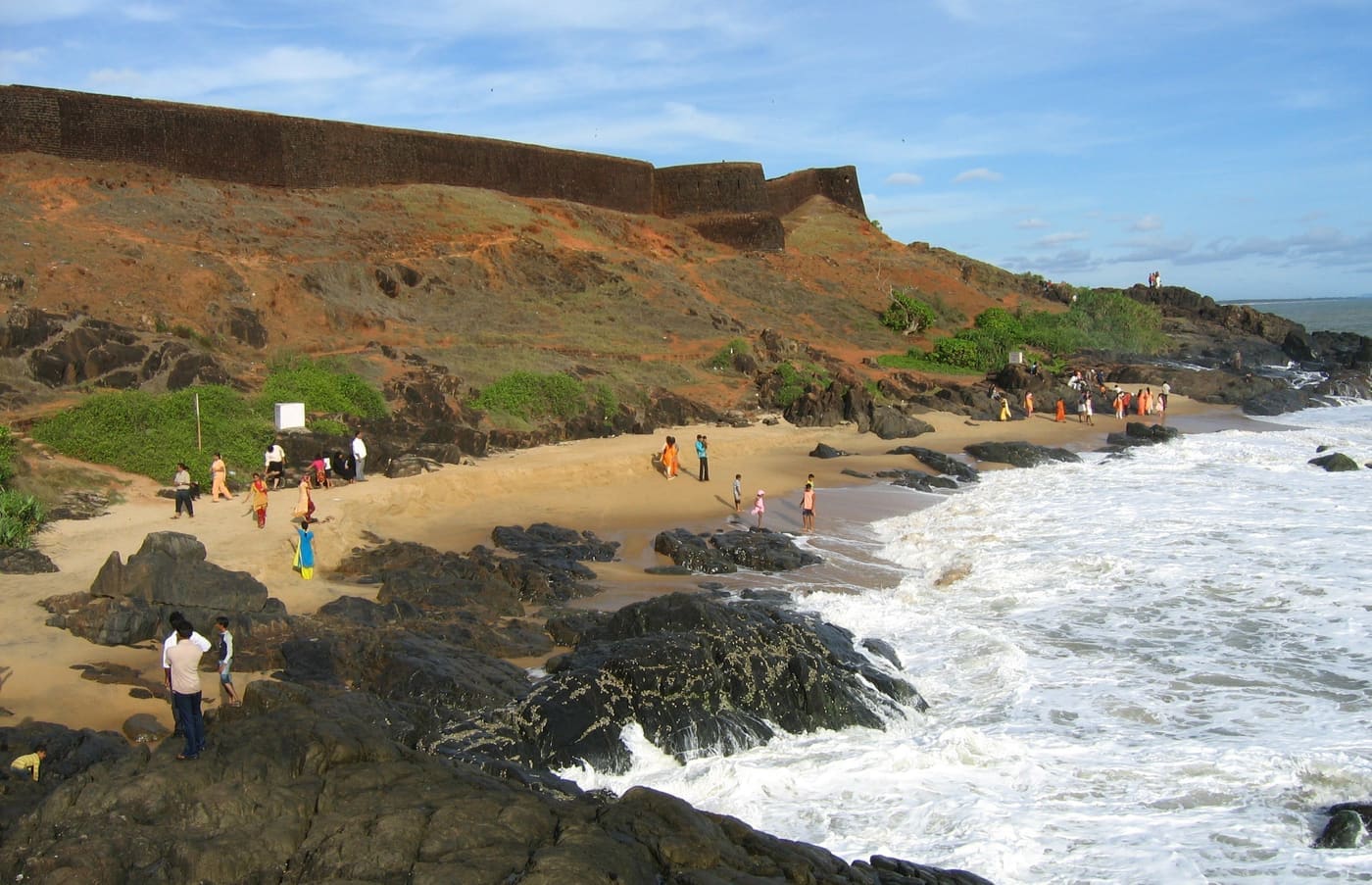
For the respectful visitor, the appeal is threefold: a genuinely ancient thread of Kerala’s Islamic history; a rare surviving example of Kerala-style mosque architecture; and the quiet, lived devotion of a shrine still central to Kasaragod’s Muslim community. It sits within easy reach of the town’s other heritage — the great Bekal Fort lies a short drive south — making Thalankara a natural stop on any thoughtful tour of Kerala’s north.
Legend & myth
The story most often told here belongs to the wider Malabar tradition of Islam’s arrival. In it, a Chera ruler remembered as Cheraman Perumal is said to have witnessed the splitting of the moon, sought out its meaning, and — moved by what he learned of the new faith — travelled towards Arabia, where he is believed to have embraced Islam. Malik Ibn Dinar and his companions, in this account, arrived on the Malabar coast in the wake of that encounter and founded a chain of mosques, of which Kasaragod is counted one.
The same tradition names the sister-mosque at Kodungallur — the Cheraman Juma Masjid — as the first of these foundations, with Kasaragod, Kollam, Madayi, Mangalore, Kannur, Dharmadam, Panthalayini, Chaliyam and others following. Several of these accounts trace back to a medieval text, the Qissat Shakarwati Farmad. It is a beautiful and deeply held story, and it anchors the community’s sense of its own antiquity.
Historians, though, treat the seventh-century dating with caution. The traditional narrative — the moon-splitting, the royal conversion, the precise founding years such as 642–643 CE — rests largely on later chronicles rather than contemporary evidence, and scholarly opinion on when exactly Islam reached the coast, and how, remains divided. Roampedia presents all of this respectfully as living tradition and legend, not as verified history.
History
Written and devotional sources describe the Kasaragod mosque as part of a coastal network of early mosques associated with Malik Ibn Dinar. The Qissat Shakarwati Farmad and later Kerala Muslim histories list foundations at Kodungallur, Kollam, Madayi, Barkur, Mangalore, Kasaragod, Kannur, Dharmadam, Panthalayini and Chaliyam — the tradition placing their establishment in the years after Malik Ibn Dinar’s arrival on the Malabar coast (seventh century AD, by tradition; scholars debate the dating).
The Thalankara mosque is traditionally said to have been completed around 22 AH — roughly 642–643 CE — a date carried in local accounts and repeated by tourism sources, which would rank it among the oldest mosques in India (traditional dating — historically contested, confirm as tradition rather than fact). Whatever its true age, the site has clearly been a centre of Muslim worship in northern Kerala for a very long time.
The mazar, or tomb, is the mosque’s spiritual heart. Popular tradition holds that Malik Deenar died at Thalankara and is buried here, which is why the shrine remains such a powerful draw for pilgrims. Some historians instead identify the principal grave as that of a descendant of Malik Ibn Dinar — Malik Ibn Muhammad is one name given — while noting the tradition that Malik Ibn Dinar himself lies here. The differing accounts sit side by side and should be treated as such (contested tradition).
Architecturally, the mosque is prized as a surviving expression of the Kerala-Islamic building style: a two-storeyed timber structure with tiered, sloping roofs, gables and richly carved wooden beams and pillars, several bearing Arabic inscriptions that record its history. Older descriptions speak of an early, simpler shrine — even of marble floor-stones said to have been brought from Arabia — later rebuilt in grander, palace-like form by local artisans (traditional detail — verify on site).
The building has been repaired and enlarged more than once; sources point to a major restoration in the nineteenth century and a comprehensive renovation in recent years that added wings, domes and a minaret in Islamic style, raising its congregational capacity while retaining the shrine’s traditional core. Today the mosque functions both as a prominent pilgrim centre of Kasaragod district and as an active neighbourhood mosque (renovation details indicative — confirm locally).
Why visit
Stand at one of India’s oldest and most revered mosques, woven into the earliest chapter of Islam on the Malabar coast (by tradition).
See a rare surviving example of Kerala-style mosque architecture — tiered timber roofs, gables and carved wooden beams inscribed in Arabic.
Pay respects at the mazar traditionally venerated as the tomb of Malik Deenar, a major South Indian pilgrimage draw.
Experience a living shrine — daily prayers, Friday congregation and the rhythms of a centuries-old community — rather than a museum piece.
Time a visit with the annual Uroos festival for flags, recitation, ziyarat and communal feasting (dates shift with the Islamic calendar).
Combine it with Kasaragod’s wider heritage — Bekal Fort, backwaters and the town’s old quarters lie close by.