The story
Rising in three copper-sheathed tiers above the green banks of the Madhuvahini river, Madhur Temple is where a Shiva shrine came to be ruled, in the hearts of pilgrims, by a plump little Ganapathi said to have grown out of a child’s idle wall-drawing.
The story of Madhur Temple
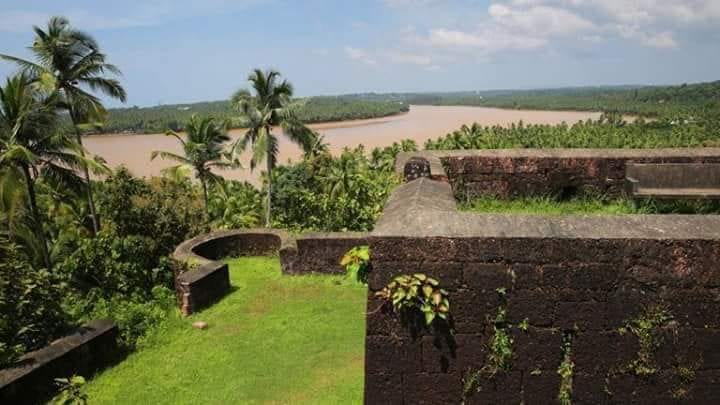
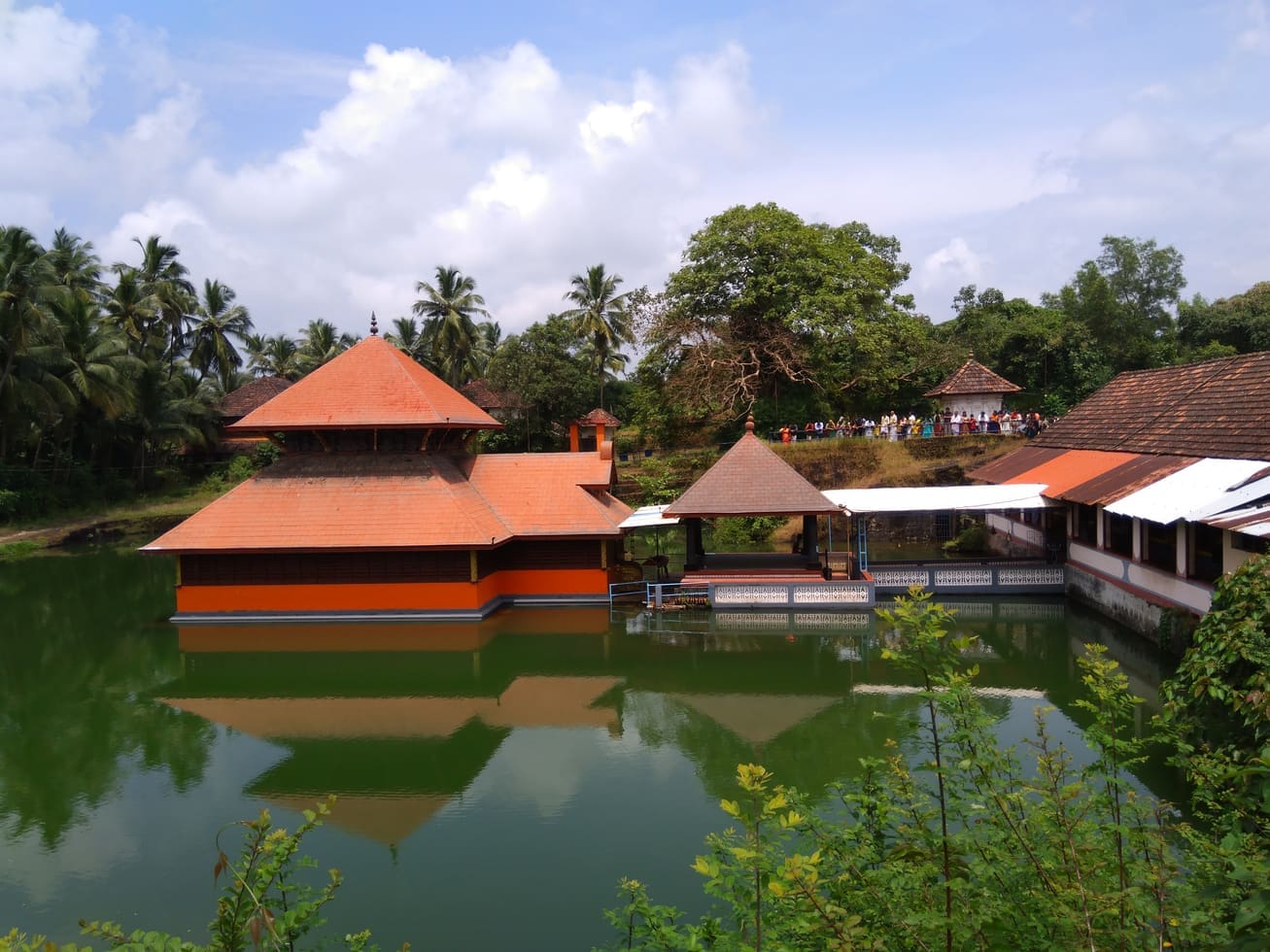
A few kilometres northeast of Kasaragod town, in the village of Madhur, the temple properly known as the Sri Madanantheswara Siddhivinayaka Temple stands on a slight rise above the Madhuvahini — a stream also called the Mogral river. The setting is quintessentially coastal Kerala: paddy and palm on the far bank, a broad temple tank, and the layered pyramid of the shrine’s roofs catching the light. Though its formal dedication is to Shiva, almost everyone who makes the journey comes to see the Ganapathi, and the temple is widely known simply as Madhur Mahaganapathi.
The presiding deity is Lord Shiva, worshipped here as Madanantheswara — a name usually read as ‘the lord who destroyed Madana (Kama)’, the god of desire. Tradition holds that the Shiva linga is an Udbhava Murti, a self-manifested image not carved by human hands, discovered long ago by a woman of the Tulu Moger community remembered as Madaru; her name is often given as the root of the place-name Madhur (indicative — local traditions vary).
Yet it is Ganapathi who dominates the devotional life of the temple. The image sits within the main sanctum, and the daily rhythm of worship, the crowds and the most beloved offerings all circle around him. This gentle inversion — a Shiva temple famous for its elephant-headed son — is part of what gives Madhur its distinct character, and it is captured in the affectionate local name for the deity: Bodajja, the ‘big-bellied’ one.
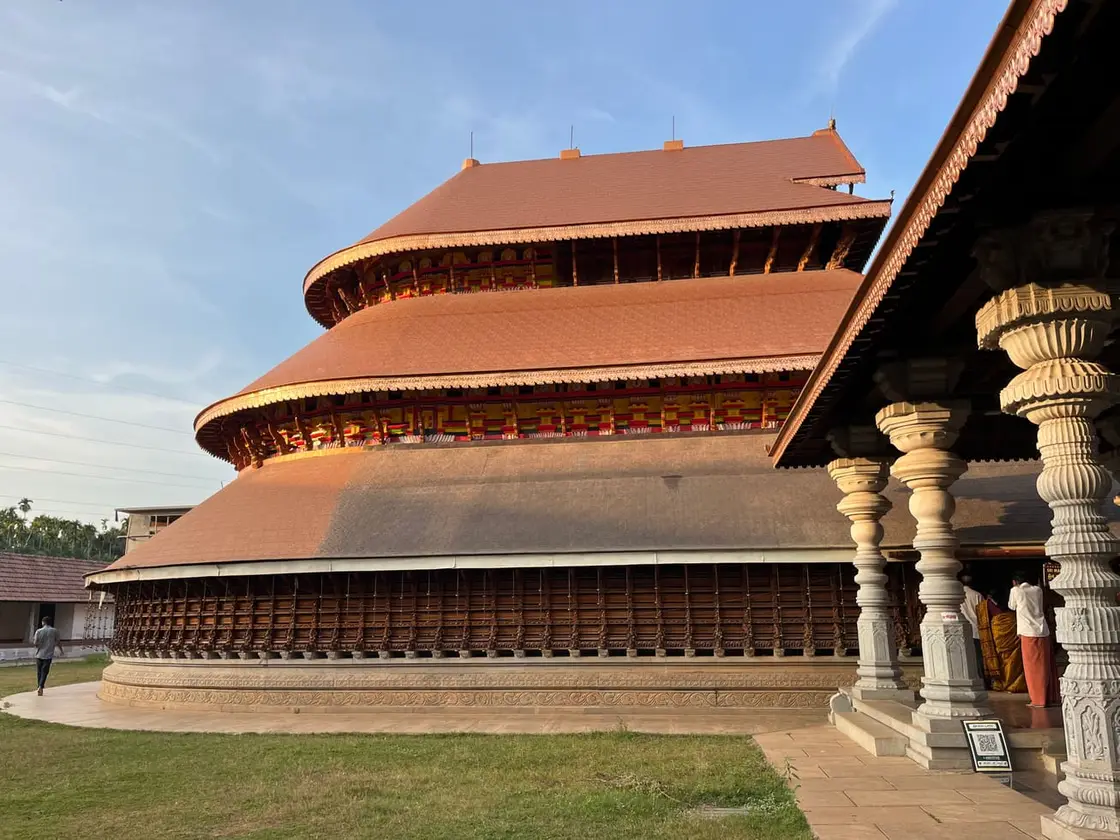
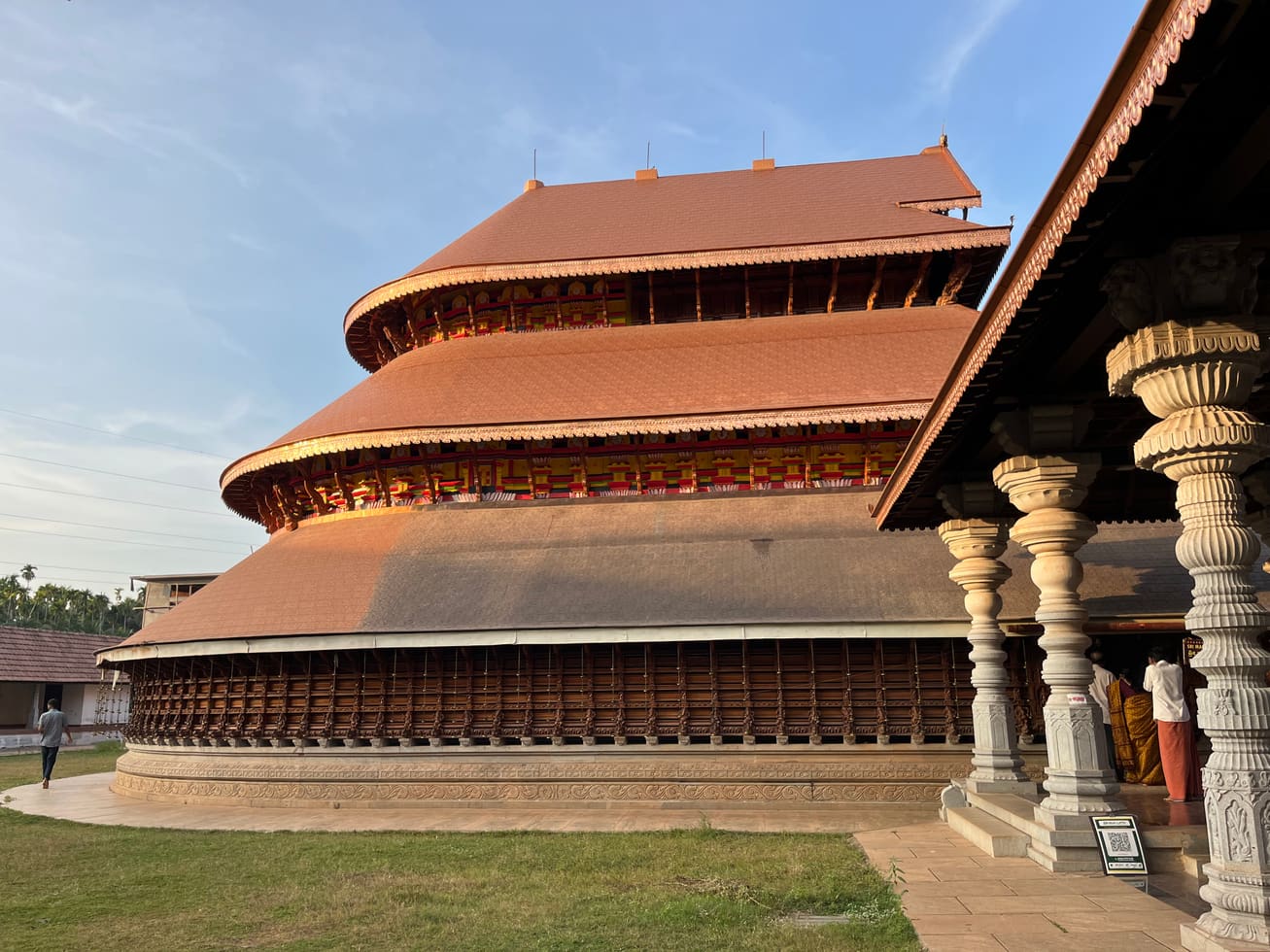
Architecturally the temple is a showpiece of the Kerala–Tulunadu tradition. Its sanctum is built in the gajaprishta plan — the apsidal, rounded form said to resemble an elephant’s back — and is crowned by a distinctive three-tiered roof, the lower tiers tiled and the whole surmounted by copper plating that gives the shrine its glinting silhouette. A cloistered courtyard, carved wooden pillars and beams, and stucco figures on the walls reflect a blend of influences often described as Hindu with Jain touches.
Inside, the Namaskara Mandapam and the sanctum walls carry a wealth of woodwork and mural detail: rows of Ganesha in varied poses along the lower walls, and carved episodes drawn from the Ramayana. Within the compound lies a deep, sacred well whose water is held to be curative and is said to lie perpetually shadowed from direct sunlight — the same well that anchors the temple’s most famous historical legend.
Madhur is counted among a small group of ancient Ganapathi shrines of the old Tulunadu region, and its river-and-roof composition has made it one of the most photographed temples of Kasaragod district. It remains an active place of worship administered as a public temple, drawing steady streams of pilgrims from Kerala and neighbouring coastal Karnataka, and swelling greatly on festival days.
Legend & myth
The best-loved story of Madhur explains why a Shiva temple is ruled by Ganapathi. As tradition tells it, a young boy — in many versions the priest’s own son — idly drew a figure of Ganapathi on the southern wall of the sanctum while at play. Day by day, to everyone’s astonishment, the drawing is said to have swelled and grown fat, until the child, half in wonder and half in affection, called it Bodajja or Bodda Ganesha, the ‘pot-bellied’ one. The Ganapathi venerated at Madhur is believed to be that self-grown image, and the belief that the deity keeps ‘growing’ underlies the temple’s signature offering, the Moodappa Seva (recounted as devotional legend, offered in faith rather than as historical fact).
The Moodappa (or Moodappam) Seva grows directly out of that legend: on the grandest occasions the entire Mahaganapathi image is ceremonially covered — ‘moodu’, to cover — in a thick coat of sweet appam made from rice, jaggery and ghee, so that the swelling god is literally clothed in his favourite food. Such a full Moodappa is held only rarely, years apart. In everyday worship the same idea lives on in the offering of appa (a sweet rice cake) as prasada, and in the celebrated Sahasrappa, the offering of a thousand appas.
The temple’s second great legend concerns Tipu Sultan. As the tradition runs, during his southern campaigns the ruler of Mysore came to Madhur intending to demolish the shrine, but after drinking water from the temple well he is said to have relented and spared it — leaving, to satisfy his soldiers and advisers, only a single cut struck with his sword on the wall by the well. A sword-mark shown to visitors near the temple well is pointed out as this very mark (related as long-standing local legend; it is not established history, and details differ between tellings).
History
Madhur’s documented origins are usually placed in the medieval Tulunadu era. The shrine is commonly said to have been established by the Mayipadi (Mypadi) rulers of the Kumbla principality, with the core of the temple attributed to around the 10th century and significant renovation and expansion in the 15th century (indicative — dates in popular sources vary and are not precisely fixed).
The temple belongs to the broader Tulu–Kerala temple culture of the far north of Kerala, a region historically linked with the Kumbla and Kasaragod chiefdoms. It is frequently counted among a set of ancient Ganapathi temples of old Tulunadu, a grouping that reflects the deep local roots of Ganesha worship along this stretch of coast (indicative — such lists differ between sources).
The physical fabric visible today — the gajaprishta sanctum, the three-tiered copper-crowned roof, the wooden pillars and carved beams, the stucco and mural work — reflects successive phases of building and restoration in the characteristic Kerala style, rather than a single moment of construction. The woodwork depicting Ganesha and Ramayana scenes is among the features most often cited by heritage descriptions of the temple.
The Tipu Sultan episode situates the temple, at least in memory, within the turbulent late-18th-century history of the Mysore campaigns across Malabar and the Tulu coast, when many temples in the region were affected. At Madhur the story is preserved as one of survival rather than destruction — a narrative kept alive by the sword-mark by the well (recounted as tradition; contemporaneous documentary confirmation is lacking).
In the modern period the temple is administered as a public institution and functions as one of the principal pilgrimage and cultural landmarks of Kasaragod district, its riverside profile a recurring image in Kerala Tourism’s presentation of the Malabar and Kasaragod region.
Why visit
See the famous Bodajja Mahaganapathi and the temple whose Ganesha is said to have grown from a child’s wall-drawing.
Admire textbook Kerala temple architecture — the elephant-back gajaprishta sanctum under a three-tiered, copper-plated roof.
Take in the serene riverside setting on the banks of the Madhuvahini, with the temple tank and palm-lined far bank.
Study the woodcarvings and murals — rows of Ganesha and carved Ramayana episodes in the mandapam and along the walls.
Hear, on the spot, two of coastal Kerala’s best-known temple legends: the growing idol and the Tipu Sultan sword-mark by the sacred well.
Time a visit to a festival — especially the rare, spectacular Moodappa Seva when the whole idol is clothed in sweet appam.