The story
Set in the middle of a spring-fed lake near Kumbla in Kasaragod, the Ananthapura Lake Temple is the only lake temple in Kerala — a serene shrine reached by a single footbridge, revered as the original seat of Ananthapadmanabha and famous for its long tradition of a guardian crocodile.
The story of Ananthapura Lake Temple
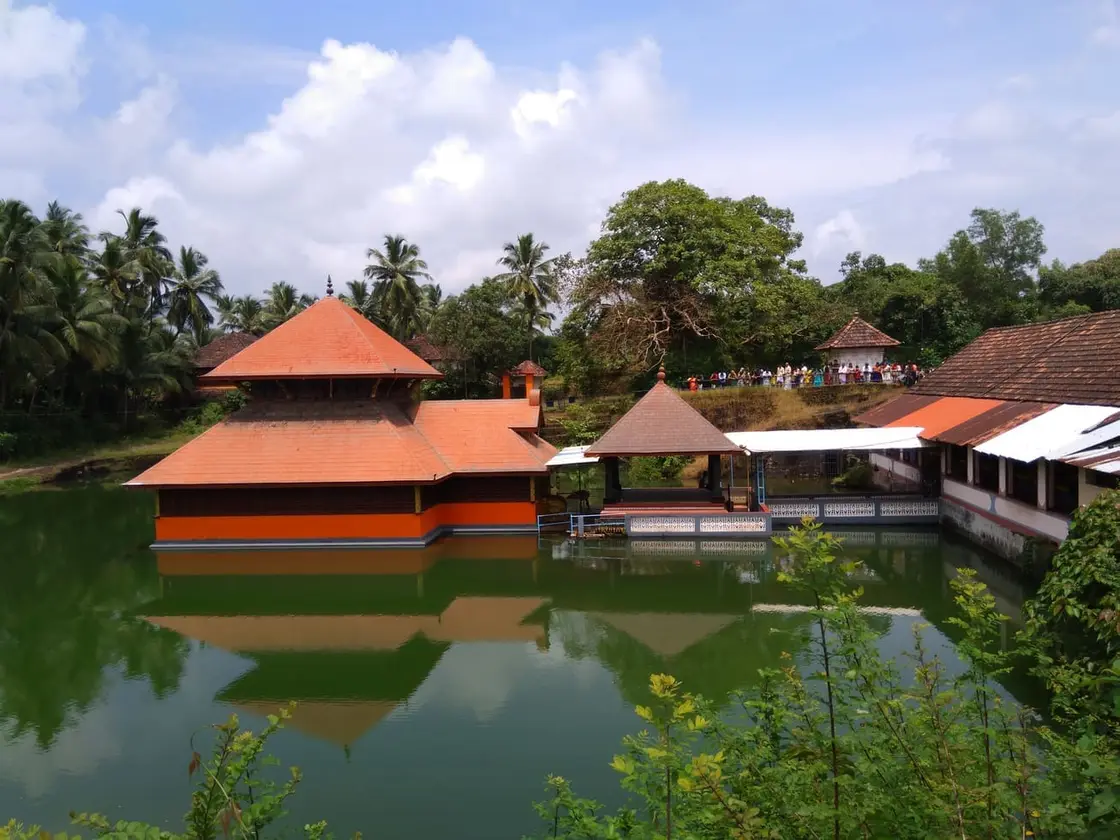
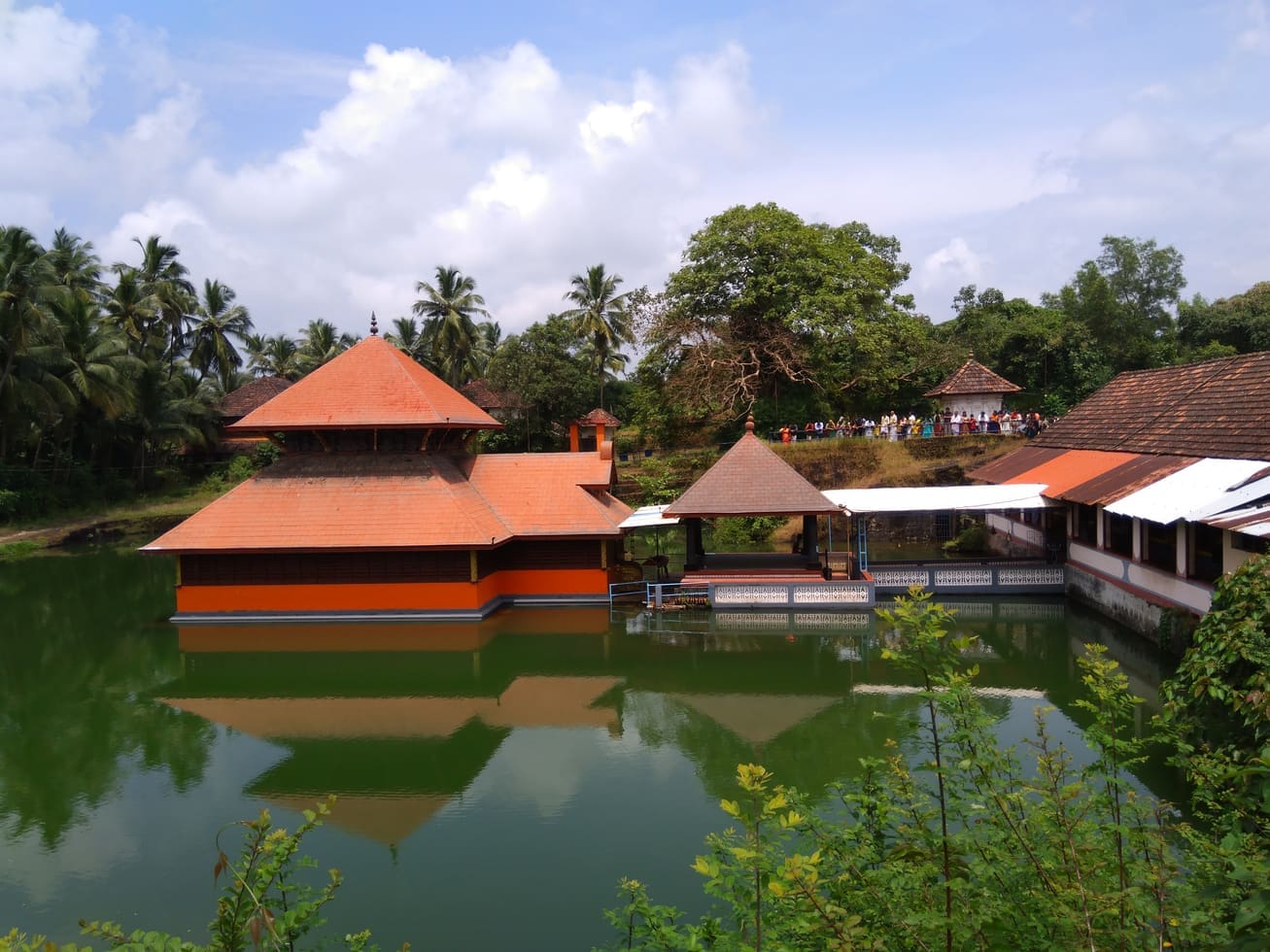
Roughly 6 km inland from the town of Kumbla, in the little village of Ananthapura in Kasaragod district, a small stone shrine sits alone at the centre of a rectangular, spring-fed lake. Reached only by a narrow footbridge, the Sri Ananthapadmanabha Swamy Temple is the sole lake temple in Kerala, and the water around it — said to be fed by perennial springs and never to run dry — is as much a part of the sanctity as the sanctum itself.
The temple enshrines Vishnu as Ananthapadmanabha, reclining upon the coils of the great five-hooded serpent Anantha. For devotees, this quiet spot carries an unusually grand claim: it is held to be the moola-sthanam, the original abode, of the very deity later worshipped at the world-renowned Sree Padmanabhaswamy Temple in Thiruvananthapuram. To stand here is, in the tradition, to stand where the story began.
The setting shapes the whole experience. The lake, described by Kerala Tourism as roughly 302 feet on each side, mirrors the low shrine and the surrounding greenery, and the crossing of the footbridge — the namaskara mandapam is linked to the eastern rock by the bridge that is the only passage to the sreekovil — gives arrival a deliberate, ceremonial feel. It is a compact temple rather than a towering one, and its magic lies in the stillness of the water and the sense of a place set apart.
Among the temple's most beloved traditions is its guardian crocodile. For decades a single crocodile was believed to live in the lake and its adjoining cave, gentle towards people and — as devotees hold — taking only the temple prasadam offered to it. The best-known of these, affectionately called Babiya, was mourned across Kerala when she reportedly died in October 2022 after living at the shrine for many years; a smaller crocodile was later sighted in the lake, and the tradition of a lone sacred crocodile continues (see the FAQ for the current, carefully hedged status).
Above the worshippers, the ceiling of the mandapam carries an exceptional set of wooden carvings depicting the Dashavataram, the ten incarnations of Vishnu — a reminder that beyond the legends and the lake, this is a living shrine of real artistic and devotional worth. Unusually for Kerala, it is open to visitors of all faiths and castes, so travellers as well as pilgrims can cross the bridge and take in its unusual, watery calm.
Legend & myth
The temple's central legend ties it directly to Thiruvananthapuram. As the story is traditionally told, the sage Vilwamangalathu Swamiyar (Vilwamangalam) was performing penance at Ananthapura when a radiant young boy began serving him. One day the sage, disturbed during his worship, spoke harshly to the child — who, feeling slighted, declared that if the sage wished to see him again he must go to Ananthankadu, and then vanished into a cave beside the temple.
Pursuing the boy through the cavern, the sage is said to have realised that the child was none other than Lord Vishnu himself, who reappeared far to the south reclining upon the thousand-hooded serpent — at the spot that became the Padmanabhaswamy Temple in Thiruvananthapuram. From this legend flows the belief that Ananthapura is the moola-sthanam, the original abode, from which the deity moved to the capital.
In keeping with the tale, a cave near the temple is popularly said to connect, underground, all the way toward Thiruvananthapuram. This underground passage belongs firmly to the realm of legend rather than verified fact, but it is central to how devotees understand the bond between the two shrines. The guardian crocodile of the lake is likewise woven into this lore, believed to watch over both the cave and the sanctity of the shrine.
History
The temple is an ancient one, and its origins are most commonly placed in the 9th century, though — as with many shrines of such age — precise founding dates are a matter of tradition rather than firm documentary record. What is clear is that Ananthapura has been a venerated centre of Ananthapadmanabha worship for many centuries, its fame amplified by the belief that it is the source-shrine of the great temple at Thiruvananthapuram.
A remarkable feature of the temple concerns its idols. Rather than the usual stone or metal, the original images are traditionally said to have been fashioned from kadu-sarkara-yogam — a rare composite of more than seventy medicinal and herbal substances bound with jaggery. This unusual material, prized in some Kerala shrines, was eventually replaced.
In 1972 the herbal idols were substituted with images of panchaloha, the traditional five-metal alloy used for temple murtis. Accounts associate this consecration with the Kanchi seer Jayendra Saraswathi. The change gave the sanctum its present metal images while the temple retained its older character elsewhere.
The temple is administered as a functioning shrine with daily worship, and over the years it has seen restoration and upkeep of its structure, its lakeside setting and its celebrated wooden ceiling carvings. Its status as Kerala's only lake temple, together with the guardian-crocodile tradition, has made it both a pilgrimage site and a notable heritage attraction in the Kasaragod region.
Today the temple sits within easy reach of Kumbla and the wider Kasaragod circuit, drawing pilgrims who come for its Padmanabha connection and travellers curious about its singular setting. Its openness to visitors of all communities is itself part of its modern identity, distinguishing it from some other Kerala temples that restrict entry to Hindus.
Why visit
It is the only lake temple in Kerala — a shrine set alone at the centre of a spring-fed lake and reached by a single footbridge, a setting you will not find anywhere else in the state.
It is revered as the moola-sthanam, the original abode of Ananthapadmanabha, giving even a short visit a strong sense of connection to the famous Padmanabhaswamy Temple in Thiruvananthapuram.
The guardian-crocodile tradition — most famously the beloved Babiya — makes this one of Kerala's most distinctive temple stories, and the lakeside cave adds an air of gentle mystery.
The wooden ceiling carvings of the Dashavataram in the mandapam are a genuine artistic highlight, rewarding travellers who look up as well as around.
Unusually, the temple welcomes visitors of all faiths and castes, so non-Hindu travellers can also cross the bridge and experience the shrine and its tranquil water.
Its calm, photogenic setting near Kumbla makes it an easy and rewarding detour on any Kasaragod or Bekal itinerary, pairing well with the district's beaches and forts.