Ashtamudi Lake is Kerala's second-largest backwater lake and the celebrated gateway to the Kerala backwaters, spreading its eight palm-shaped arms across Kollam town before draining to the Arabian Sea. A Ramsar wetland of international importance and home to India's first sustainably certified clam fishery, it is the serene southern counterpart to the more famous Alappuzha backwaters.
The story of Ashtamudi Lake
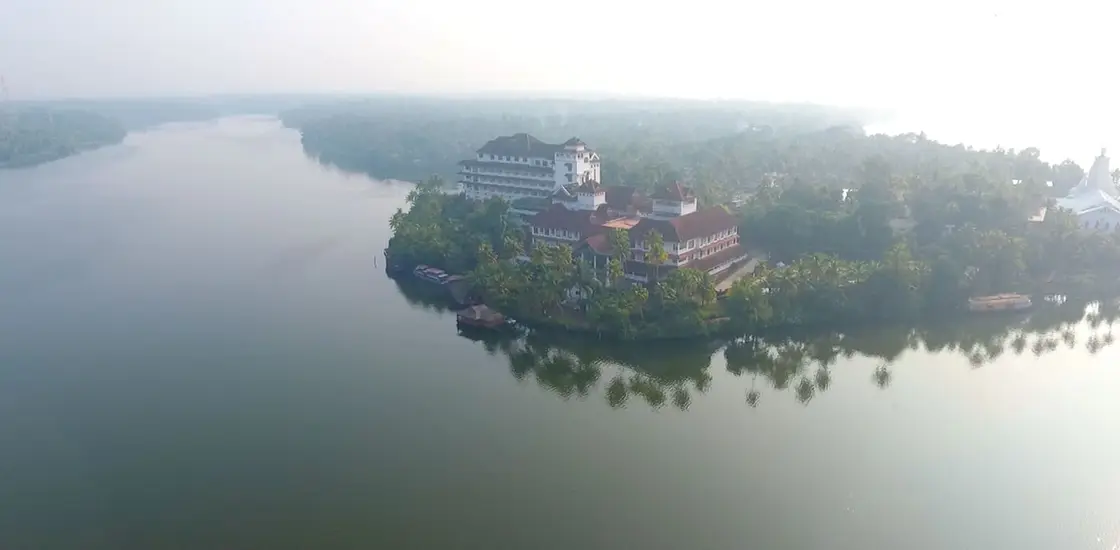
Say the name slowly — Ashtamudi, from the Malayalam ashta (eight) and mudi (peaks or braids) — and you already have the shape of the place. The lake does not lie in a single sheet like an ordinary lagoon; instead it fans out from Kollam town in eight long, finger-like arms, so that from the air it resembles an outstretched palm, or, as locals like to say, a coconut palm laid on its side. Those eight branches carry names that read like a roll-call of the villages they touch — Thevally, Kureepuzha, Kandachira, Thekkumbhagam, Perumon, Kanjirottu, Kallada and Kumbalathu kayals — and it is this many-armed geometry, more than its size, that gives Ashtamudi its particular, labyrinthine magic.
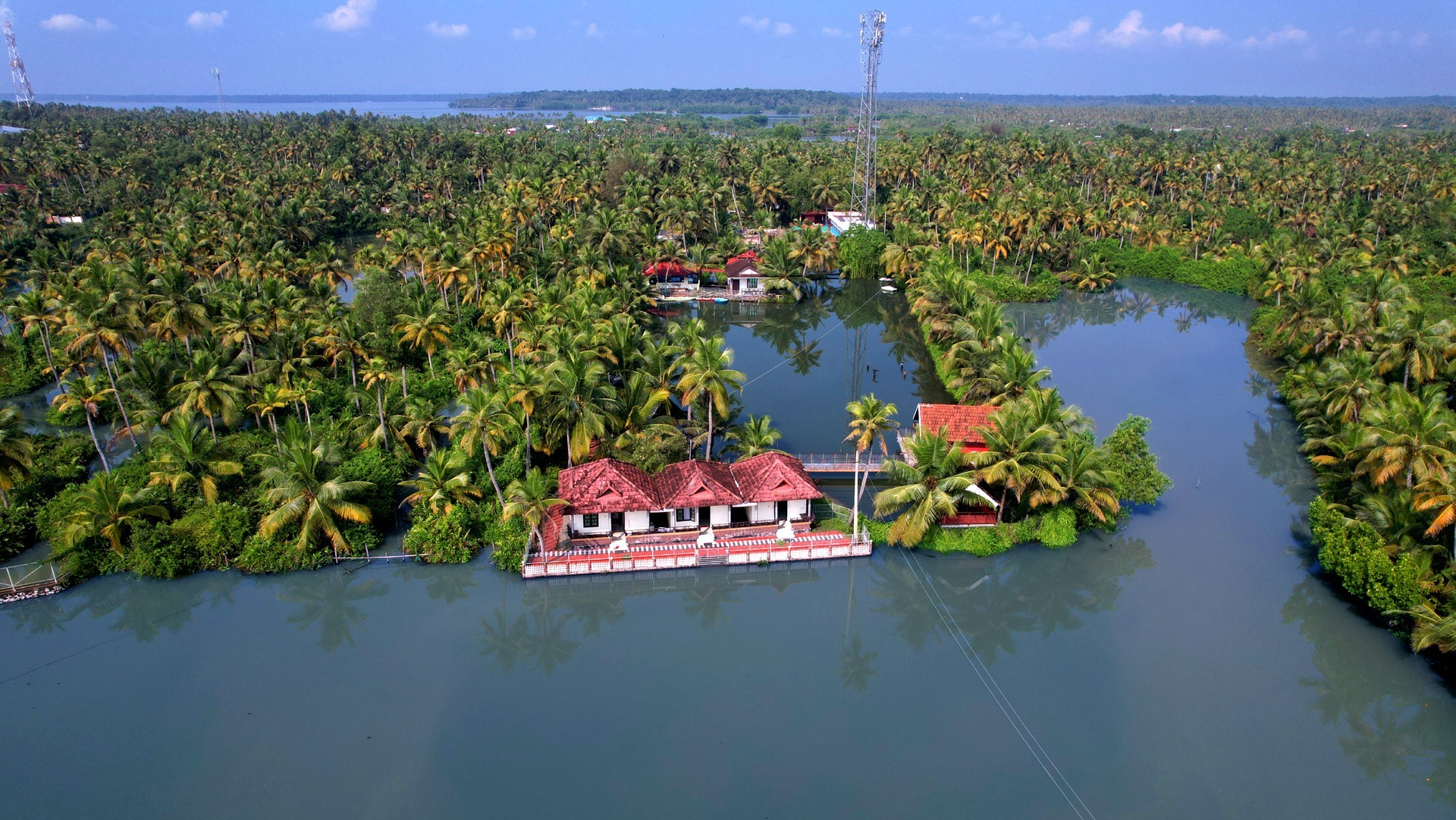
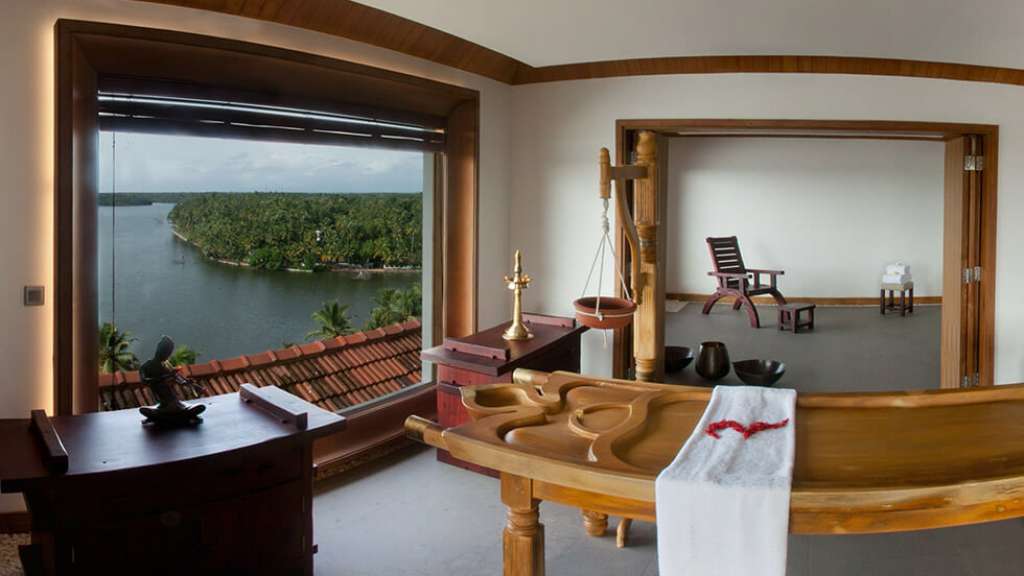
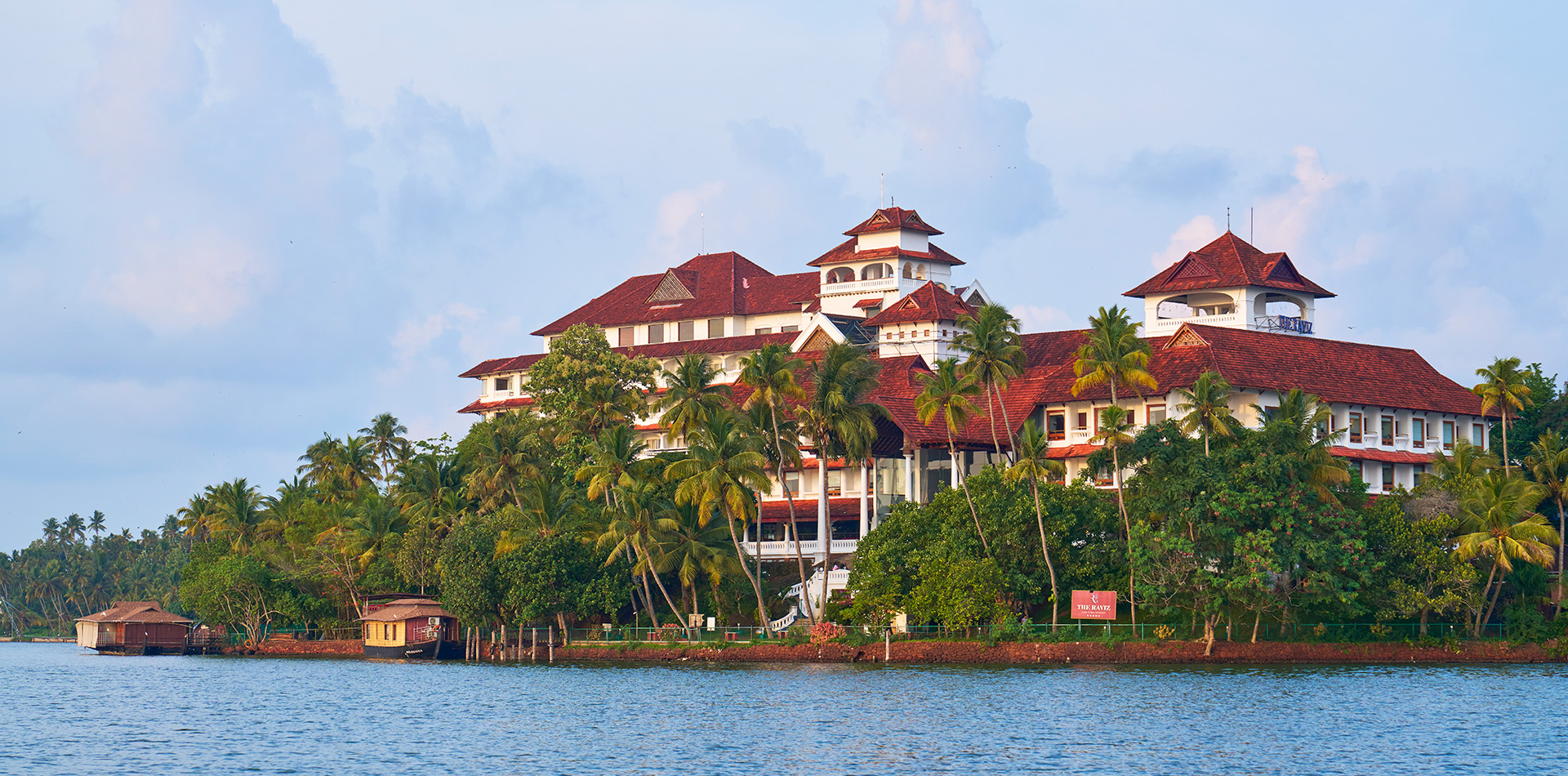
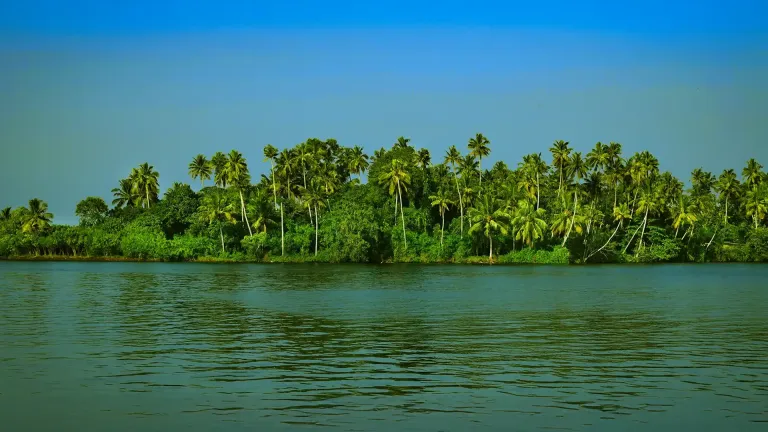
This is the lake that earns Kerala the title Gateway to the Backwaters. Where Alappuzha is broad and open, Ashtamudi is intimate and secretive: narrow canals hemmed by coconut palms, still lagoons that mirror the sky, and hidden channels where a country canoe can slip between overhanging branches. It is the point at which the great inland waterway of Kerala begins its journey north, and for the traveller arriving from Thiruvananthapuram it is very often the first true taste of the slow, water-borne rhythm that defines the region.
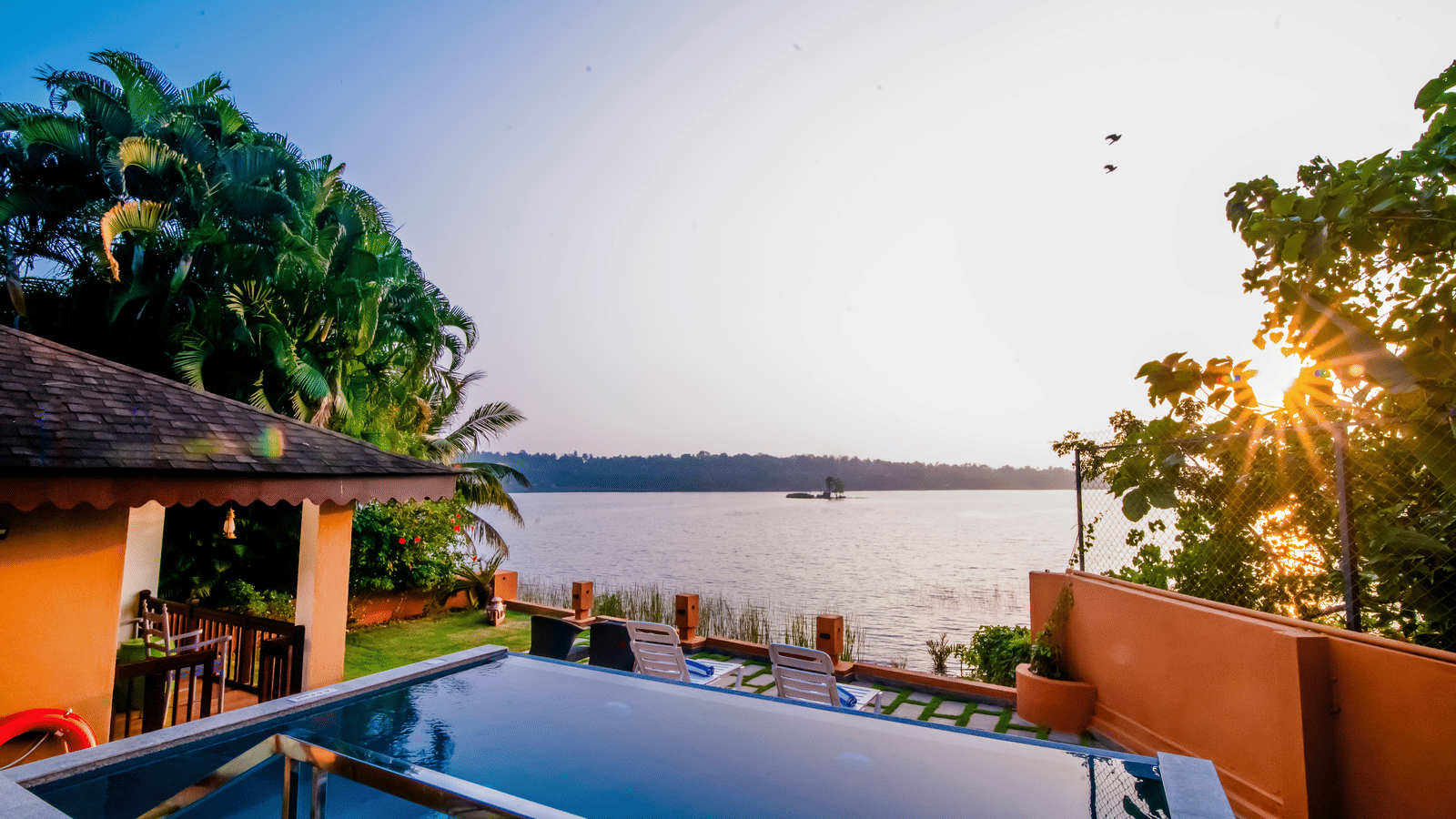
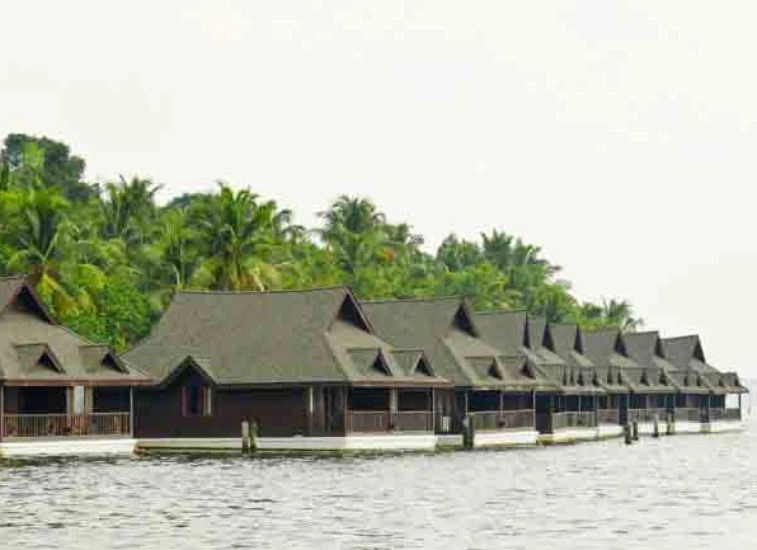
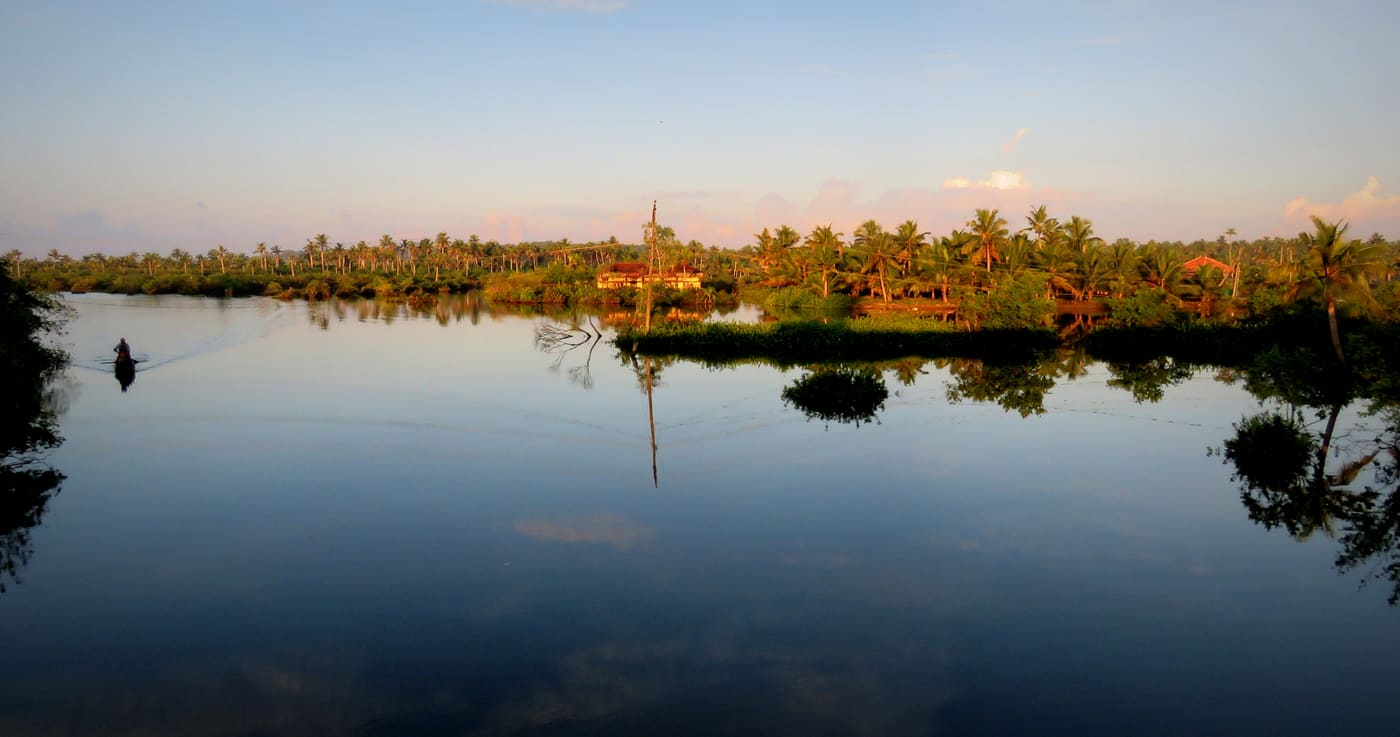
The classic way to meet the lake is from the deck of a kettuvallam, the thatched houseboat rebuilt from the old rice barges that once ferried cargo along these waters. Drifting out from the Kollam jetty in the late afternoon, you pass Chinese-style cantilever fishing nets dipping into the shallows, women wading waist-deep to rake clams from the bed with their feet, and toddy tappers shinning up the palms on the banks. As the sun lowers, the whole western sky pours itself into the water, and Ashtamudi delivers what many consider the finest backwater sunset in Kerala — a long, unhurried burning-out of the light behind silhouetted palms.
The lake's single most famous journey does not stay on Ashtamudi at all. From the Kollam jetty the District Tourism Promotion Council runs what is billed as the longest backwater cruise in Kerala — an eight-hour public ferry that threads north through a chain of canals to link Ashtamudi with the Kayamkulam and Vembanad lakes, ending at Alappuzha. It is a slow, sociable, budget-friendly voyage past village life, coir-making yards and endless green, and for many backpackers it remains the definitive Kerala backwater experience.
Turn instead into the lake's quieter reaches and you reach Munroe Island — Munroturuttu — a cluster of little islets knitted together by narrow canals where the water is so close to the land that the two seem to merge. Here the tourist houseboats cannot follow; you transfer to a small country canoe poled by a local boatman, and glide beneath low bridges past fish farms, coir-twisting units and village playschools. It is Ashtamudi at its most tranquil, a living portrait of Kerala backwater life largely unchanged for generations.
For all its beauty, Ashtamudi is a serious working ecosystem as much as a scenic one. Its mangrove fringes and mudflats nurse shrimp and fish, draw migratory birds in winter, and support thousands of fishing families whose clam rakes and cast-nets are part of the view. To cruise here is to move through a landscape that is simultaneously a Ramsar-listed wetland, a globally certified fishery and one of Kerala's most photogenic waterscapes — which is precisely what makes it so rewarding.
Legend & myth
The name itself is the lake's chief piece of folklore, and it is best understood as descriptive legend rather than literal fact. Ashtamudi is popularly explained as eight braids or eight peaks — some tellings speak of ashta mudi as the eight-tressed lake, its arms imagined as the plaited hair of the land — a poetic reading of the way its eight channels spread out from Kollam. Whichever gloss you prefer, the eight branches are real and visible on any map, so the poetry and the geography agree.
History
The lake's shores carry one of the oldest continuous port histories in India. Kollam — known through the centuries as Quilon, Coilum and Desinganadu — stands on the banks of Ashtamudi, and its harbour was trading with the Phoenicians and Romans in the early centuries of the Common Era. Under the Tang dynasty (7th to 10th centuries) Quilon was the Chinese fleet's chief port of call on the Malabar coast, exporting spices, coir, areca nut and sapanwood, and the lake's sheltered waters were part of what made the anchorage so valuable.
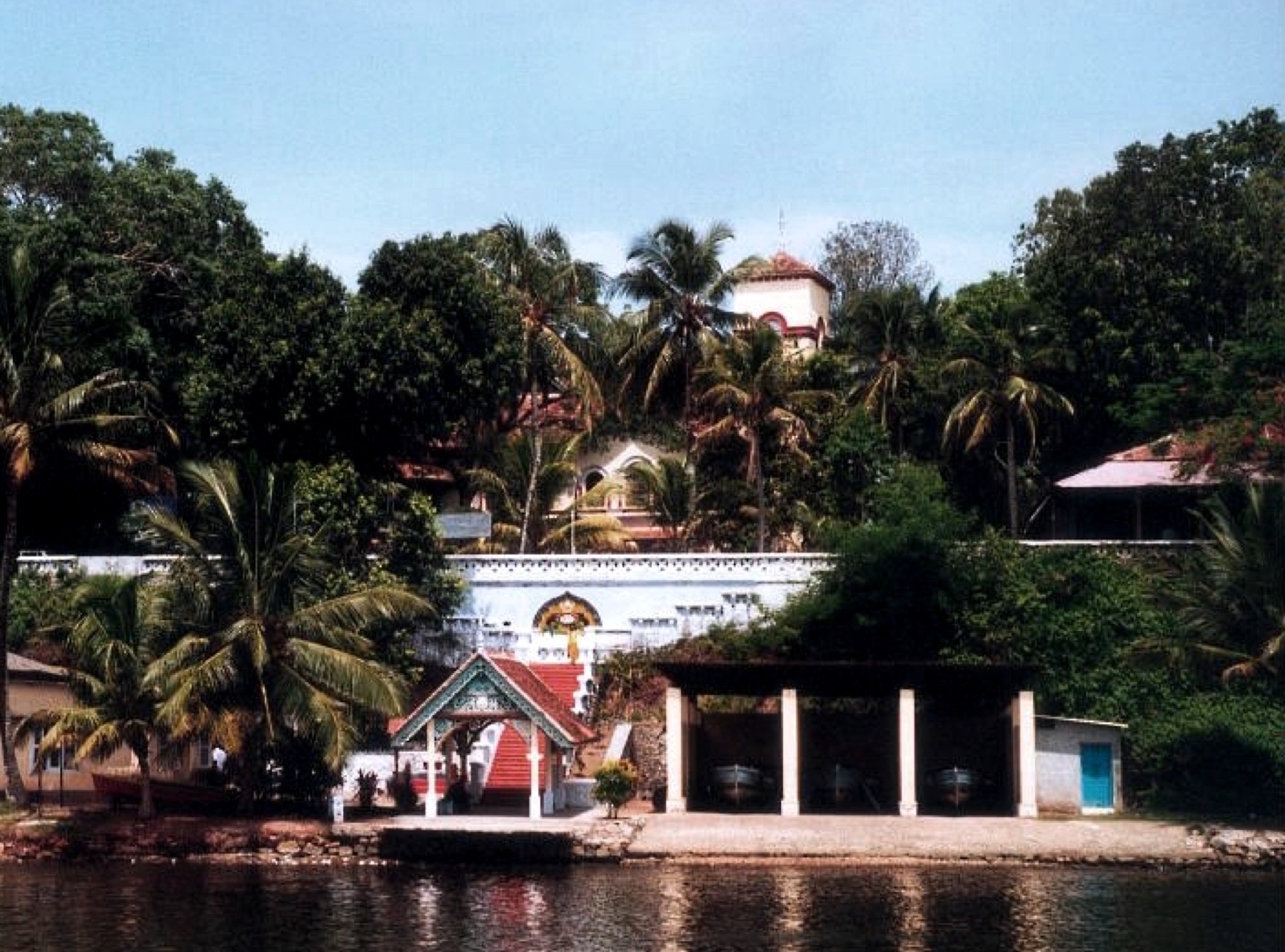
By the medieval period the port's fame had spread across the known world. The Arab traveller Ibn Battuta, in the 14th century, counted Kollam among the finest ports he had seen in twenty-four years of travel and noted the Chinese merchants trading there; Marco Polo, passing through in the 13th century as an envoy of Kublai Khan, described a cosmopolitan town of Christians, Jews and Arab and Chinese merchants. The Portuguese arrived in the early 16th century and built a fort at Thangasseri to control the pepper trade, followed in turn by the Dutch and the British — layers of history still legible along the Kollam waterfront.
Ecologically, Ashtamudi is an estuarine wetland of about 61 square kilometres, second in Kerala only to Vembanad. It is fed chiefly by the Kallada River, which rises near the Western Ghats and drains a catchment of some 1,700 square kilometres, and it meets the sea through the Neendakara estuary — the tidal mixing of fresh and salt water creating the brackish conditions on which its whole food web depends. In recognition of this richness it was designated a Ramsar Wetland of International Importance on 19 August 2002.
The lake supports remarkable biodiversity for its size: studies record dozens of fish species across many genera, more than fifty species of birds, and fringing mangroves that act as nurseries for commercially important shrimp. Winter brings migratory waterfowl to its mudflats and backwaters, while the mangrove pockets shelter herons, egrets, kingfishers and cormorants — making the quieter arms, and Munroe Island in particular, a rewarding stretch for casual birdwatching from a canoe.
Ashtamudi's proudest modern distinction is its clam fishery. The short-neck clam beds here have been worked since the early 1980s and support several thousand fishers who collect, clean and process the catch, once driven by export demand from Vietnam, Thailand and Japan. After overfishing crashed the harvest in the early 1990s, a closed season, minimum export size and a ban on mechanical harvesting were introduced; the recovery was so successful that in November 2014 the Ashtamudi short-neck clam fishery became the first Marine Stewardship Council-certified sustainable fishery in India — a landmark achieved jointly by CMFRI, WWF, the State Fisheries Department and the local fishing community.
Why visit
The gateway to Kerala's backwaters — Ashtamudi is where the great inland waterway begins, offering the same palm-fringed canals and kettuvallam cruising as Alappuzha but with noticeably fewer crowds and a more intimate, tucked-away feel.
The eight-armed lake itself — a genuinely unusual, many-branched waterscape whose hidden channels, wide lagoons and mirror-still reaches reward slow exploration by houseboat or canoe.
Kerala's most famous long cruise — the eight-hour DTPC ferry from Kollam to Alappuzha, billed as the longest backwater cruise in the state, linking three great lakes through a chain of village canals.
Munroe Island — a serene cluster of islets explored by small country canoe through canals too narrow for houseboats, giving one of the most authentic glimpses of Kerala backwater village life anywhere in the state.
Sunsets and birdlife — Ashtamudi is renowned for luminous backwater sunsets, while its mangroves and mudflats draw kingfishers, egrets, herons and winter migratory birds for easy waterborne birdwatching.
A living wetland with a story — a Ramsar site and home to India's first MSC-certified clam fishery, where you can watch traditional clam-raking and coir-making as part of a genuinely working landscape, all beside the two-thousand-year-old port of Kollam.