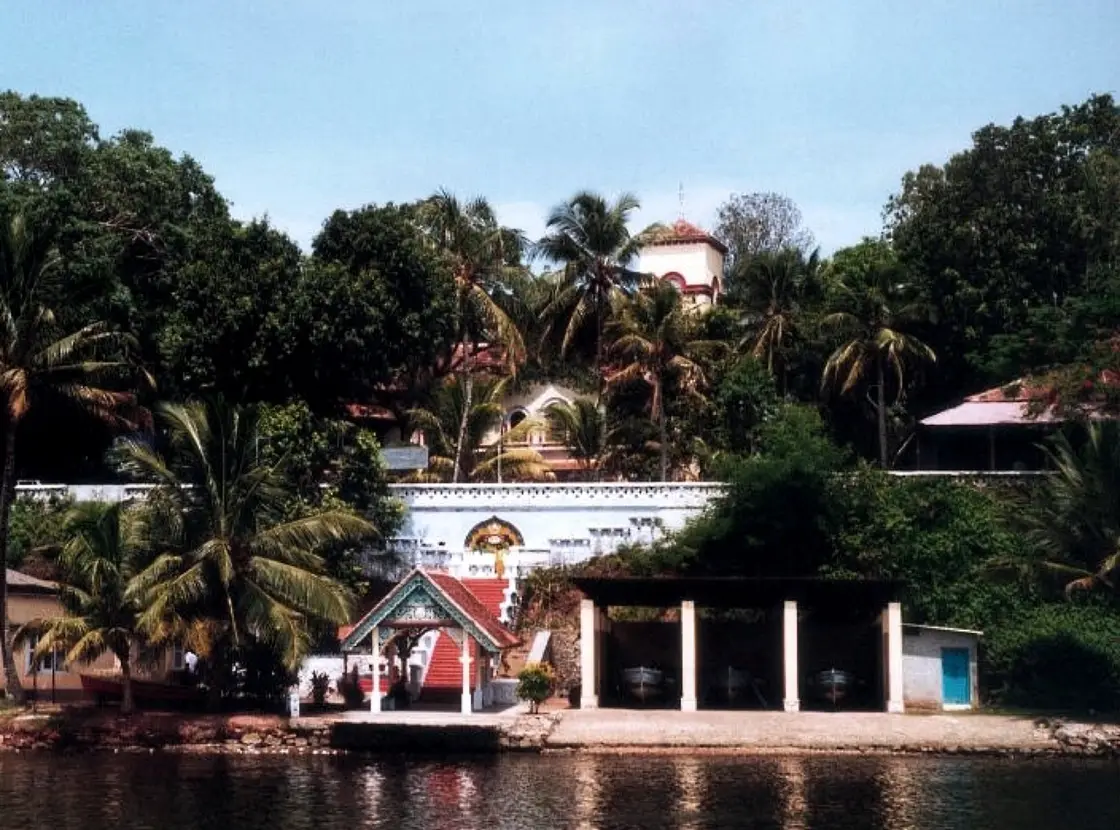
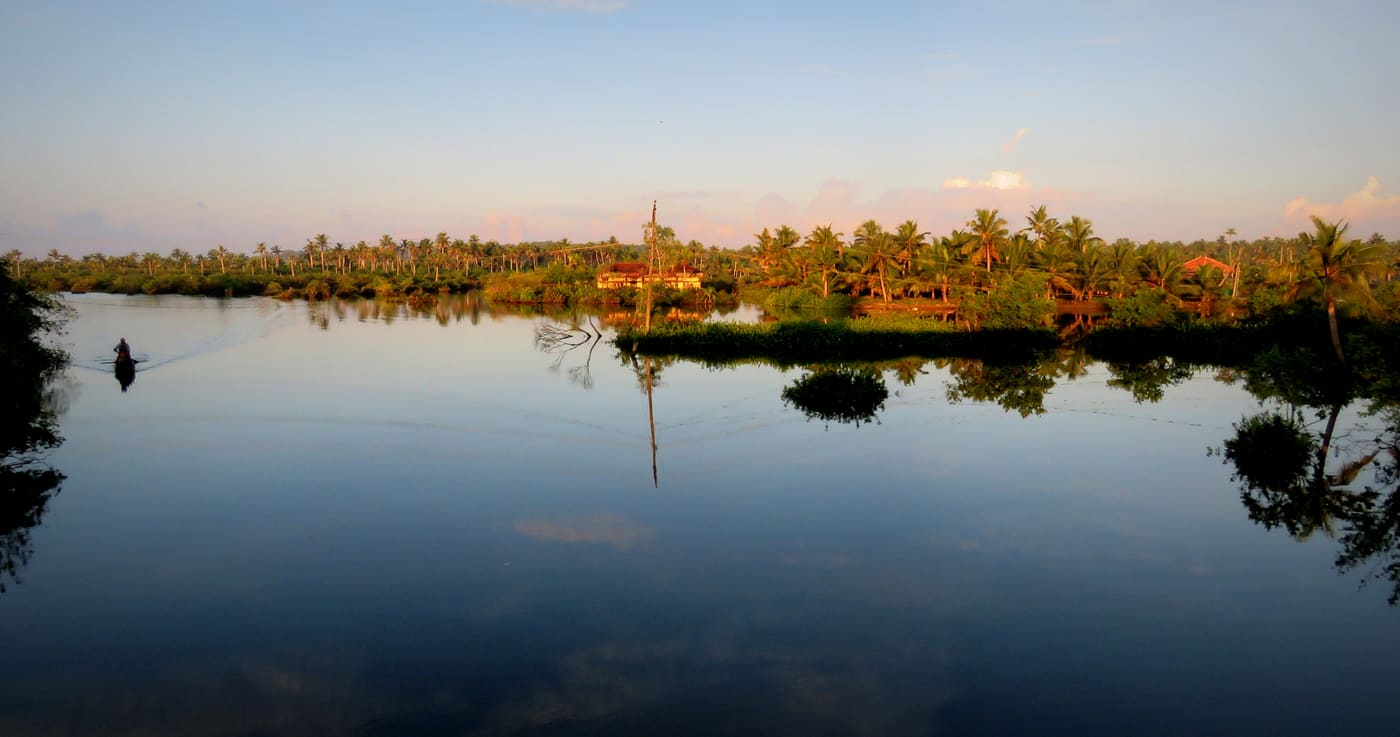
Standing on the palm-fringed banks of the Ashtamudi Lake in Kollam, Thevally Palace is one of Travancore’s most graceful surviving royal residences — a two-century-old riverside mansion where Indian, Dutch, Portuguese and British design ideas were married under one tiled roof. It is important to know before you set out: the palace today functions as a defence-cadet establishment and is not an open, ticketed monument, so most visitors admire it from the lakeside or from a boat rather than from within its halls.
The story of Thevally Palace
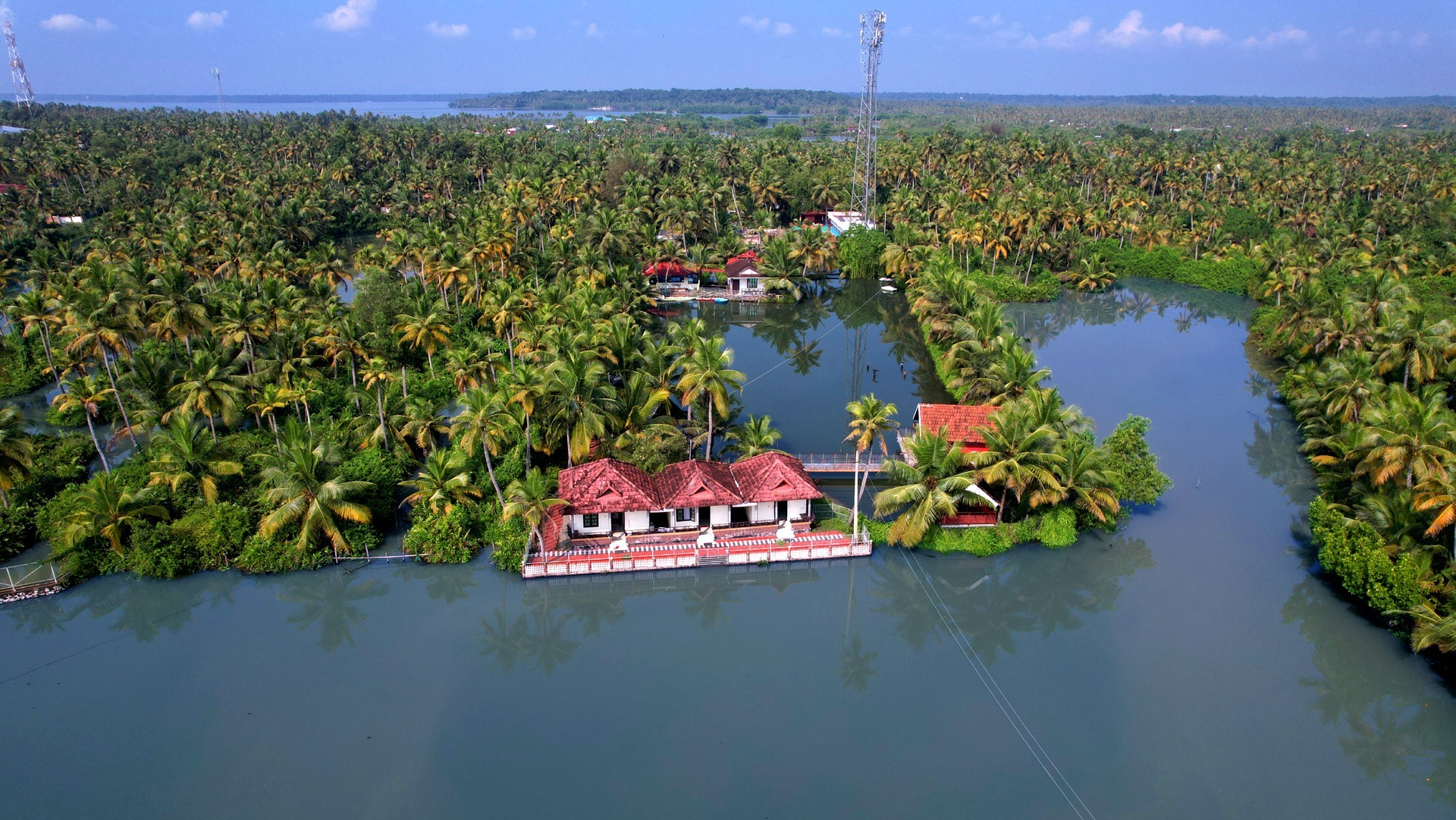
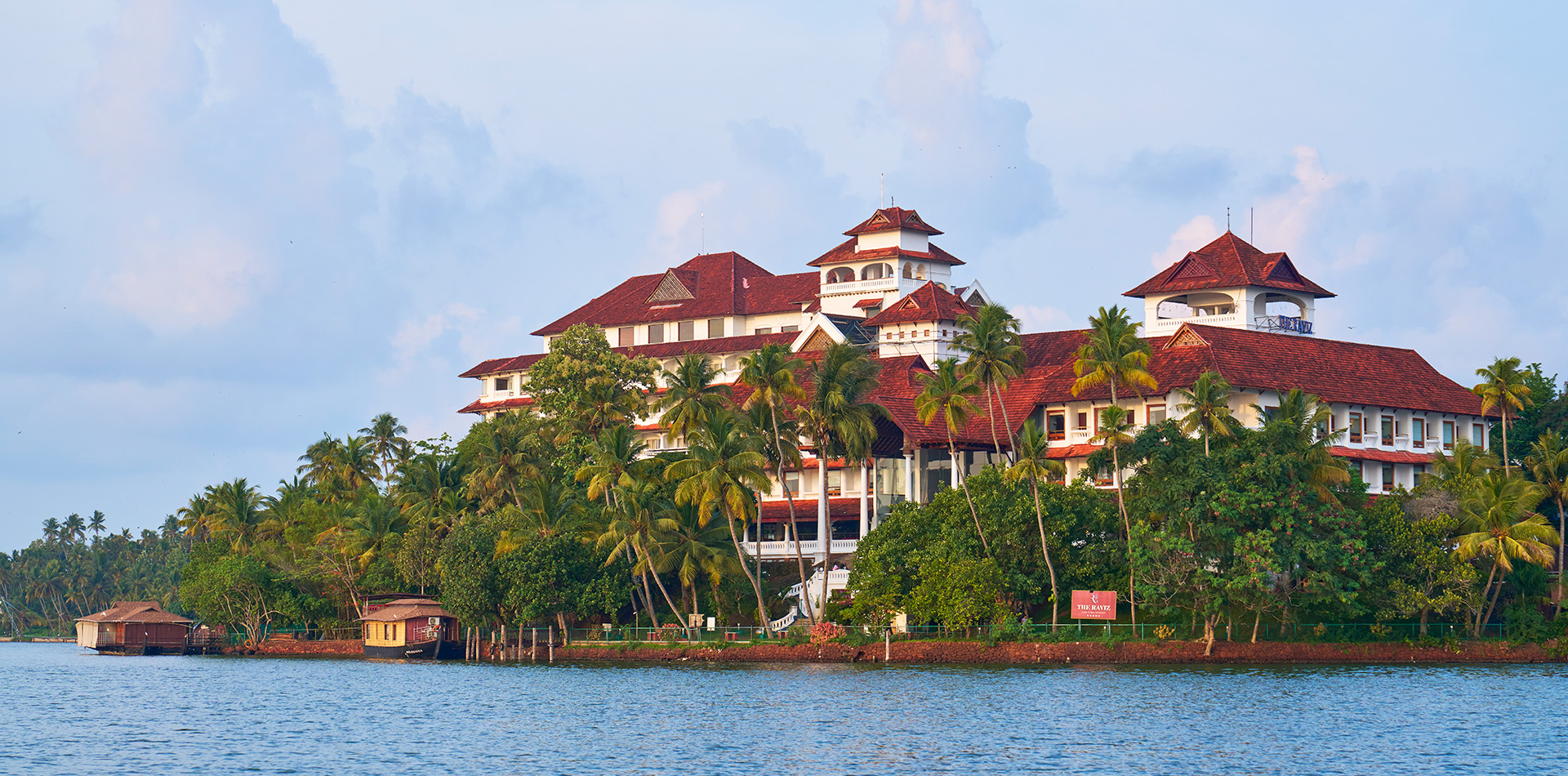
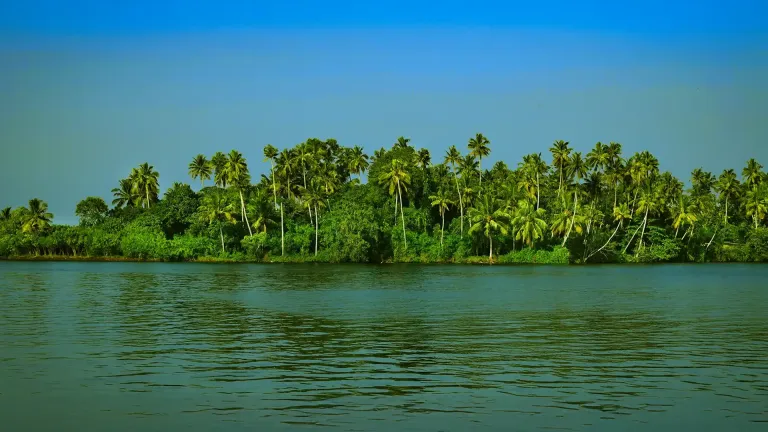
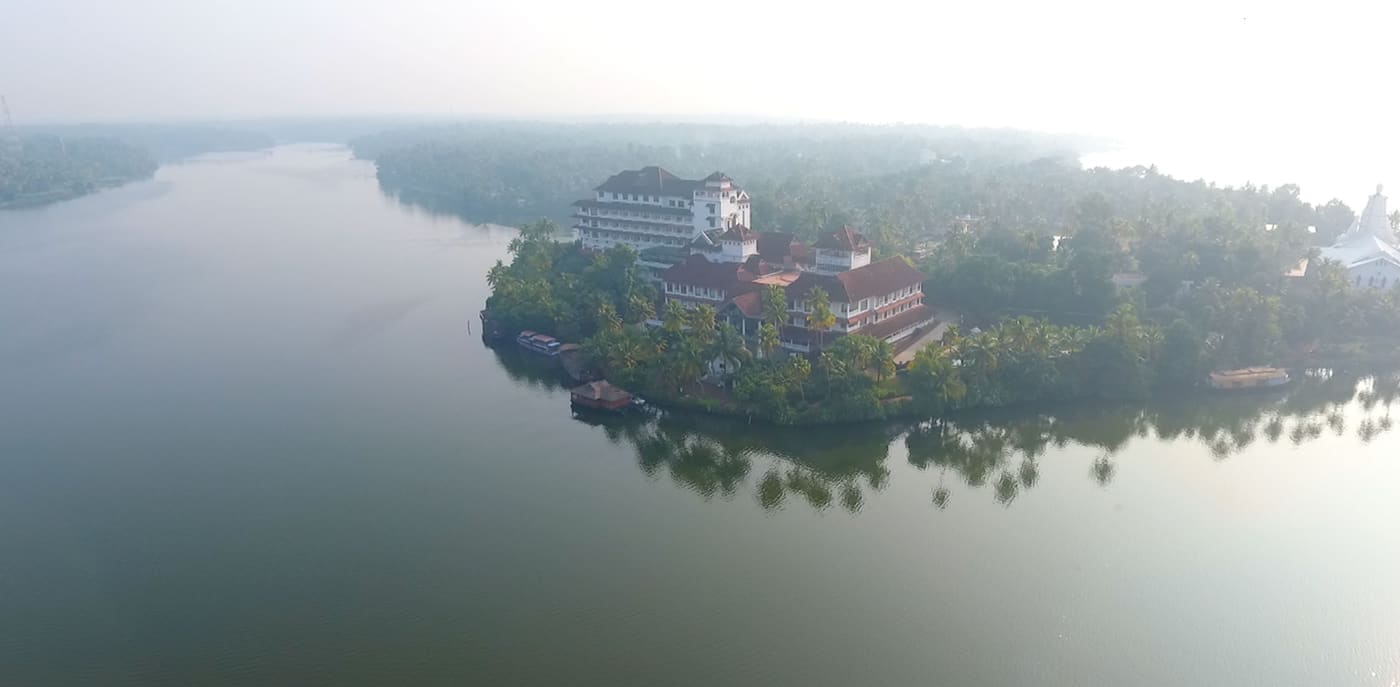
Thevally Palace sits in the leafy Thevally neighbourhood on the southern edge of Kollam town, looking out over the shimmering expanse of the Ashtamudi Lake — the sprawling, palm-lined backwater that has always been the town’s reason for being. For generations the lake carried spice barges, coir boats and royal barges alike, and the palace was deliberately placed so that its verandahs and gardens caught the breeze coming off the water. Even now, glimpsed from the lakeshore or from a passing houseboat, its long, low silhouette and sloping roof read unmistakably as the home of a princely house.
The building was raised by the Travancore royal family in the early nineteenth century, when Kollam — long known as Quilon — was one of the most important towns of the kingdom and a place where the Maharajas came to meet, negotiate with and keep watch on the British Residents stationed in Travancore. Rather than a fortress, Thevally was conceived as an elegant lakeside residence: a place for the royals to stay, to hold quieter conversations of state, and to receive colonial officials in surroundings that were comfortable and impressive in equal measure.
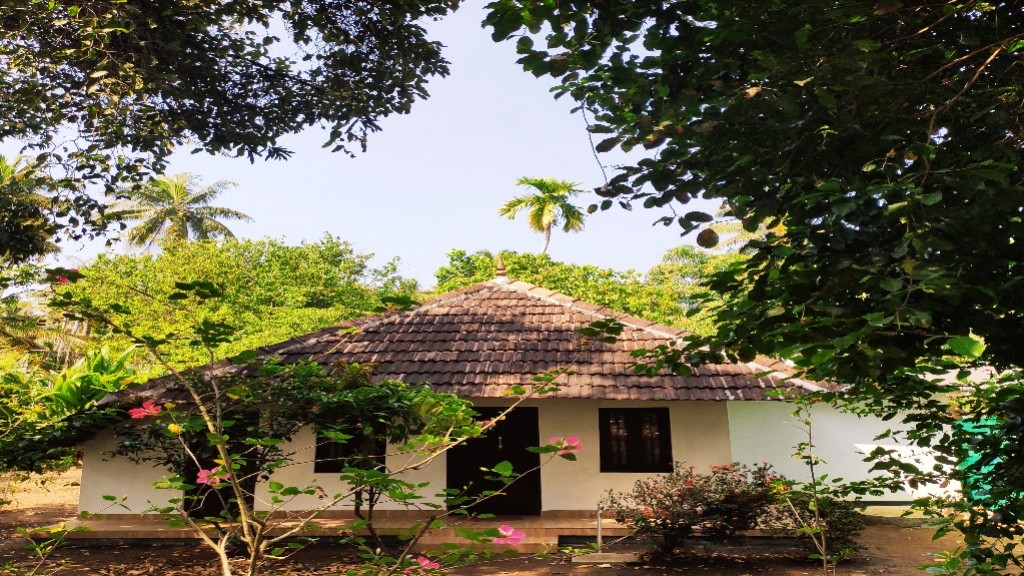
What makes the palace so distinctive is that it does not belong to any single architectural tradition. Its makers borrowed freely — the pitched, tiled roof and timbered upper floor speak the language of traditional Kerala building, while the arches, proportions and detailing carry Dutch, Portuguese and British colonial influences absorbed over centuries of trade contact along this coast. The result is a hybrid, Indo-European mansion that feels both rooted in Malabar and quietly cosmopolitan, a physical record of Kollam’s long life as a port open to the world.
Contemporary descriptions note that the skeleton of the palace was built from the materials the region knew best — laterite blocks and lime plaster — with the gabled upper storey framed in good-quality timber and topped by a sloping tiled roof. A small shrine to Lord Sastha is associated with the grounds, in keeping with the Travancore custom of tying royal residences to a household deity. Together the stonework, woodwork and waterside setting give the palace a dignified, weathered beauty that photographs well even from a distance.
In the years after the princely era, the palace passed into government hands and was put to public, administrative use rather than being preserved purely as a show-monument. Because of this it has never developed into a busy, gate-and-ticket tourist attraction in the way that some other Kerala palaces have. Its story is quieter — a working heritage building rather than a museum — which is exactly why so many visitors know it best as a landmark seen across the Ashtamudi waters rather than as somewhere they have walked inside.
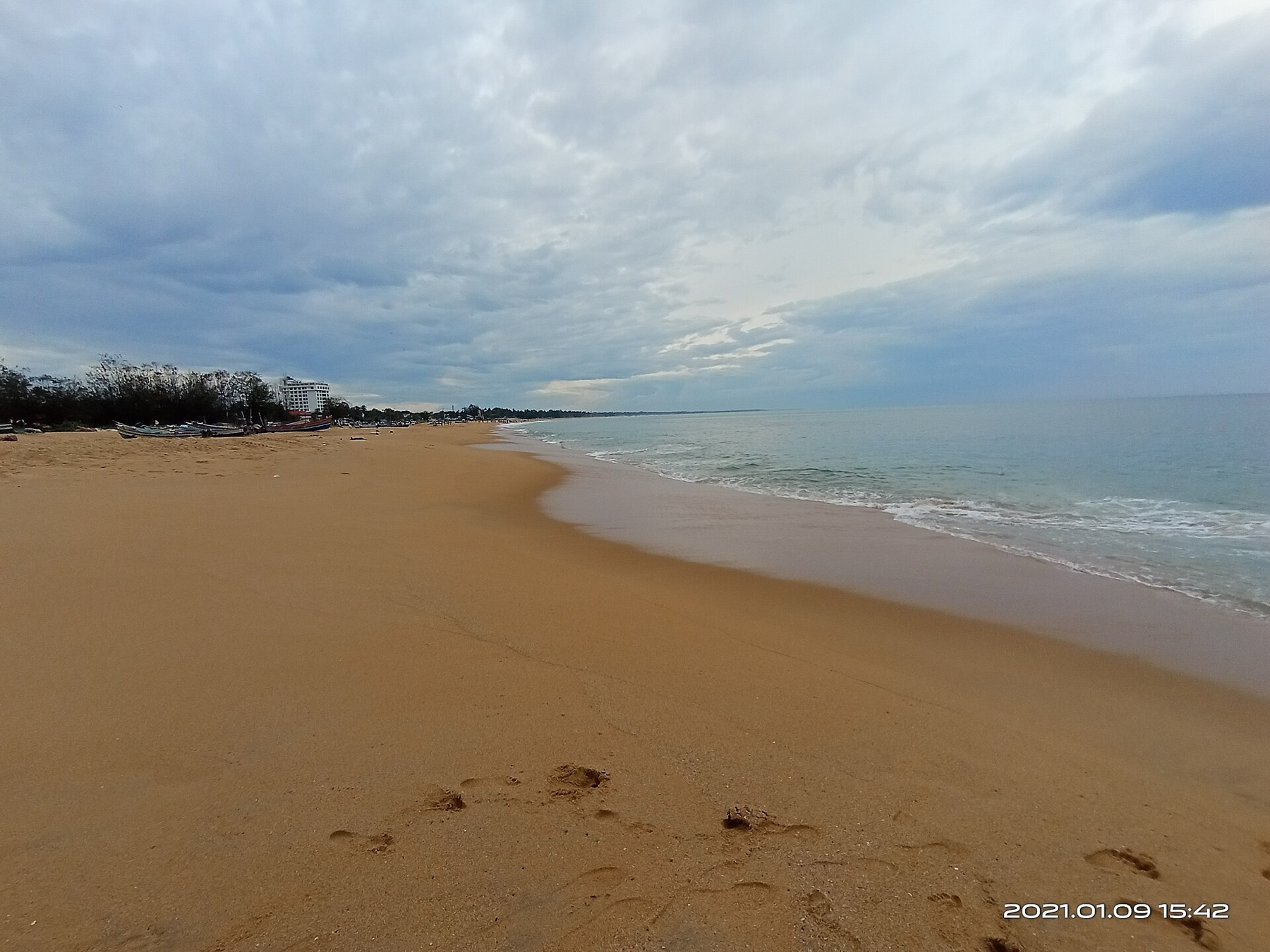
For the traveller, Thevally is therefore less a place you tour and more a place you seek out, admire and photograph as part of a wider Ashtamudi Lake experience. Paired with a backwater cruise, a visit to Kollam’s beaches and the town’s old port heritage, it rounds out a picture of Kollam as one of Kerala’s oldest and most historically layered towns — and it rewards those who take the trouble to view it from the right angle on the water.
History
The palace is generally dated to the reign of Maharani Gowri Parvati Bayi, the regent of Travancore in the early nineteenth century, with construction usually placed between roughly 1811 and 1819 (indicative dates — confirm locally). Because Gowri Parvati Bayi served as regent and later relinquished authority to her nephew, the celebrated Maharaja Swathi Thirunal, the palace is sometimes described as begun under her patronage and completed around the transition to his reign — a hedged but widely repeated account of its origins.
Kollam’s importance to Travancore explains why a royal residence was built here at all. As one of the kingdom’s principal towns and trading centres, Kollam was where the Maharajas came to engage with the British Residents — the East India Company and later Crown officials who exercised influence over the princely state. Thevally Palace gave the royal family a fitting base on these visits, a place to stay and to hold discussions with colonial officers away from the capital.
Architecturally the palace is a deliberate blend rather than a copy of any one style. Its builders combined traditional Kerala forms — the timbered, gabled upper floor and the tiled, sloping roof — with Dutch, Portuguese and British colonial detailing absorbed through Kollam’s centuries of maritime trade. Laterite and lime plaster formed the main fabric of the walls, with quality wood used generously in the first-floor structure, producing the Indo-European character for which the palace is admired today.
After the end of princely rule and the integration of Travancore into modern India, ownership of the palace and its grounds passed to the state, and the property is today held under the Public Works Department (PWD). Rather than being turned into a museum, the building was given over to official use — it is widely reported to serve as the National Cadet Corps (NCC) Group Headquarters for the Kollam district, a defence-affiliated establishment.
This administrative, defence-linked role is the key fact for any would-be visitor. Because the palace functions as a working government and cadet-training office rather than as a ticketed heritage site, general public entry is restricted and the interiors are not routinely open to tourists (indicative — confirm locally). For most travellers the palace is therefore experienced as a striking exterior and a lakeside landmark, its royal rooms remaining out of casual public reach.
Why visit
It is one of Kollam’s most photogenic heritage landmarks — a graceful two-storey Travancore-era palace set right on the edge of the vast Ashtamudi Lake, unmistakable even when seen only from the shore or the water.
The architecture is a genuine rarity: an Indo-European fusion of Kerala, Dutch, Portuguese and British design, blending a tiled timber upper floor with colonial-era arches and proportions in a single building.
The Ashtamudi setting is the real reward. Viewing the palace from a houseboat or backwater cruise combines a piece of royal history with one of Kerala’s most beautiful lakescapes in a single outing.
It anchors a wider Kollam itinerary — pair it with the town’s beaches, its old port heritage and an Ashtamudi backwater trip for a full, unhurried day in one of Kerala’s oldest towns.
For history lovers it is a tangible link to the Travancore royal family and to Kollam’s role as the place where the Maharajas met the British Residents — a quiet, atmospheric survivor rather than a manicured tourist showpiece.
Because it is off the standard tourist-entry circuit, it appeals to travellers who enjoy seeking out lesser-visited landmarks and appreciating architecture from the outside, camera in hand, without the crowds of a ticketed monument.