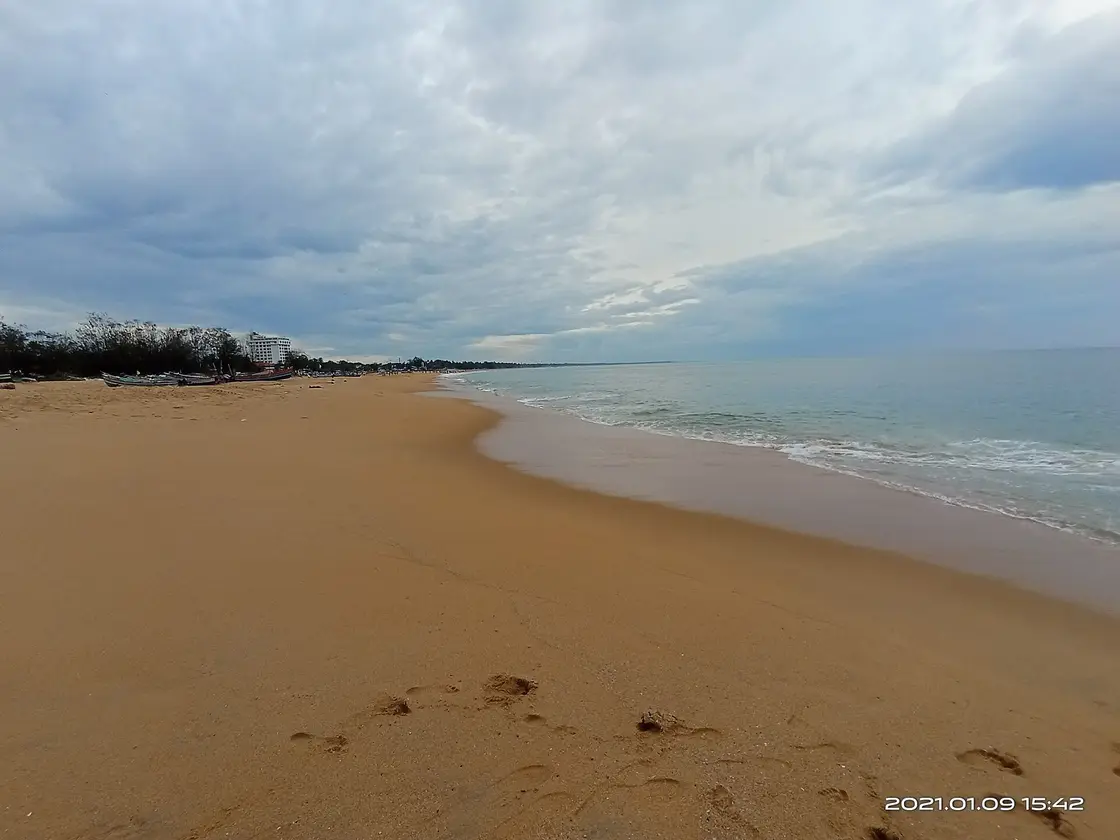
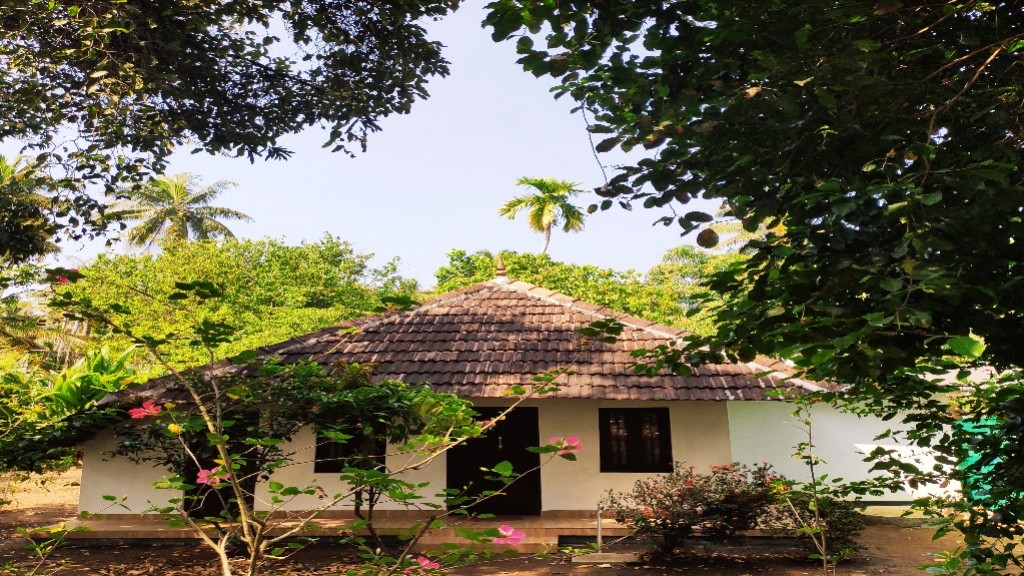
Kollam Beach — officially Mahatma Gandhi Beach — is the golden seafront of the old spice port of Kollam (Quilon), where a breezy promenade, a landscaped park and the sweep of the Arabian Sea meet on the edge of one of Kerala’s most storied trading towns. Barely a couple of kilometres from the town centre and the Ashtamudi backwaters, it pairs easy sunset strolls with a remarkable hinterland of Portuguese and Dutch ruins, an old lighthouse and centuries of maritime memory.
The story of Kollam Beach
The first thing you notice at Kollam Beach is the light. In the last hour before dusk the Arabian Sea turns molten, fishing catamarans become dark silhouettes against the glow, and the whole promenade fills with families, courting couples, joggers and knots of friends sharing paper cones of roasted peanuts. This is the town’s living room, an easy walk from the heart of Kollam, and on any given evening it hums with the unhurried sociability that defines Kerala’s coastal towns.
The beach itself runs for well over two kilometres of clean, golden-brown sand, edged by a paved walkway and shaded by leaning coconut palms. The waves here can be spirited — Kollam is one of the few Kerala beaches to maintain lifeguard stations, and the currents earn a genuinely high hazard rating — so most visitors come to wade, paddle and watch rather than to swim far out. That, in truth, is the point. Kollam Beach is a place to slow down, to feel the salt wind and to let the horizon do the work.
Anchoring the shore is Mahatma Gandhi Park, an internationally styled seaside park laid out beside the sand with lawns, walking paths, a children’s play area and open spaces that draw local families through the evening. The park gives the beach a gentle, groomed character quite unlike the wild strands further north, and it is a large part of why Kollam Beach earned its distinction as Kerala’s first designated beach-wedding venue — a spot where couples exchange vows with the sea as their backdrop.
Look south along the coast and the mood shifts from leisure to legend. The old quarter of Thangassery (Tangasseri) begins just beyond, its skyline pricked by a candy-striped lighthouse and littered with the weathered ruins of colonial forts and centuries-old churches. Walking that way from the beach is like stepping out of the present and into the age of pepper fleets and merchant governors, when this shoreline was fought over by three European powers.
The sea has always given Kollam its purpose. Fishing communities still launch their boats from these sands each morning, and the day’s catch feeds the town’s appetite for coastal Kerala cooking — fiery fish curries, prawns and calamari served at simple eateries a short walk from the shore. Come evening, food carts and small stalls line the promenade, and the smell of frying and spice drifts along with the breeze.
For all its history, Kollam Beach wears its past lightly. Most visitors come simply for the sunset, the sea air and the company of a crowd at ease. But the layers are always there beneath the surface — a working fishing beach, a wedding destination, a public park and the doorstep to one of the oldest ports on the Malabar Coast, all folded into a single evening stroll by the water.
History
Kollam — long known to the wider world as Quilon — is among the oldest continuously inhabited port cities on India’s Malabar Coast, and its beachfront is the seaward face of that ancient trade. From the early centuries of the Common Era, ships from Rome, Arabia, Persia and China called here to load pepper, ginger, cardamom and other spices grown in the hills inland, making Kollam a great emporium of the Indian Ocean spice routes. The fourteenth-century Moroccan traveller Ibn Battuta counted Quilon among the finest ports he had seen in a quarter-century of journeying.
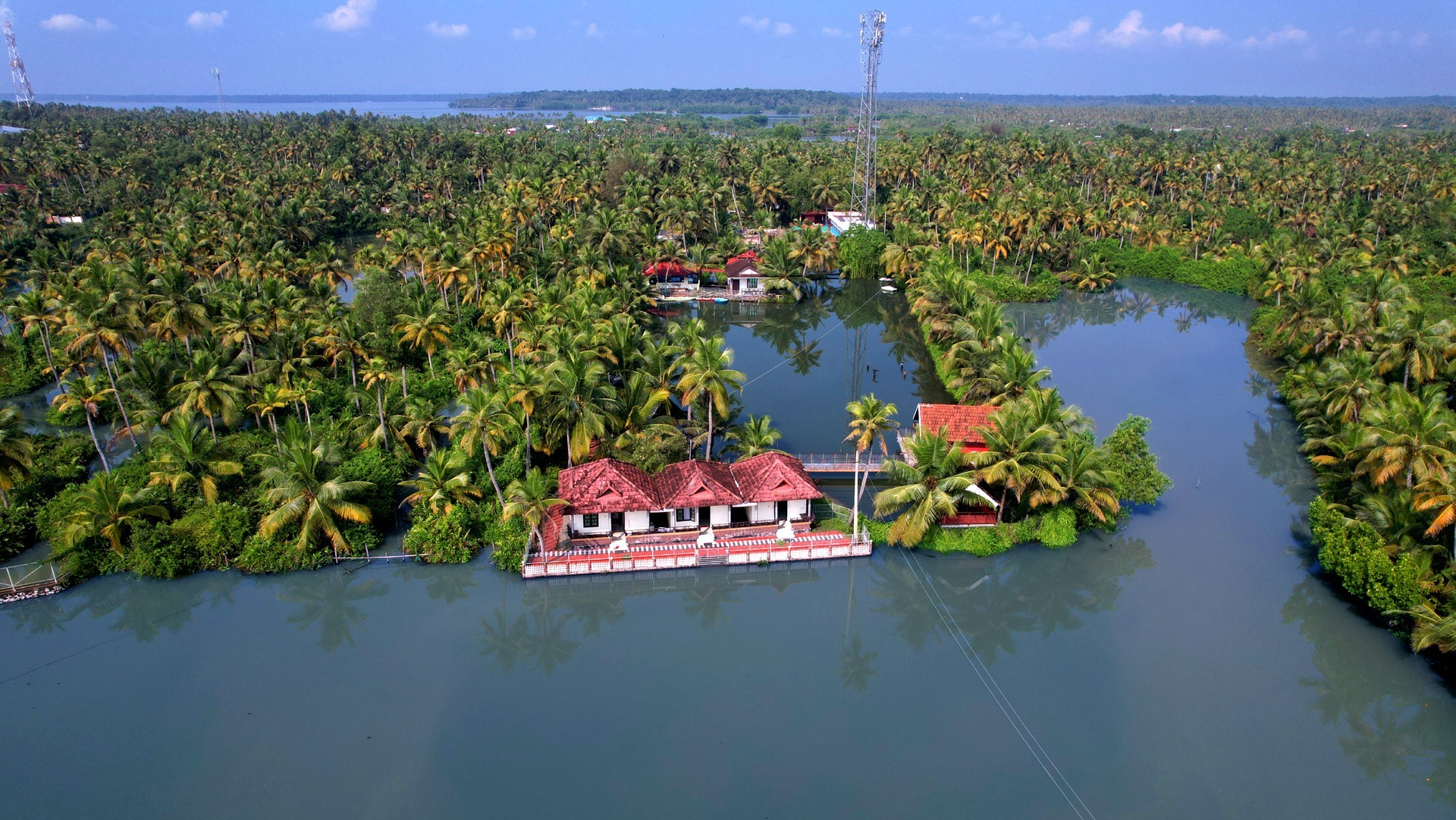
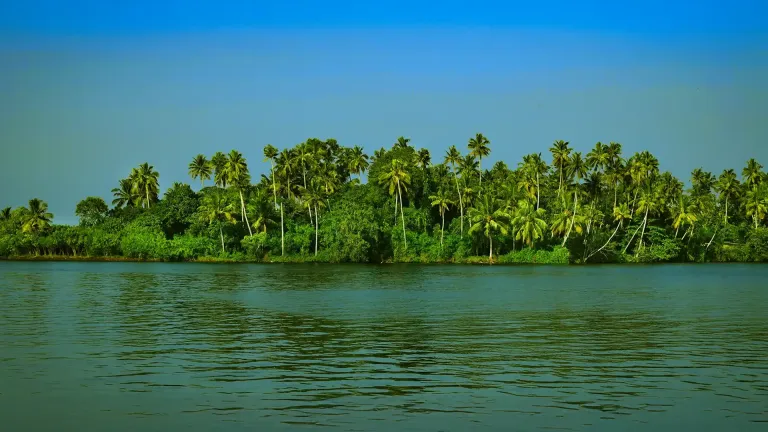
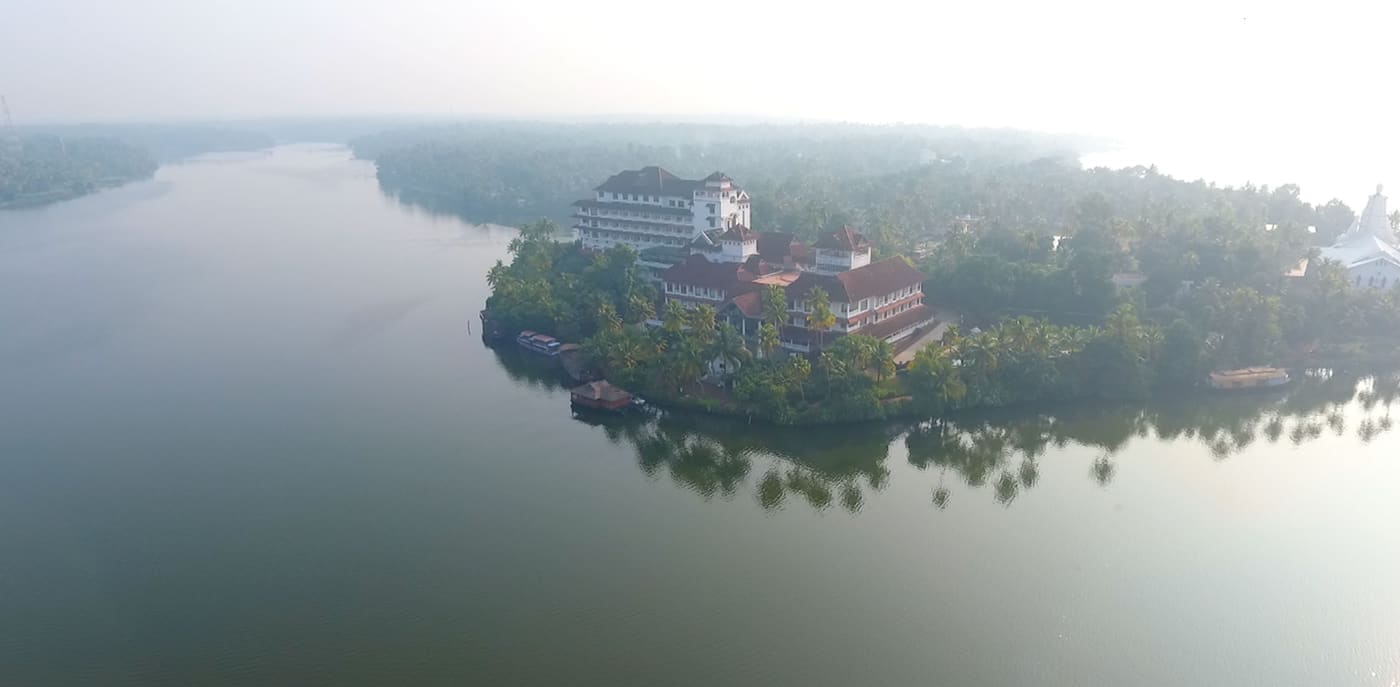
The town’s fortunes were tied to the sheltered waters of Ashtamudi Lake, the many-armed backwater on whose banks Kollam grew, which opens to the Arabian Sea near this coast. That natural harbour let Kollam serve as a trans-shipment hub between the backwaters and the open sea, and gave it lasting importance to Arab, Chinese and later European merchants long before the colonial era proper began.
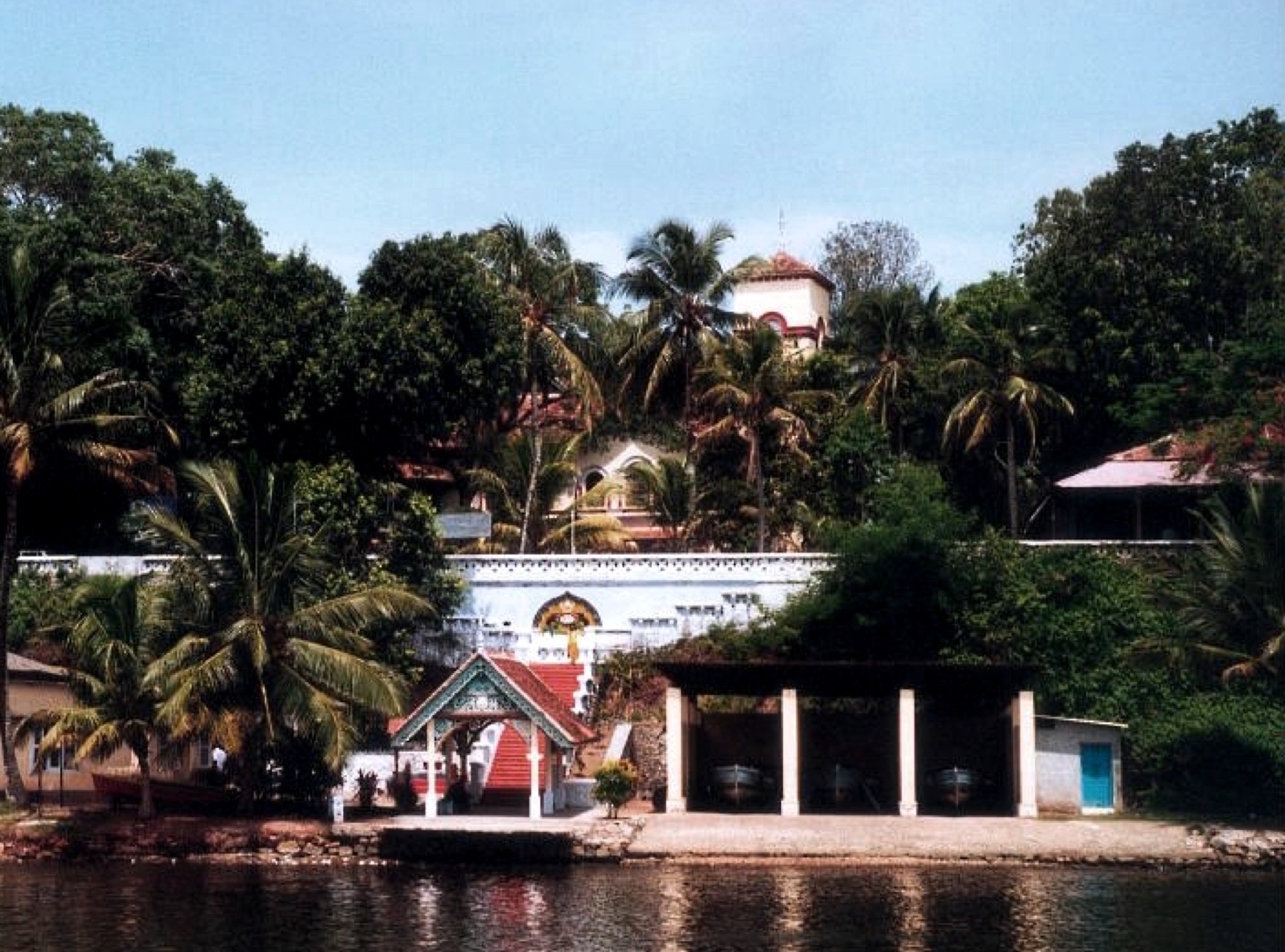
European contest for the pepper trade reshaped the shore at Thangassery, just south of the beach. The Portuguese arrived in the early sixteenth century — establishing a trading presence around 1502 and raising St Thomas Fort at Thangassery in 1518 — turning this stretch of coast into a centre of the pepper trade. In 1661 the Dutch wrested control of Thangassery from the Portuguese, holding the fort and settlement until the British took it in 1795. The tumbled ramparts, old cemeteries and churches that survive at Thangassery are the physical residue of that three-way struggle.
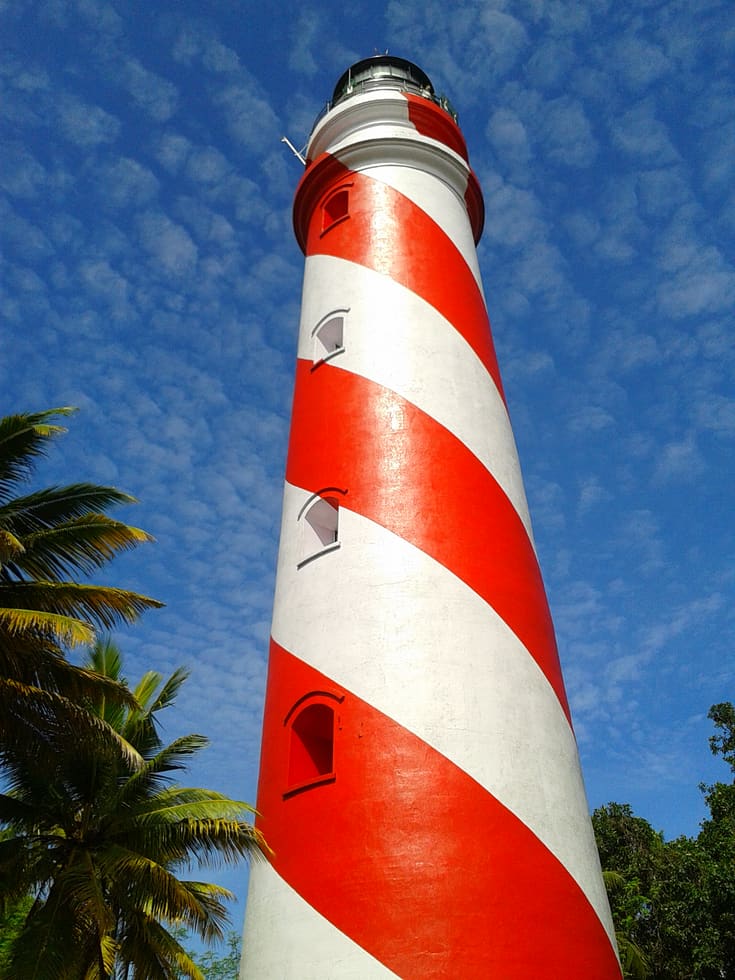
The Tangasseri Lighthouse, the tall red-and-white tower that presides over the coast just beyond the beach, was commissioned in 1902 and rises around 44 metres (about 144 feet). It replaced older navigational lights and long guided ships toward the port, its beam a fixed point in Kollam’s maritime life for more than a century. Nearby, the Tangasseri breakwater was built to shelter Kollam Port, which in modern times became famous as a hub of India’s cashew-processing and export trade.
The beach’s civic identity is more recent. Mahatma Gandhi Park was laid out and inaugurated in the 1960s by the then Vice-President of India, Zakir Husain, giving the town a landscaped seaside promenade to match its historic waterfront. Today that combination — an ancient spice port, a colonial frontier and a modern people’s park — is what makes a stroll here so unexpectedly rich.
Why visit
Sunsets over the Arabian Sea from a broad, walkable promenade — arguably the best free show in town, and the reason locals gather here every evening.
A landscaped seaside park (Mahatma Gandhi Park) right beside the sand, with lawns, paths and a children’s play area that make it easy for families and first-time visitors.
An extraordinary historical hinterland within walking distance: the 1902 Tangasseri Lighthouse and the ruined Portuguese and Dutch forts and old churches of Thangassery.
A genuine working fishing beach where you can watch catamarans launch and land, then eat fresh coastal Kerala seafood a short stroll away.
Its status as Kerala’s first beach-wedding destination, giving the shore a groomed, event-friendly character unlike the wilder strands elsewhere.
An ideal, low-effort add-on to a Kollam trip built around the Ashtamudi backwaters and houseboats — sea and lake sights within a couple of kilometres of each other.