The story
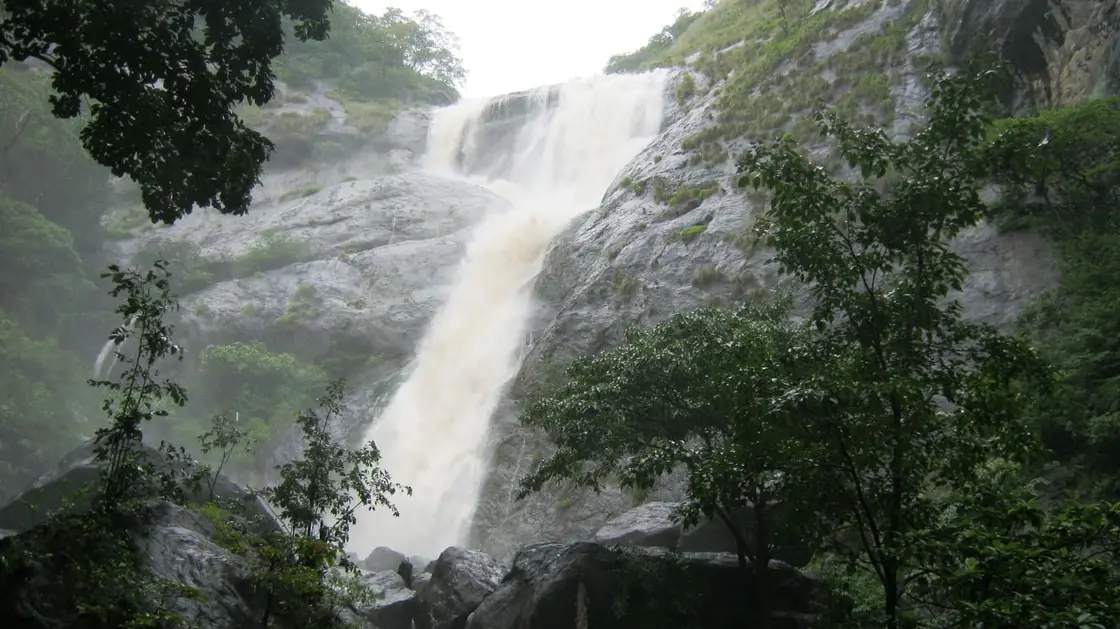
Deep in the forests above Thenmala, where the Kollam plains give way to the Western Ghats, the Kallada river spills over a rock face and shatters into a foaming white curtain. Local people named it Palaruvi — the ‘stream of milk’ — and one look tells you why: the water breaks so completely on the way down that it looks less like a river and more like milk poured from the sky.
The story of Palaruvi Waterfalls
Palaruvi sits on the eastern edge of Kollam district, near the little forest town of Aryankavu, close to the point where Kerala hands over to Tamil Nadu. To reach it you leave the busy Kollam–Shencottah road, turn inland, and follow a lane that dies at a forest car park. From there the last stretch is on foot — a walk of roughly half a kilometre (indicative — confirm locally) through shade so dense that the sound of the falls reaches you long before the water does.
The name is a small poem in Malayalam. ‘Pal’ is milk, ‘aruvi’ is stream, and together they describe exactly what the eye sees. The Kallada river arrives at the lip of the cliff and drops in a single, near-vertical plunge, splitting into a broad froth of white as it goes. On a full-flow day the whole face of the rock disappears behind that milky veil, and a cool spray drifts out across the pool and the visitors gathered along its edge.
Sources put the height at around 300 feet — roughly 91 metres — though the exact figure varies from one account to another, and it is best treated as an approximation rather than a surveyed fact. By most reckonings it ranks among the tallest waterfalls in India; several databases place it around 32nd on the national list. What matters more on the ground is the scale of it: the drop is tall enough that the water is already a fine spray by the time it reaches the shallow pool below.
That pool is the heart of the visit. It is broad and relatively gentle at the base, and generations of families have come here to wade and bathe in the falling water. There are separate, easier bathing areas set aside for women and children, and on weekends and holidays the rocks fill up with picnickers, day-trippers from Kollam and Thiruvananthapuram, and pilgrims breaking their journey to the nearby Aryankavu temple.
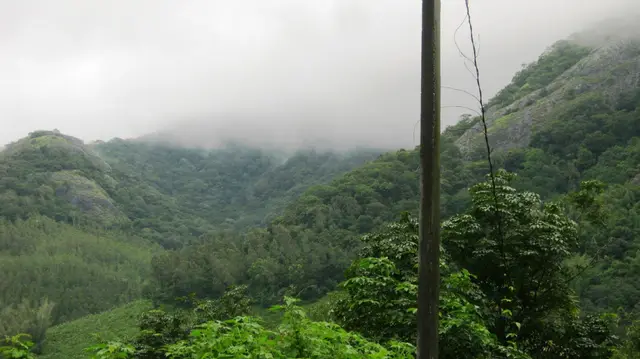
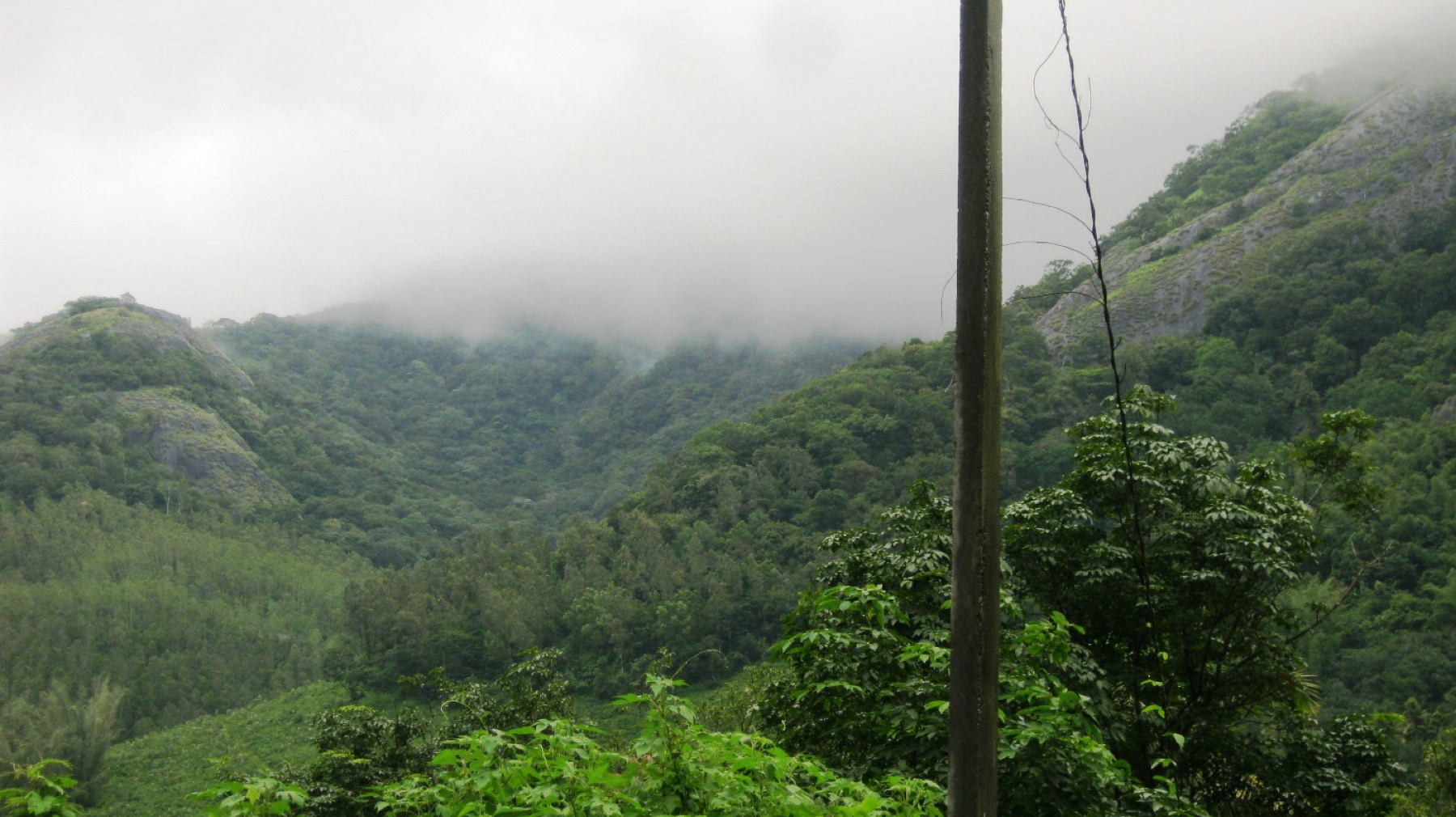
The forest itself is as much the attraction as the falls. This is Western Ghats country — a biodiversity hotspot of tropical trees, flowering shrubs, butterflies and birds. Patient visitors spot hornbills, woodpeckers and kingfishers in the canopy, and the whole approach walk has the damp, green, unhurried feel of true rainforest. Palaruvi is part of the wider Thenmala eco-tourism landscape, India’s first planned eco-tourism destination, which spreads across these same forested hills.
For all its beauty, Palaruvi is a creature of the seasons, and that is the single most important thing to understand before you go. In the monsoon and the months just after, the falls are thunderous and the pool is full; in the dry heat of high summer the flow thins to a trickle and the forest department may restrict or close access altogether. Come at the right time and it is one of Kerala’s great sights; come in the wrong month and you may find little more than wet rock.
Legend & myth
A gentle folklore clings to Palaruvi, and it is worth framing clearly as belief rather than record. Water from these falls is widely held to carry Ayurvedic, healing qualities — the story goes that the Kallada river, before it reaches the cliff, threads through natural groves of medicinal herbs high upstream, and carries something of their virtue down with it. Some Ayurvedic physicians are said to treat a dip at Palaruvi almost as a form of herbal bathing, and to recommend it to patients on that basis. It is a traditional belief, not a proven medical claim, and should be taken in that spirit.
Older tales reach further back still. Local legend connects these forests to ancient sages who are said to have come here to perform penance, drawn by the seclusion and the pure water — the kind of story that gathers around many of Kerala’s remote, wooded waterfalls. There is no historical proof behind it, and it survives as folklore rather than fact, but it adds to the sense that Palaruvi has long been regarded as a place set slightly apart from the ordinary world.
History
As a natural feature, Palaruvi has no founding date — the Kallada river has been carving this drop for far longer than anyone has been counting. What has changed over time is the way people reach it and think about it. For centuries it was simply a landmark on the forested route between the Kollam coast and the passes into Tamil Nadu; today it is a managed tourist site on the fringe of one of India’s best-known eco-tourism projects.
The falls owe part of their modern accessibility to the railway. The Kollam–Shencottah (Sengottai) line, a metre-gauge chord line later converted to broad gauge, was cut through these hills to link the Malabar coast with the Tamil interior, and it runs close by. Trains bound for Shencottah stop at Aryankavu, only about four kilometres from the falls, which for decades gave travellers and pilgrims a way into what is otherwise deep forest country.
The bigger story around Palaruvi is Thenmala. In the late 1990s and early 2000s the Kerala government developed Thenmala, a short distance away, as India’s first planned eco-tourism destination — a deliberate attempt to organise tourism around conservation rather than against it. Laid out in culture, adventure and leisure zones, and sharing its forests with the Shenduruny (Shendurney) Wildlife Sanctuary at the foot of the Ghats, Thenmala reframed this whole belt of hill country, Palaruvi included, as a place to visit with care.
The forest around the falls is not incidental scenery but a working part of that conservation landscape. It falls under forest-department control, which is why entry is ticketed, hours are fixed, and access can be closed at short notice for safety or during the driest months. The bathing pool, the marked areas for women and children, and the walkways are all part of a managed site rather than a wild, unwatched one.
Put together, the history of Palaruvi is really the history of how a remote forest waterfall became a destination: first a landmark on an old trade and pilgrimage route, then a stop near a mountain railway, and finally a signature sight within a planned eco-tourism region that draws visitors from across Kerala and beyond.
Why visit
The sight itself is the reason to come. A near-vertical drop of around 300 feet (indicative — the figure varies by source), breaking into a broad milky-white sheet of foam, is genuinely spectacular when the river is running full, and few waterfalls in Kerala pull off the ‘stream of milk’ effect quite so literally.
You can get in the water. Unlike many tall falls that are for looking only, Palaruvi has a bathing pool at the base, with easier, sheltered areas set aside for women and children — which is why it has been a beloved family picnic spot for generations.
The setting is real Western Ghats rainforest. The short walk in passes through dense, shaded tropical forest alive with butterflies and birds — hornbills, woodpeckers and kingfishers among them — so the approach is part of the pleasure, not just a means to an end.
It anchors a wider day out. Palaruvi sits within the Thenmala eco-tourism landscape, with the Thenmala dam and gardens, the Shenduruny Wildlife Sanctuary and the Aryankavu temple all within reach, so it pairs easily into a full itinerary rather than a single stop.
There is a gentle folklore that adds to the appeal — the long-held belief that the water carries Ayurvedic, herb-borne healing qualities, and older tales of sages who meditated in these forests. Taken as tradition rather than fact, it gives the place an atmosphere beyond the purely scenic.
It is refreshingly easy to reach for a forest waterfall. Sitting just off the Kollam–Shencottah road, only about four kilometres from Aryankavu railway station, Palaruvi is far more accessible than its wild-looking surroundings suggest, making it a rewarding half-day trip from Kollam or Thiruvananthapuram.