The story
On the eastern shore of the vast Vembanad Lake, a compact ribbon of mangrove, paddy‑bund and rubber‑estate greenery erupts each dawn into a riot of wingbeats and calls. The Kumarakom Bird Sanctuary — often listed as the Vembanad Bird Sanctuary — is a modest patch of roughly 14 acres that punches far above its size, drawing egrets, herons, darters, teals and, in the cold months, travellers on the wing from the Himalayas and Siberia. It is a place best entered on foot in the half‑light, binoculars up and voices down.
The story of Kumarakom Bird Sanctuary
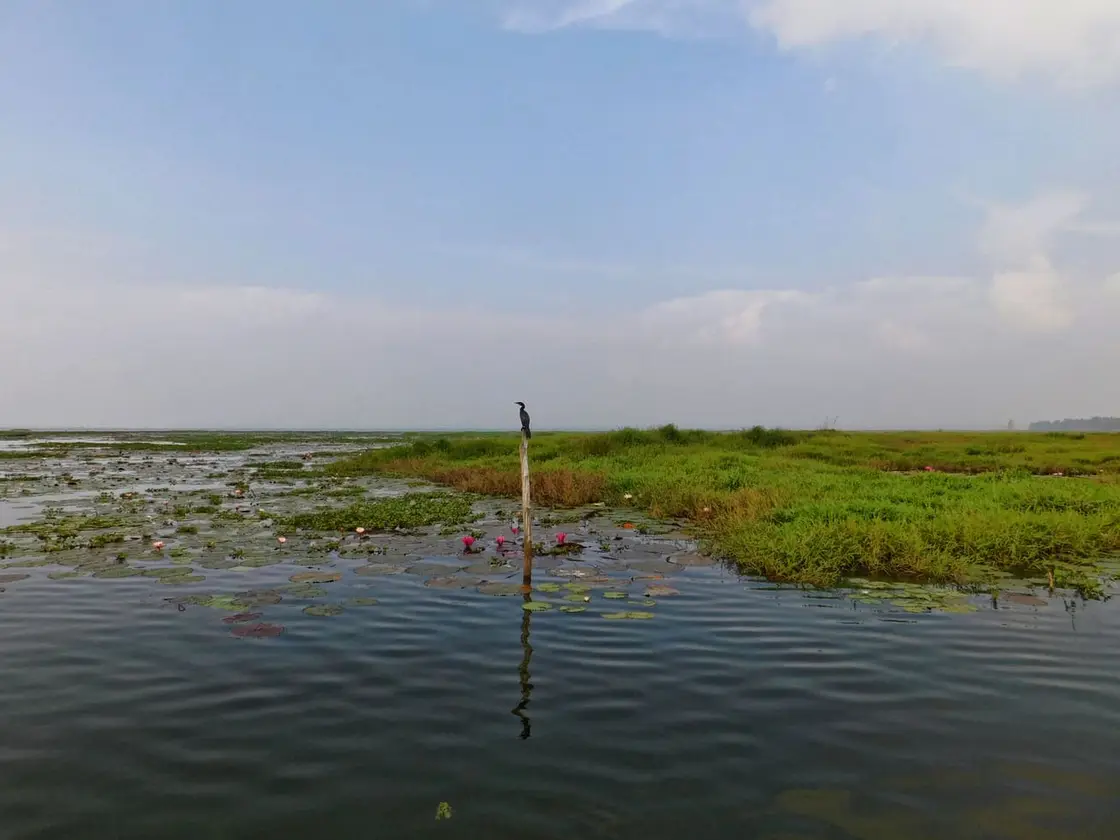
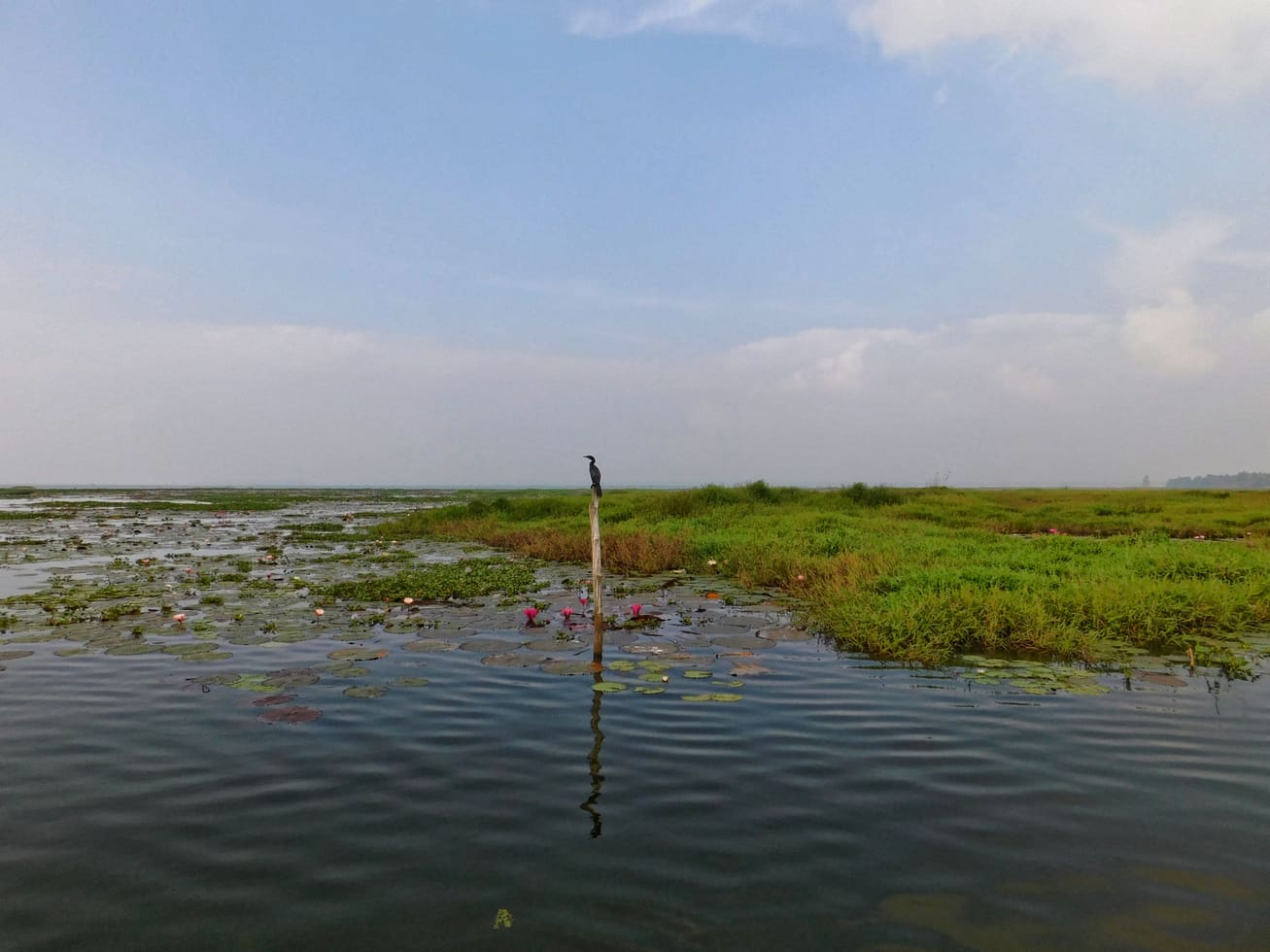
The sanctuary is deceptively small — most first‑time visitors expect a sprawling forest reserve and instead find an intimate garden of trees threaded by a single walking trail. That compactness is the point. Within a short loop you pass from planted mangrove and marshy fringe to the open water of Vembanad Lake, and the birds concentrate accordingly. On a good winter morning the branches over your head can be white with roosting egrets, while cormorants dry their wings on the mudflats below.
Come at first light and the sanctuary rewards you. In the cool early hours the birds are active and unhurried, feeding along the shallows and calling across the canopy before the heat of the day sends them into shade. By late morning much of the activity subsides, which is why seasoned birdwatchers treat the dawn window as non‑negotiable and why the walk is far quieter, and richer, than an afternoon stroll would suggest.
The soundscape does as much as the sightings. Long before you separate a darter from a cormorant against the glare, you hear the koel, the harsh croak of a heron lifting off, and the whistling of teals out on the water. Guides who have walked the trail for years read the calls like a map, steering you toward a roosting owl tucked into foliage or a Brahminy kite wheeling over the lake, its chestnut and white unmistakable against the sky.
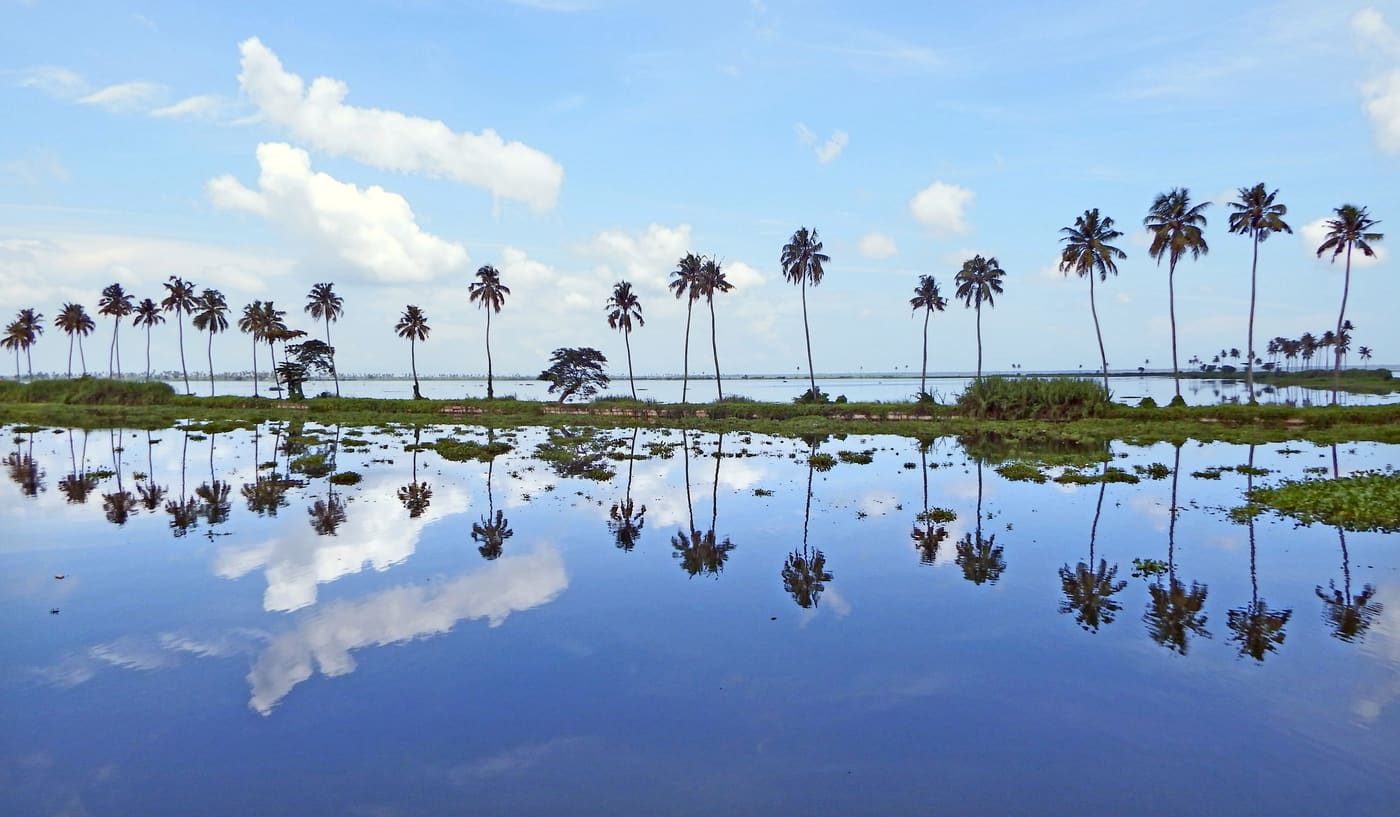
Water is the sanctuary’s organising principle. Set on the shores of Vembanad — Kerala’s largest lake and the heart of the celebrated backwaters — the reserve sits where fresh river water meets the brackish estuary, a mingling that feeds fish, frogs and insects and, through them, the birds. The paddy fields, canals and mangrove roots around Kumarakom form a wider wetland mosaic, so the sanctuary is really the visible core of a much larger living system.
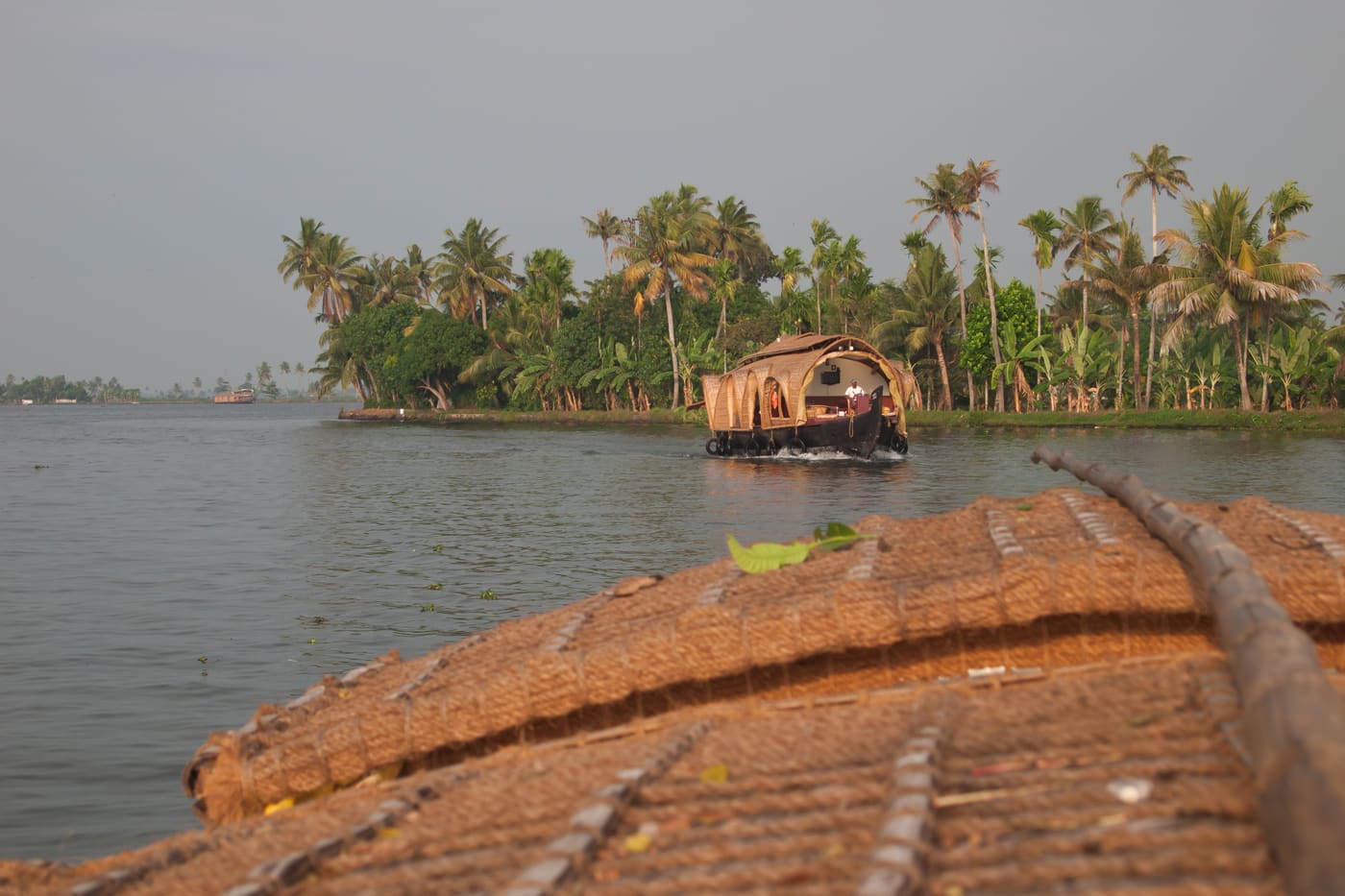
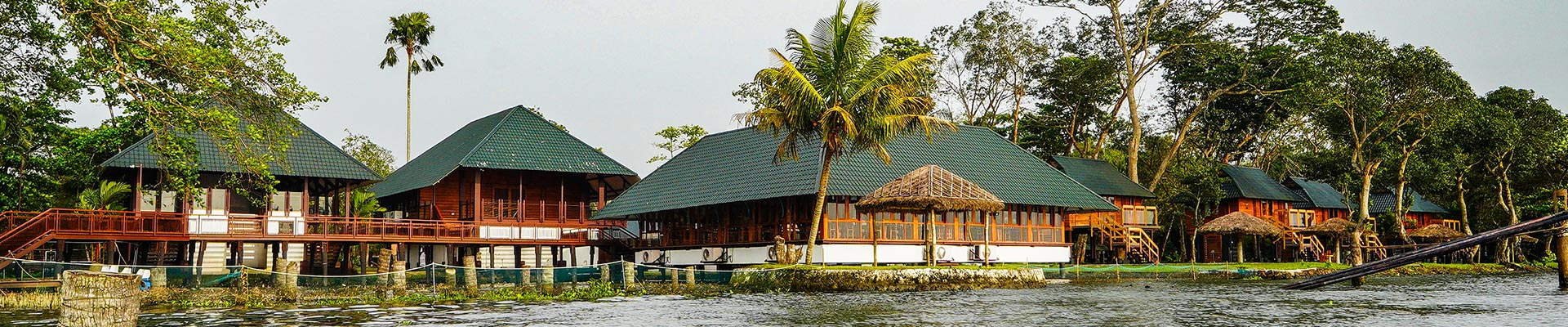
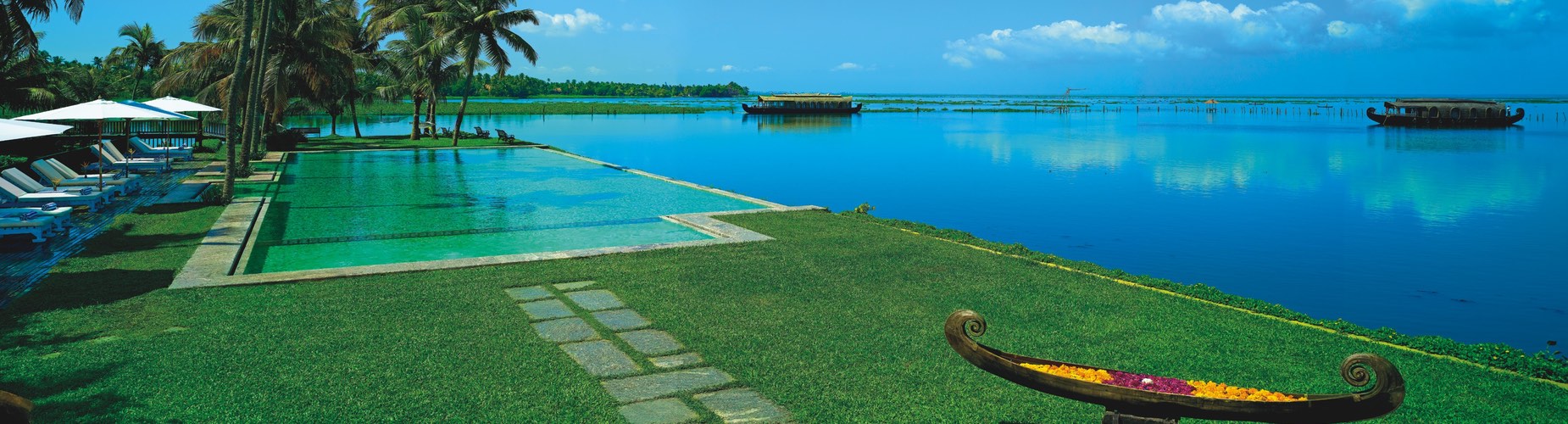
Many visitors pair the land trail with the water. A slow country‑boat or houseboat glide along the lake edge offers a second vantage, letting you drift past reed beds and half‑submerged branches where the birds perch at eye level rather than overhead. Seen from the water at sunrise, with mist lifting off Vembanad and the estate palms in silhouette, Kumarakom explains in a single frame why the backwaters are called a birdwatcher’s paradise.
For all its fame, the sanctuary asks little of you but patience and quiet. There are no grand gates or crowds of jeeps here — just a gravelled path, dripping foliage, and the discipline of moving slowly and looking hard. That restraint is exactly what makes it work: linger long enough at dawn and the ordinary‑seeming trees resolve, one careful glance at a time, into a densely inhabited world.
History
The sanctuary’s story begins not with conservation but with cultivation. It is widely traced to the mid‑nineteenth century — sources cite the year 1847 — when an Englishman of the Baker family, remembered in different accounts as George Alfred Baker (elsewhere as Alfred George Baker), set about reclaiming and developing the low wetlands near Vembanad Lake into workable estate land. The tract became known simply as Baker’s Estate, a name still attached to the sanctuary today.
Crucially, the Baker development left part of the land to nature. Accounts describe mangroves being planted along a stretch of the estate and that portion then being left largely undisturbed. Sheltered and food‑rich, the mangrove fringe was quickly adopted by resident waterbirds and, season after season, by migratory flocks — and so a farmed estate slowly became a wild roost, the germ of the sanctuary that exists now.
The estate later passed into public and institutional hands, and the protected core was formalised as a bird sanctuary spread over roughly 14 acres (about 5.7 hectares) on the lakeshore. Today it is managed within Kerala’s tourism and forest framework — commonly associated with the Kerala Tourism Development Corporation — and it carries a reputation, cited by several sources, as one of the earliest scientifically maintained bird sanctuaries in the country.
Its ecology is inseparable from Vembanad itself. The lake is Kerala’s largest and a Ramsar‑listed wetland of international importance, fed by several rivers where fresh water meets the brackish backwater. This mixing zone sustains fish and aquatic life that in turn support dense birdlife, making the little sanctuary a window onto the health of a far larger and ecologically significant wetland system.
The sanctuary has also been a stage for wetland awareness. It has hosted birdwatching and conservation events — including a programme organised around World Wetlands Day — reflecting a shift in how the site is valued: no longer estate land to be drained and planted, but a wetland habitat to be watched, counted and protected.
Why visit
It is one of Kerala’s signature birdwatching destinations, with sources citing on the order of 180 species — resident waterbirds year‑round and dozens of migratory species in winter — packed into a short, walkable loop.
The dawn experience is genuinely special: arrive early and you can watch egrets, herons, darters and cormorants feed and roost in the cool morning light, an atmosphere no afternoon visit can match.
The setting on the shore of Vembanad Lake means you can combine a land trail with a country‑boat or houseboat cruise, seeing the birds both from the mangrove path and from the water.
In the migratory months, birds arriving from the Himalayas and as far as Siberia — teals, flycatchers and others — join the residents, giving keen birders a real chance at species they would not see at home.
It is compact, accessible and unintimidating: a quiet, foot‑paced reserve rather than a vast jeep‑safari park, ideal for families, casual nature lovers and serious birders alike.
As the visible heart of the wider Kumarakom backwater wetland, it pairs naturally with the region’s houseboats, resorts and village life, making it an easy and rewarding half‑day within a larger backwaters trip.