The story
Vembanad is the vast, shimmering heart of the Kerala backwaters — widely described as the longest lake in India and the largest in the state, a labyrinth of brackish water, palm-fringed islands and below-sea-level paddy that stretches roughly 96 km through three districts. From the quiet resort village of Kumarakom on its eastern shore, you meet the lake at its gentlest: houseboats drifting past drooping coconut palms, kingfishers diving into still canals and a horizon that dissolves where water meets sky.
The story of Vembanad Lake
Seen from Kumarakom, Vembanad does not announce itself with drama so much as with immensity. The land simply runs out — paddy bund, coconut grove, a fisherman’s stilt — and then there is water, wide enough that the far bank melts into haze and you could believe you were looking at the sea. This is the great backwater lagoon of Kerala, a shallow sheet fed by rivers and flushed by tides, and Kumarakom sits on its eastern edge like a green thumb pressed into the blue.
The lake wears different names along its length. Here in Kottayam it is Vembanad Kayal; down towards Alappuzha the same water is called Punnamada; at its northern mouth in Kochi it becomes the Kochi Lake before spilling into the Arabian Sea. Four rivers and more — the Meenachil, Pampa, Manimala and Achankovil among them — pour their monsoon load into it, so the water is fresh after the rains and turns saltier towards the coast, a shifting balance that shapes everything from the fish to the farming.
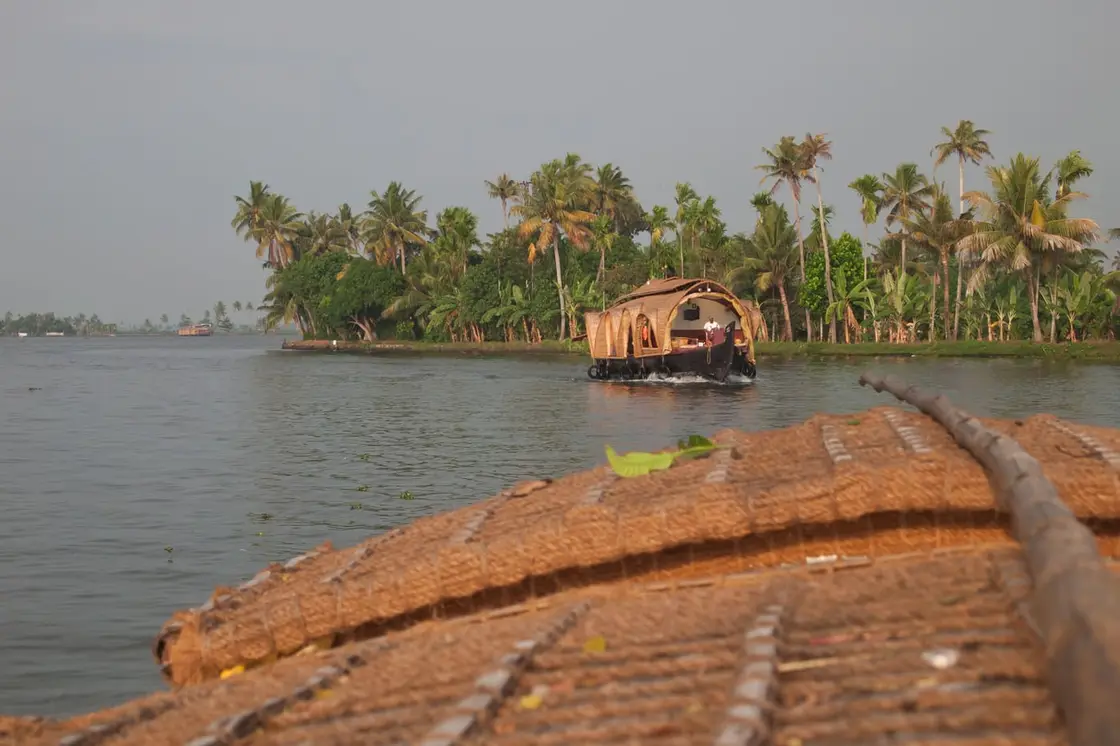
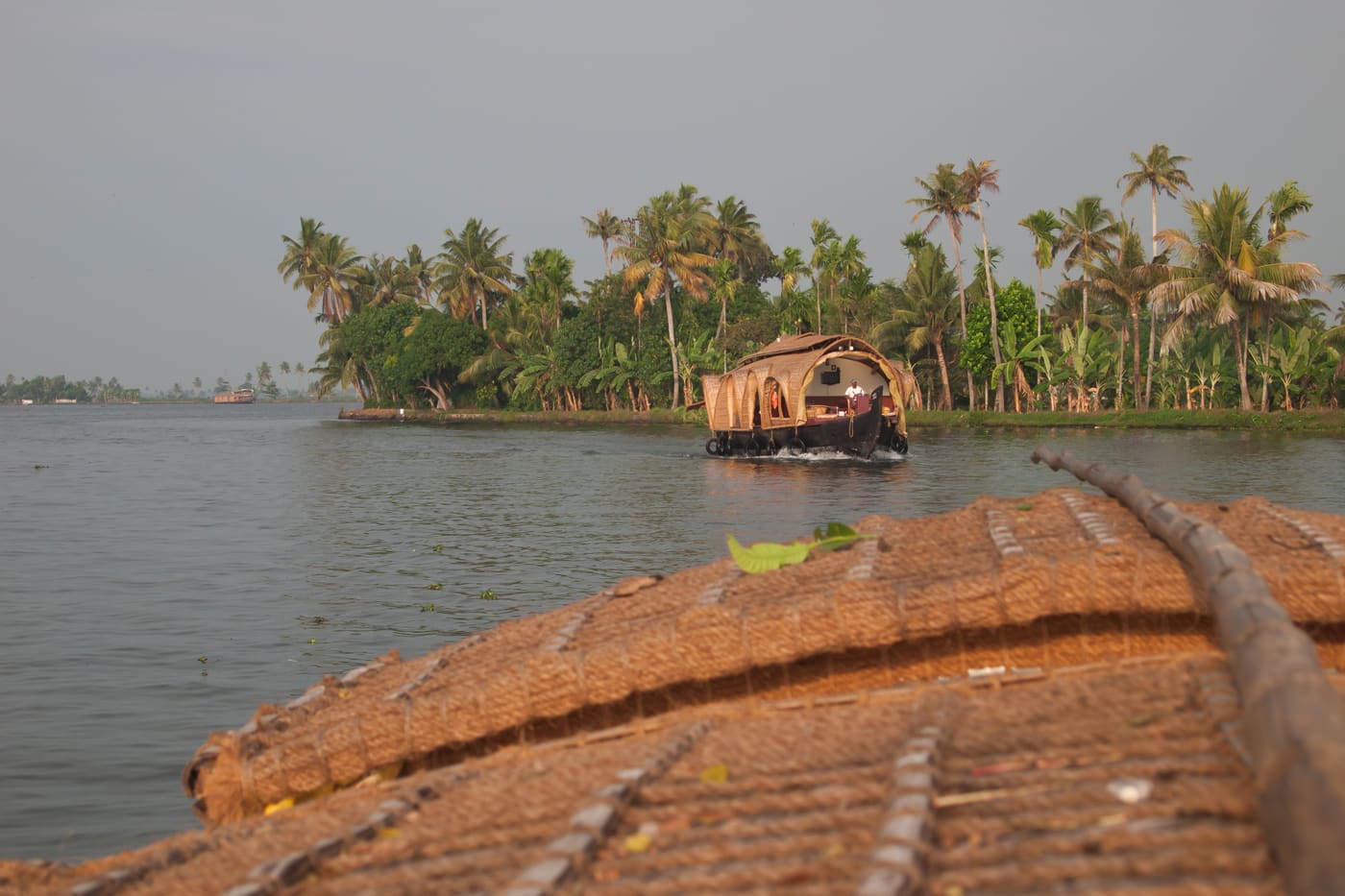
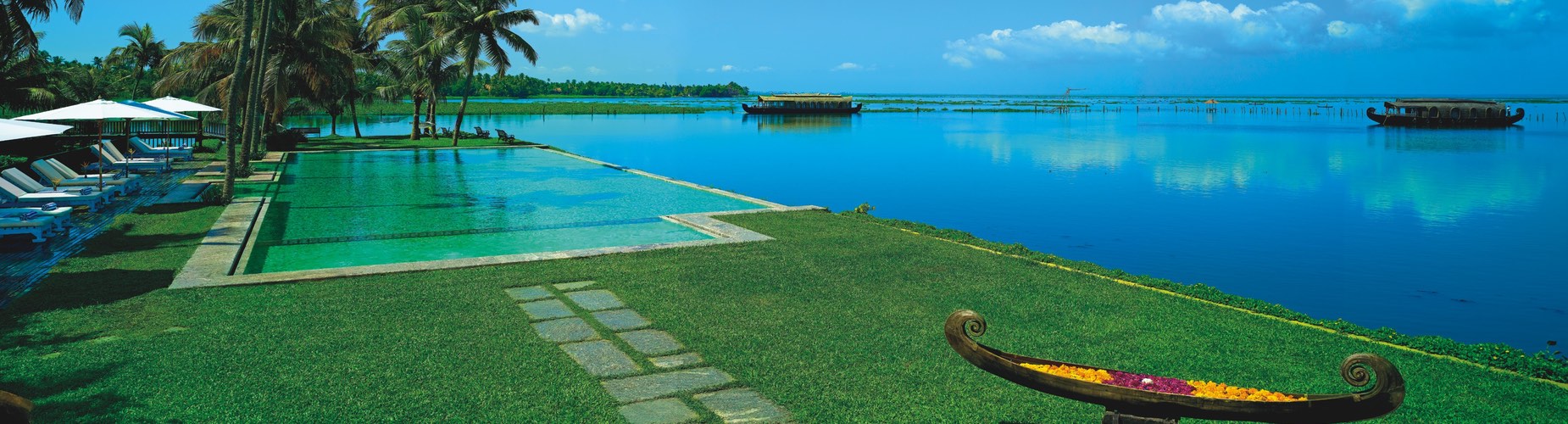
A day on Vembanad is measured in the slow arithmetic of a boat. The classic vessel is the kettuvallam, the old rice barge reborn as a houseboat, its ribs of jackwood lashed with coir rope and roofed in woven palm — no nails in the traditional build, only knots. It glides at walking pace past villages where life is lived at the water’s edge: women beating laundry on the ghats, toddy tappers shinning up palms, a church bell and a temple gong sounding across the same stretch of water.
For the narrow arteries a houseboat cannot enter, there is the shikara or a slender country canoe, poled into canals so tight the coconut fronds meet overhead. This is where you see the real Kuttanad — ducks herded in their hundreds across open water, mussel gatherers wading chest-deep, prawn farmers tending their sluice gates. The lake is not scenery here; it is a working landscape, a place where people have farmed below the level of the sea for generations.
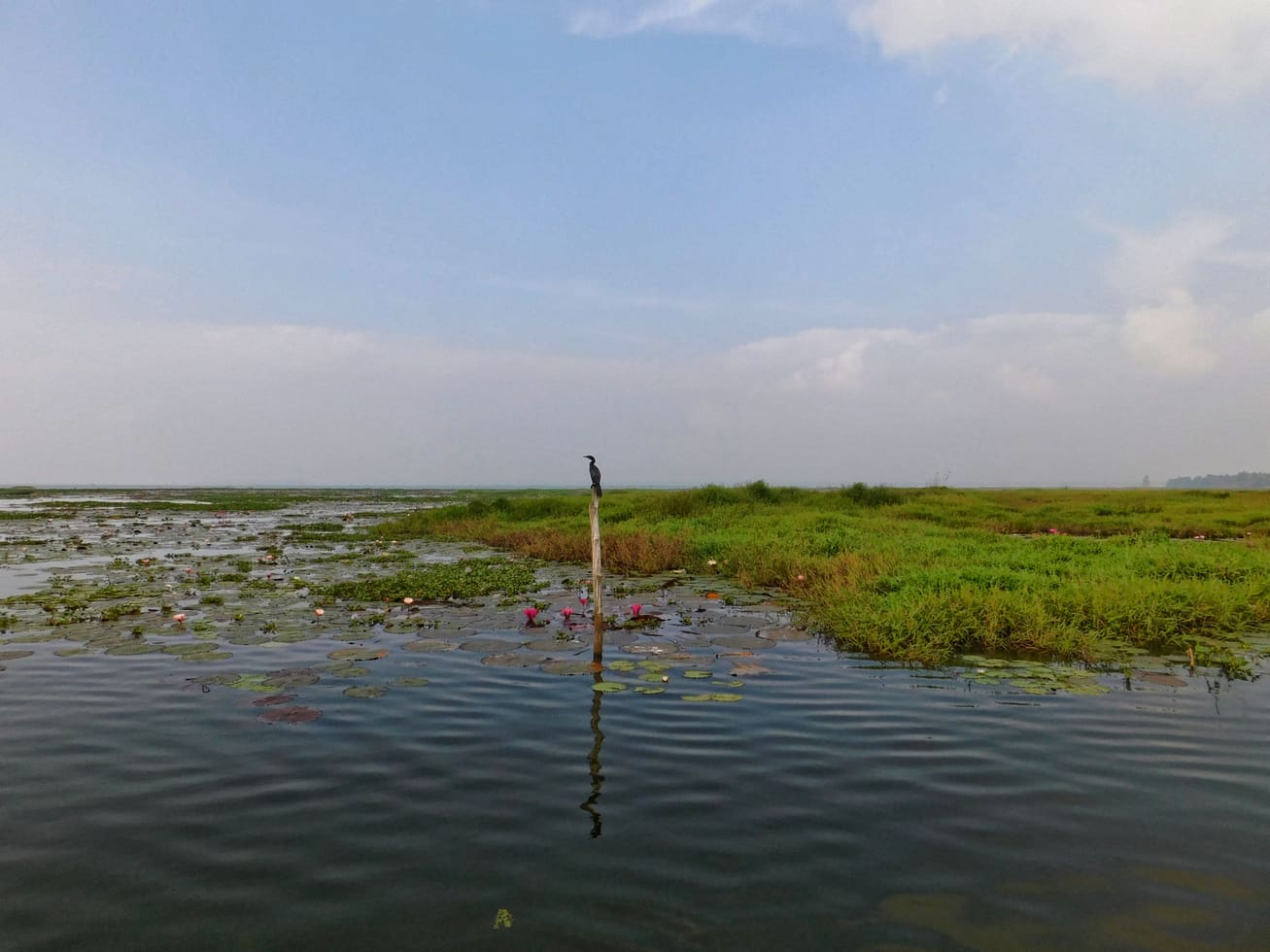
The most magical hours are the edges of the day. At dawn the water is a sheet of pewter and mist hangs in the palms while cormorants and darters fan out to fish; by late afternoon the light turns molten gold and the returning fishing canoes cut long silhouettes against it. A sunset cruise out of Kumarakom, with the sky bleeding orange into the lake and the first lamps flickering on the far shore, is for many travellers the single image they carry home from Kerala.
And then there is the birdlife. The Kumarakom Bird Sanctuary spreads over the lake’s shore in a tangle of mangrove and greenery, drawing egrets, herons, darters and cormorants year round and, in the cool months, flocks of migrants that have flown down from Siberia and the Himalayas. To sit in a canoe at first light with the trees noisy above you and the lake still as glass is to understand why this modest corner of Kottayam became one of Kerala’s most beloved retreats.
Legend & myth
Local tradition offers a poetic explanation for how such a vast body of water came to be. The name Vembanad is said to descend from an ancient realm called Vempoli Nadu, through which the sacred river Pampa once flowed. As the story goes, in a distant age this land — along with a stretch of the Pampa — sank into the earth, and the great lake welled up to fill the wound it left behind.
The tale is best enjoyed as legend rather than geology; geographers attribute the lagoon to the slow, natural drowning of the coast and the shifting of river mouths over millennia. Still, the idea of a submerged kingdom lingering beneath the still water gives an old, mythic weight to a lake that can feel, on a misty dawn, genuinely otherworldly.
History
Vembanad is a coastal lagoon — one of a chain of such backwaters strung along the Kerala shore where rivers, sea and shifting sandbars have woven land and water into a single amphibious country. For centuries it was a highway before it was a holiday: rice, coir, spices and timber moved along it in country boats, and the ports at its northern end grew rich on the trade that passed through its mouth to the Arabian Sea.
The lake’s modern shape was written by human hands as much as by rivers. From the early nineteenth century, farmers in the region now called Kuttanad began the audacious work of reclaiming land from the shallow lake itself — throwing up bunds around patches of water, pumping them dry and planting rice on the lakebed. These reclaimed fields, the kayalnilams, sit below sea level, making Kuttanad one of the very few places on earth where paddy is farmed several feet beneath the tideline, kept dry only by an unending cycle of bunds and pumps.
The single greatest intervention came in the 1970s. To stop salt water from the sea creeping up and ruining the paddy, engineers built the Thanneermukkom barrage — often called the largest mud regulator in India — across the lake, linking Thanneermukkom in Alappuzha with Vechoor in Kottayam. Constructed by 1974 and in service from the middle of the decade, its shutters split Vembanad in two: a freshwater southern half held back for the farmers, and a tidal, brackish northern half open to the sea.
The barrage let Kuttanad’s farmers raise two or three crops a year where once they managed one, but it came at a steep ecological price. With the tidal flushing choked off, the southern lake stagnates for months, weeds such as water hyacinth choke the surface, and the famed inland fishery has collapsed — the catch of Karimeen, the pearl spot that is Kerala’s state fish, falling dramatically in the decades since the shutters closed. Silting and encroachment have shrunk and shallowed the lake, and its long-term health is now a live public debate.
In recognition of its outsized importance to wildlife and to people, Vembanad — together with the Kol wetlands to its north — was designated a Wetland of International Importance under the Ramsar Convention in 2002, ranking among the largest such sites in the country. It remains a vast, stressed, still astonishing ecosystem, and Kumarakom is the window through which most travellers come to know it.
Why visit
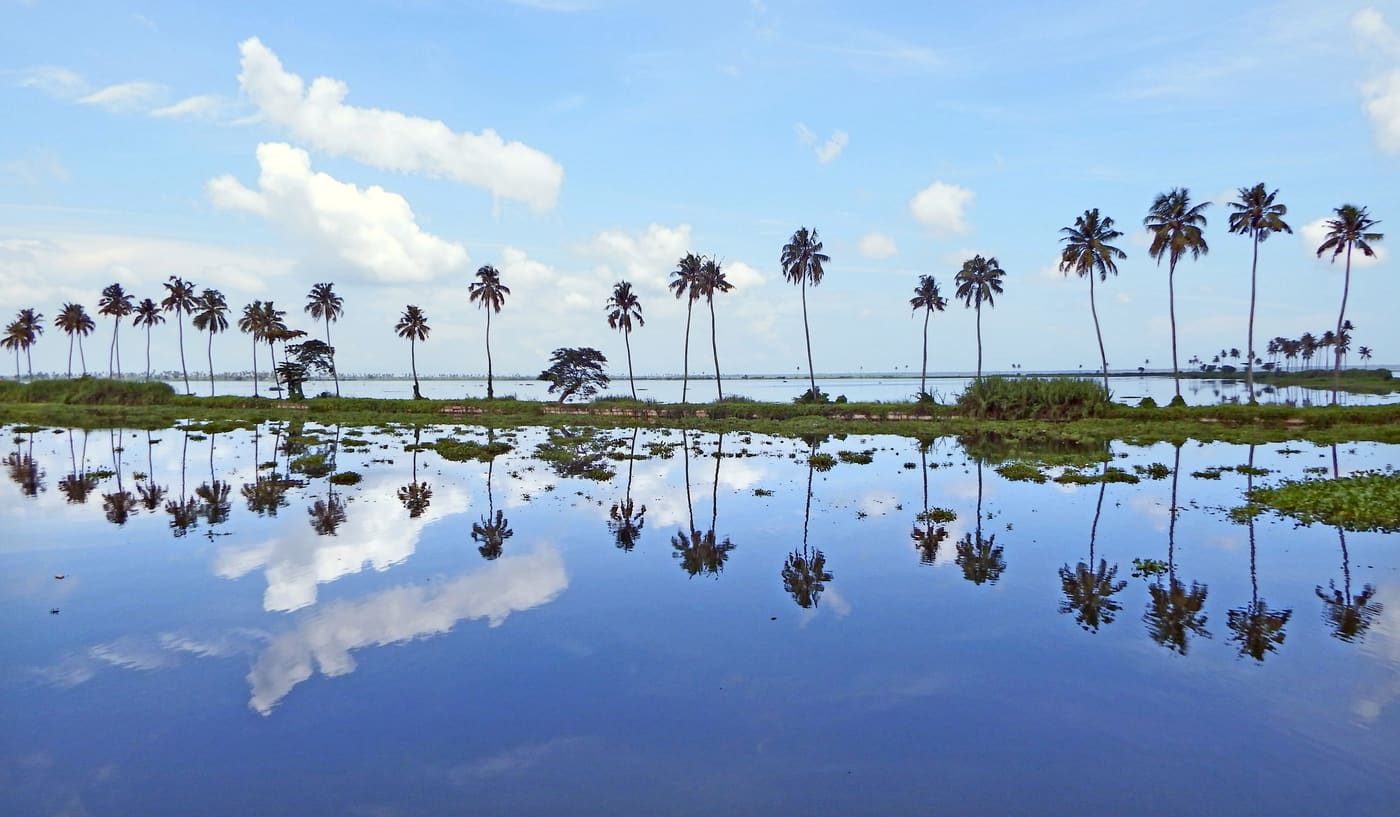
This is the backwaters at their most iconic — the very landscape that made Kerala famous. A cruise from Kumarakom across Vembanad delivers the postcard in motion: houseboats on open water, coconut palms leaning to their own reflections, and villages living at the waterline.
It is the largest lake in Kerala and widely counted the longest in India, a genuinely vast expanse that gives the horizon a sea-like openness rare among lakes — the sense of scale alone is worth the trip.
The Kumarakom Bird Sanctuary on the shore turns the lake into one of South India’s finest birding grounds, alive with egrets, herons, darters and cormorants year round and with Siberian and Himalayan migrants from November to February.
The choice of boats suits every appetite: a slow overnight kettuvallam houseboat for romance, a nimble shikara or canoe for the hidden canals of Kuttanad, or a short sunset cruise for those with only an evening to spare.
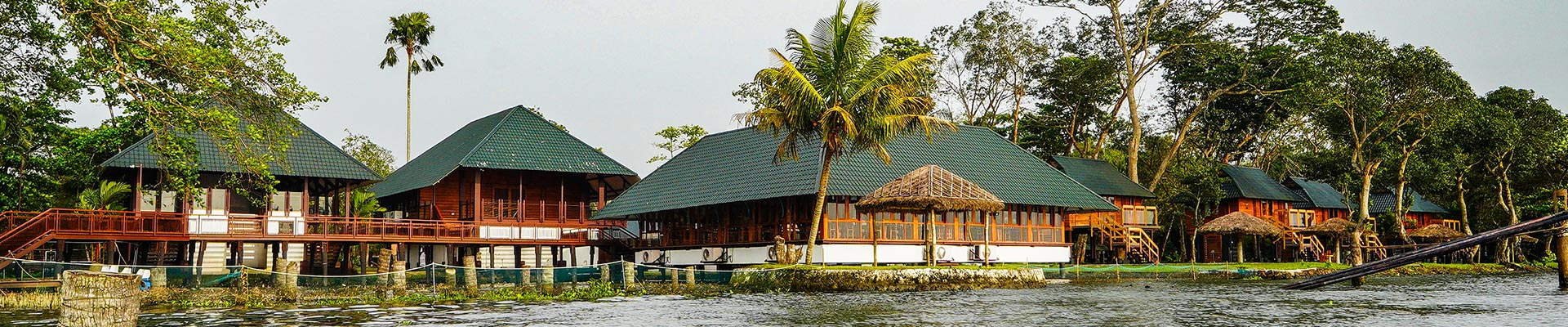
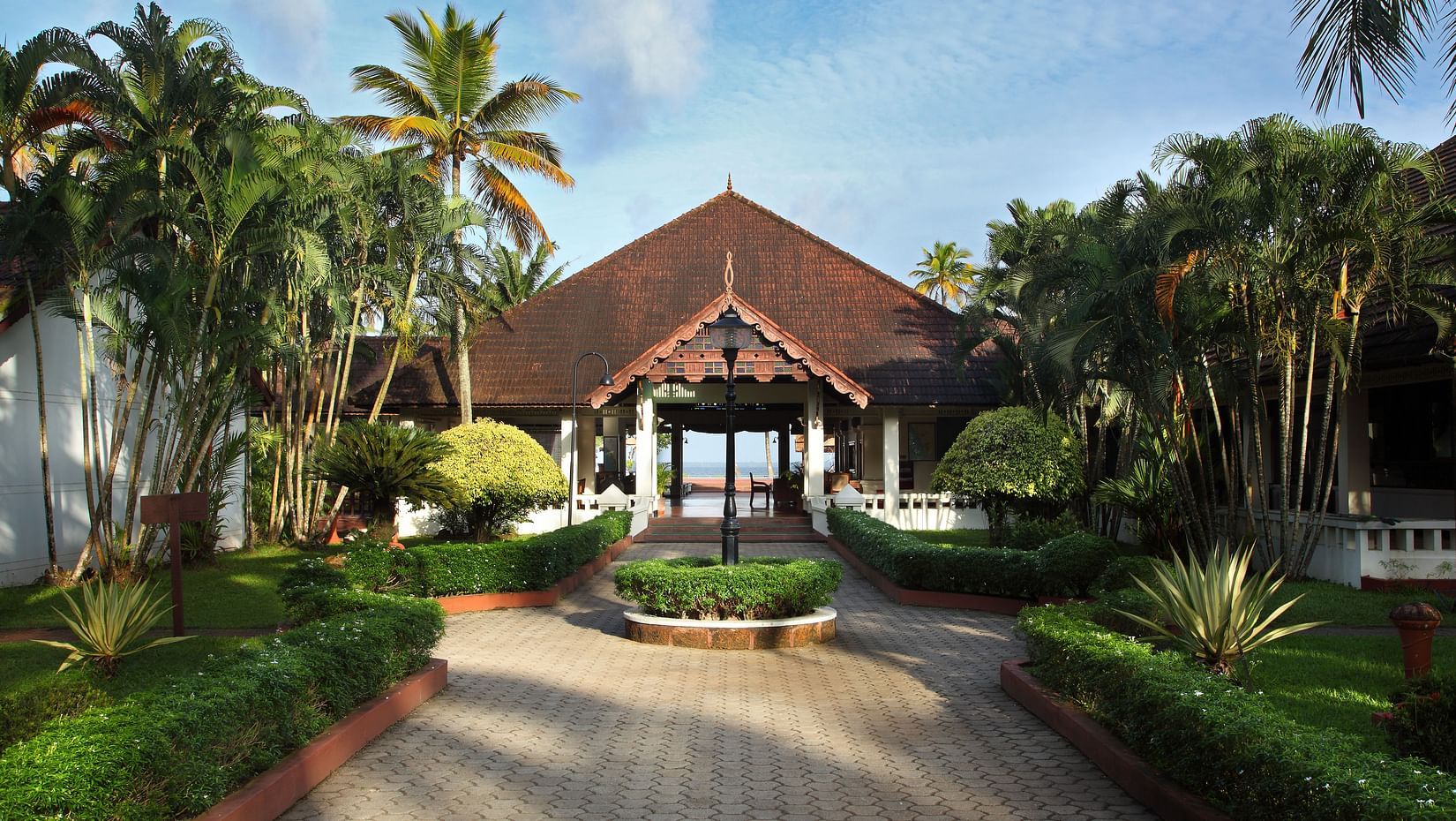
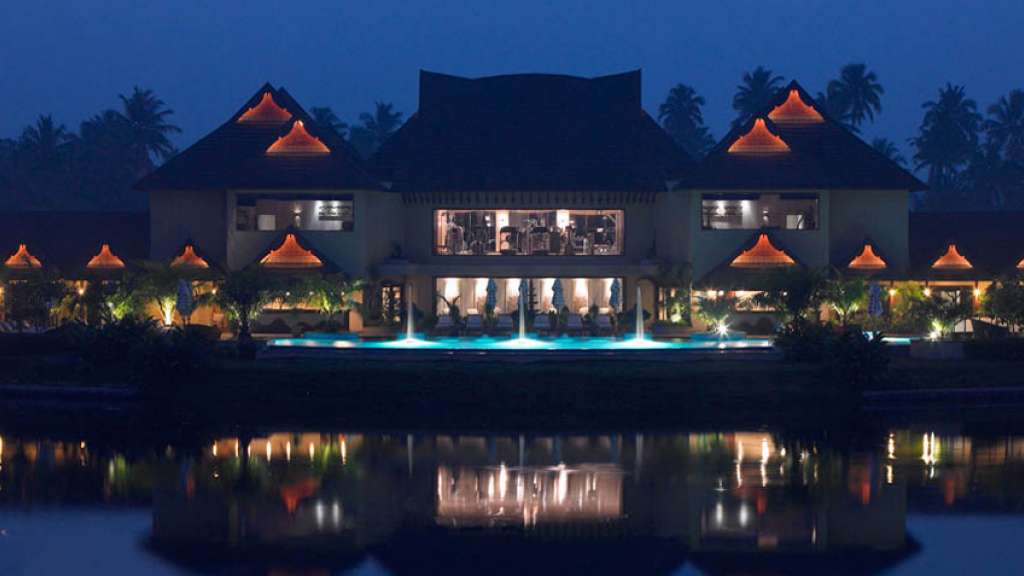
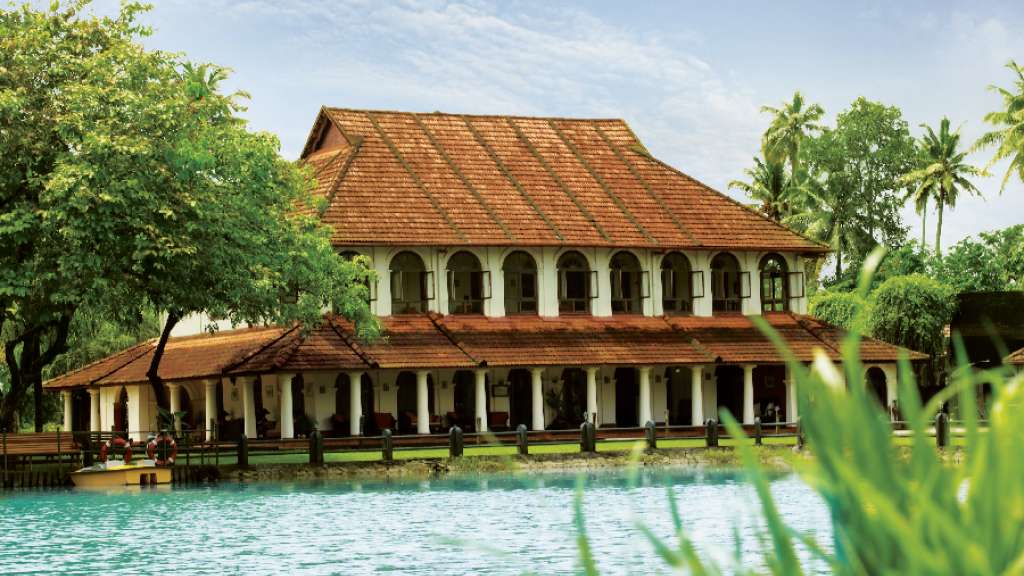
Kumarakom itself is a calm, green, well-served base — a cluster of islands and quiet resorts on the lake’s edge — that lets you experience the vastness of Vembanad without the bustle of a town, making it a favoured spot for honeymooners and unhurried travellers.
In August the lake near Alappuzha explodes into the Nehru Trophy snake-boat race and the wider Vallam Kali season, one of India’s great spectacles of colour, chant and sinew — a very different, thunderous face of the same tranquil water.