The story
Adrift in the vast sheet of Vembanad Lake, halfway between the paddy waterworld of Kuttanad and the resorts of Kumarakom, lies a tiny green island reachable only by boat — Pathiramanal, whose name whispers of the night. Little more than a leaf of land floating on the backwaters, it is one of Kerala’s most beloved birding havens: an uninhabited, forested speck where cormorants dry their wings, egrets stalk the shallows and, in winter, travellers arrive on wings from as far as Siberia. To reach it you drift out across open water in a houseboat or a low, quiet shikara, the lake widening around you until the mainland thins to a line — and then this hush of trees rises from the water, exactly as a much-loved legend says it once did, at midnight.
The story of Pathiramanal Island
Pathiramanal is small — a matter of some ten-odd acres (indicative — confirm locally), barely 550 metres from end to end — yet it looms large in the imagination of anyone who loves the Kerala backwaters. It sits in Vembanad, the longest lake in India, in the stretch of water between Thanneermukkom and Kumarakom, within Muhamma panchayat of Alappuzha district. There are no roads here, no bridges, no jetty-lined promenade. The only way across is over the water itself, and that single fact is the whole charm of the place: Pathiramanal is a destination you must earn by boat, and it rewards you with a stillness that the busier backwater routes have long since lost.
The crossing is half the pleasure. From Muhamma the island is only about 1.5 kilometres out (indicative — confirm locally); from the Kumarakom side it is a longer, dreamier ride of roughly twenty to thirty minutes across open lake. Houseboats moor offshore and lower their guests into smaller craft; shikaras — the slim, canopied country boats — nose in close to the reed fringe. All around, Kuttanad life unspools: fishermen tending Chinese-style nets, ducks herded in great rafts across the water, the green geometry of paddy fields lying below sea level behind their bunds. Then the resorts and the traffic fall away astern, and there is only the lake, the sky and the approaching smudge of trees.
Step ashore and the island turns out to be a pocket wilderness. A narrow track loops through screwpine, mangrove-edged banks and a canopy loud with birds; the ground is soft, often damp, and in the monsoon months distinctly marshy. There are no shops, no cafés, no touts — nothing to buy and nothing to sell. What there is instead is the low continuous soundtrack of a healthy wetland: the creak and chatter of waterfowl, the sudden clatter of a heron lifting off, the plop of a cormorant diving, and, if you are lucky and quiet, the smooth dark back of an otter breaking the surface offshore.
It is as a birdwatchers’ island that Pathiramanal has made its name. It is said to shelter on the order of ninety resident species and dozens more that migrate in for the northern winter (indicative — confirm locally), and the shallow, weed-rich water between the island and the Kumarakom Bird Sanctuary opposite is a famous haunt of visitors from Siberia, the Himalayas and beyond. Darters, egrets in four or five sizes, purple and grey and pond herons, cormorants, teal, jacanas trotting on lily pads, kingfishers flashing along the bank — the roll-call is long, and best appreciated in the soft light just after dawn. (Exact species and their seasons vary year to year — confirm locally.)
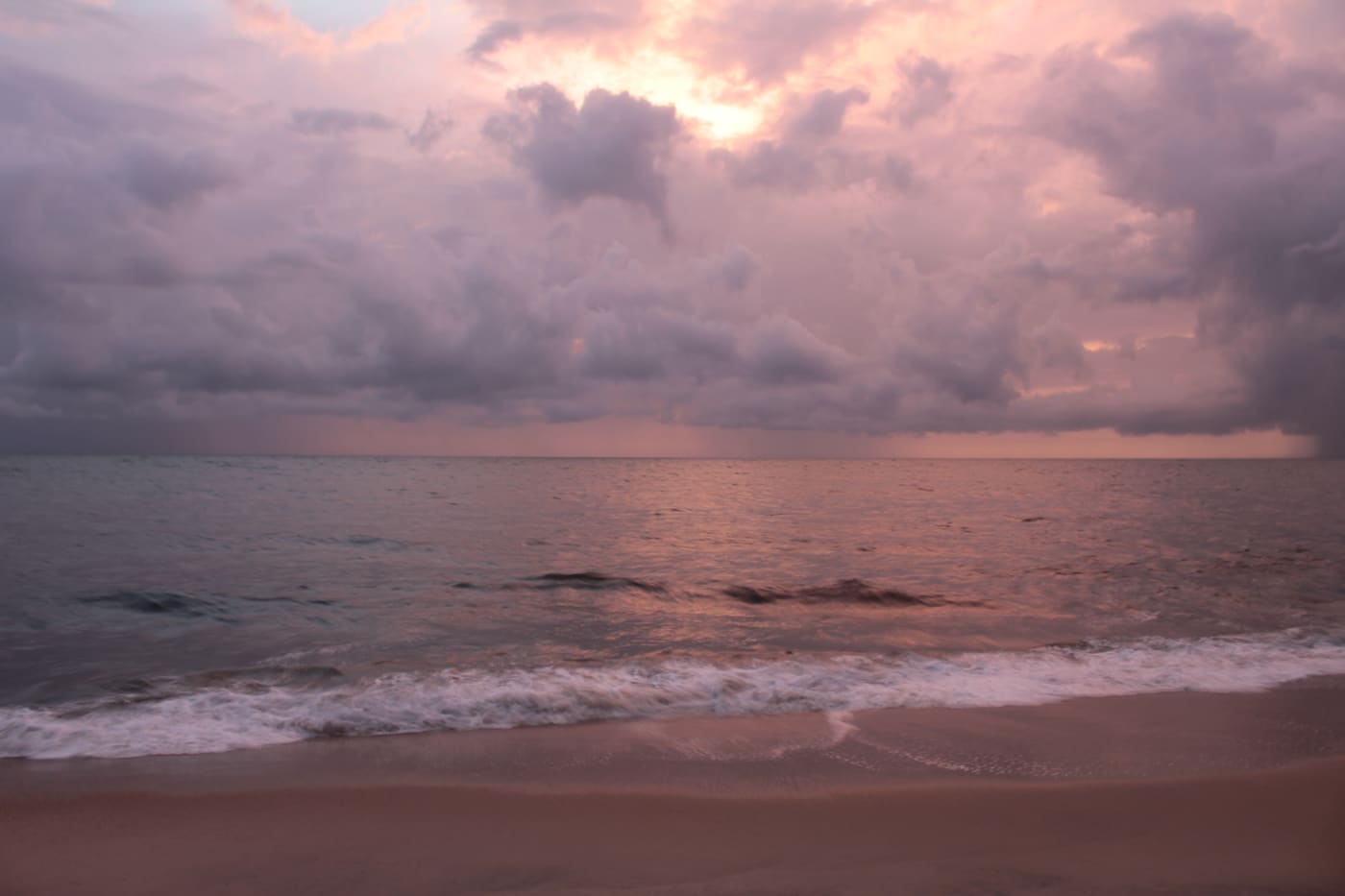
The island’s appeal, though, is not only ornithological. For many who come, Pathiramanal is simply the quietest room in the great house of the backwaters — a place to switch off the boat engine, sit under the trees and let Vembanad breathe. Sunrise here, with mist lifting off the water and the birds waking in waves, is the kind of scene that fixes Kerala in the memory. Sunset, watched from a houseboat moored just offshore, does the same in reverse. There is no nightlife, no crowd, no schedule — the island keeps its own slow time.
That slowness is worth protecting, and Pathiramanal wears its fragility openly. It is a small, low, uninhabited island in a lake under real pressure from farming, tourism and shifting water quality, and its birdlife depends on it staying undisturbed. Visitors are asked to tread lightly — to keep voices down, carry their litter back out, and let the birds be birds. Come at dawn, come in winter, come by the gentlest boat you can, and Pathiramanal will give you the backwaters as they were meant to be felt: wild, watery and wonderfully quiet.
Legend & myth
The island’s name is where its magic begins. Pathiramanal is usually translated as “sands of midnight” or “midnight sand” — pathira for the dead of night, manal for sand — and the name carries its own legend. As the story is told, a young Brahmin, deep in his devotions, waded into Vembanad Lake at night to perform his ritual ablutions; and at his touch the waters are said to have drawn back and let dry land rise from below, so that an island appeared from the lake at the stroke of midnight. (Told and retold as folklore — framed here as legend, not history.)
A second, cheekier version names the Brahmin as the wandering mystic Vilwamangalathu Swamiar, who — crossing the lake by boat one night and needing to answer nature’s call — is said to have conjured a patch of solid ground out of the water on the spot, and so gave the island both its existence and its name. Whichever version a boatman tells you, the two agree on the essentials: a holy man, the deep of night, and a lake that briefly parted to raise a scrap of sand — a fitting origin tale for a place that still seems to float half in this world and half out of it. (Legend, not verified fact.)
History
Behind the folklore, Pathiramanal’s real story is the story of Vembanad — the sprawling brackish lagoon, the longest lake in India, that runs down Kerala’s coast and drains a huge web of rivers into the Arabian Sea at Kochi. The island is one of the small natural rises that stud this vast, shallow, ever-shifting waterbody. Around it lies Kuttanad, the celebrated below-sea-level rice bowl of Kerala, where farmers have for generations grown paddy on land reclaimed from the backwaters and kept dry behind earthen bunds — one of the few places on earth where cultivation happens below sea level.
The wider Vembanad wetland is recognised as a site of international importance for waterbirds, and is commonly cited as a Ramsar-listed wetland (indicative — confirm locally). That status reflects what visitors to Pathiramanal see first-hand: this is one of the most important overwintering and breeding grounds for water birds on the Indian peninsula, drawing tens of thousands of them each year across a mosaic of lake, marsh and paddy. The little island sits like a green stepping-stone in the middle of that ecosystem.
A defining moment in the lake’s modern history was the building of the Thanneermukkom bund — the salt-water barrier, or “salt-water barrage,” thrown across Vembanad not far from Pathiramanal to keep tidal salt out of the Kuttanad paddy during the cultivation season. The barrier reshaped the lake’s ecology, changing its salinity, its water hyacinth growth and its fish and bird life on either side, and it remains central to any conversation about Vembanad’s health. Pathiramanal lies within this managed, much-worked waterscape rather than in true wilderness.
Precisely because it stayed uninhabited and wooded while the shores around it were farmed and built up, Pathiramanal came to be valued and looked after as a refuge for birds — a small protected green island promoted as part of Kerala’s backwater and eco-tourism circuit alongside the neighbouring Kumarakom Bird Sanctuary across the water. Today it is best known as a day-trip birding and nature stop woven into houseboat and shikara itineraries out of Alappuzha, Kumarakom and Muhamma.
Its future, like the lake’s, is not guaranteed. Vembanad faces silting, shrinking area, pollution, invasive water hyacinth and the strain of heavy tourism, and a low-lying island of this size is sensitive to all of it. Pathiramanal’s continued role as a bird haven depends on the wetland around it being cared for — which is why responsible, low-impact visiting is not just courtesy here but part of what keeps the island worth visiting at all.
Why visit
Because it is one of the last genuinely quiet corners of the Kerala backwaters. With no roads, no shops and no crowds, Pathiramanal offers the stillness that busier stretches of Alappuzha and Kumarakom have lost — an uninhabited island where the loudest sound is birdsong.
For the birdwatching. Resident darters, cormorants, herons and egrets share the island and its shallows with winter migrants said to arrive from Siberia and the Himalayas — teal, pintails, jacanas, kingfishers and more (species and seasons vary — confirm locally). A dawn visit in winter can be genuinely memorable, binoculars or not.
For the journey itself. You can only reach Pathiramanal by boat, so a visit means a slow, scenic ride across the open expanse of Vembanad Lake — past Chinese fishing nets, duck flocks and below-sea-level paddy fields — in a houseboat or a low, quiet shikara. The crossing is half the experience.
For sunrise and sunset over the lake. Mist lifting off the water at first light, birds waking in waves, and the long golden calm of evening from a houseboat moored offshore — Pathiramanal serves up the classic, unhurried backwater scenery that Kerala is loved for.
For the legend. Few places wear their name so well: an island said to have risen from the lake at midnight at the touch of a meditating Brahmin. Arriving by boat to find trees floating on the water, the “sands of midnight” story feels less like folklore than a description of the view.
Because it pairs so neatly with the rest of the region. Pathiramanal slots naturally into a Kuttanad houseboat cruise or a Kumarakom stay, sitting almost within sight of the Kumarakom Bird Sanctuary across the water — an easy, rewarding half-day add-on to a bigger backwater trip.