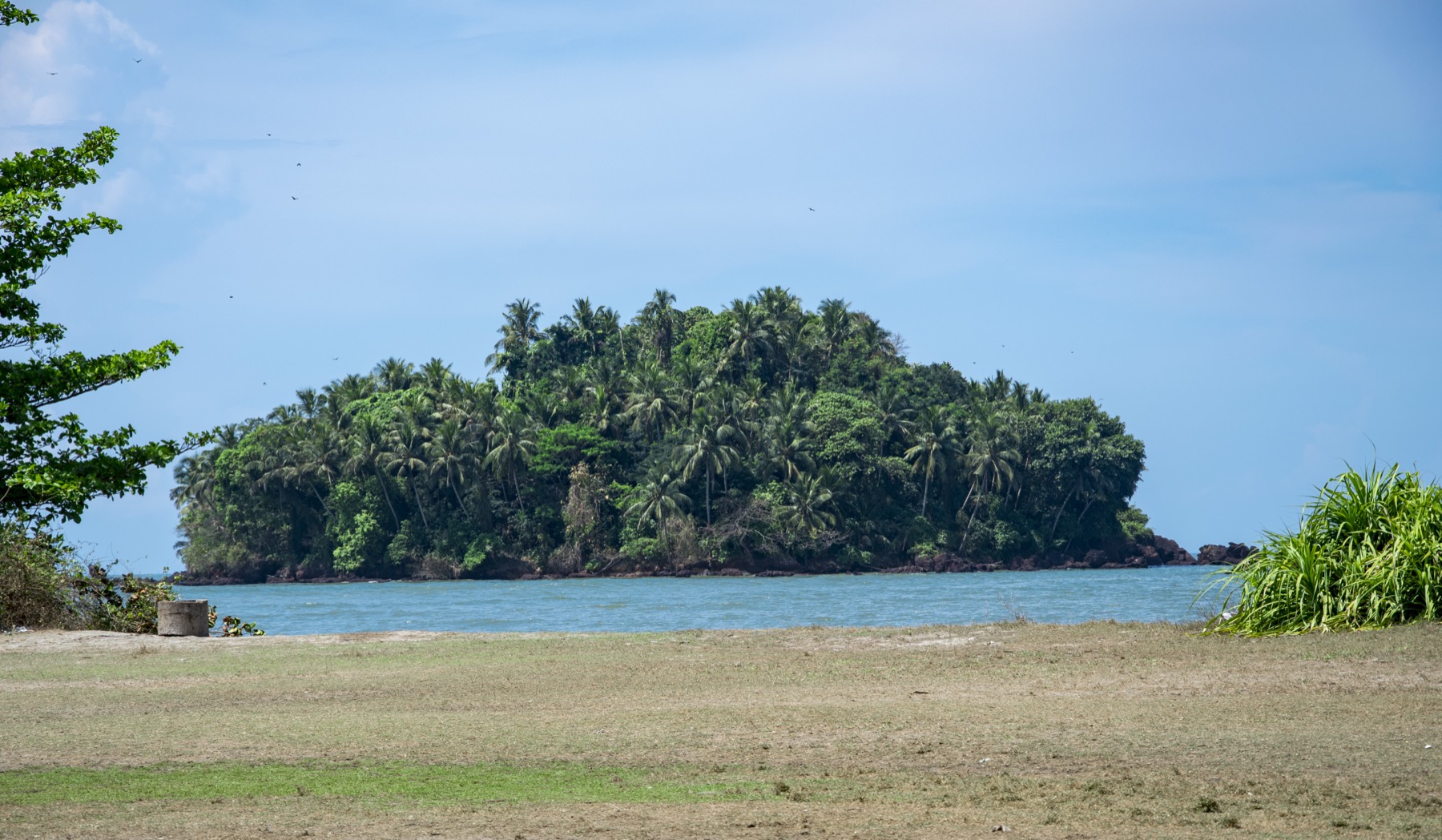
A hushed, laterite-fringed cove a few kilometres south of Kannur, where a freshwater stream slips into the Arabian Sea and a cluster of old homestays quietly turned an unknown shore into one of Malabar’s most loved secrets.
The story of Thottada Beach
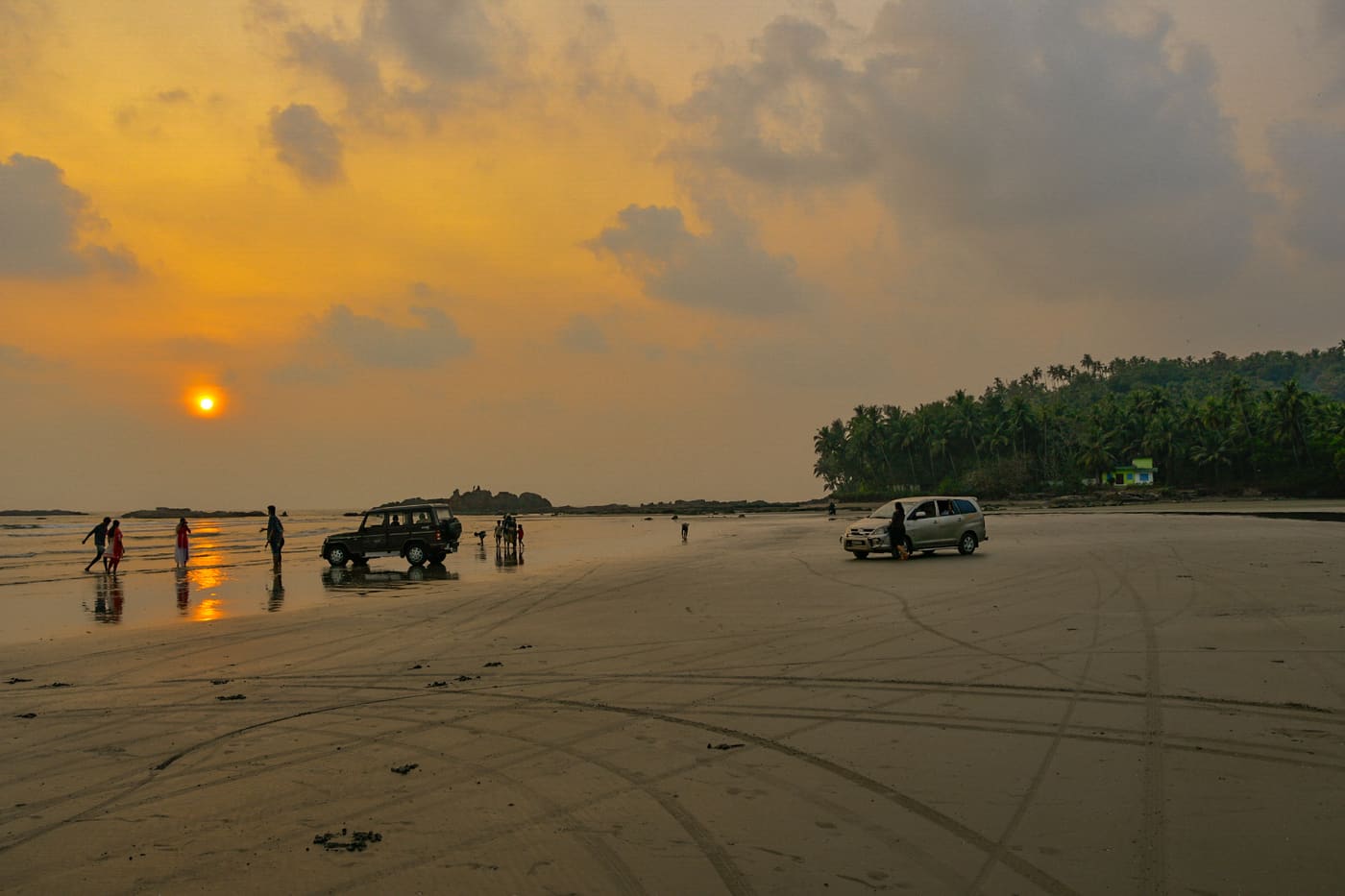
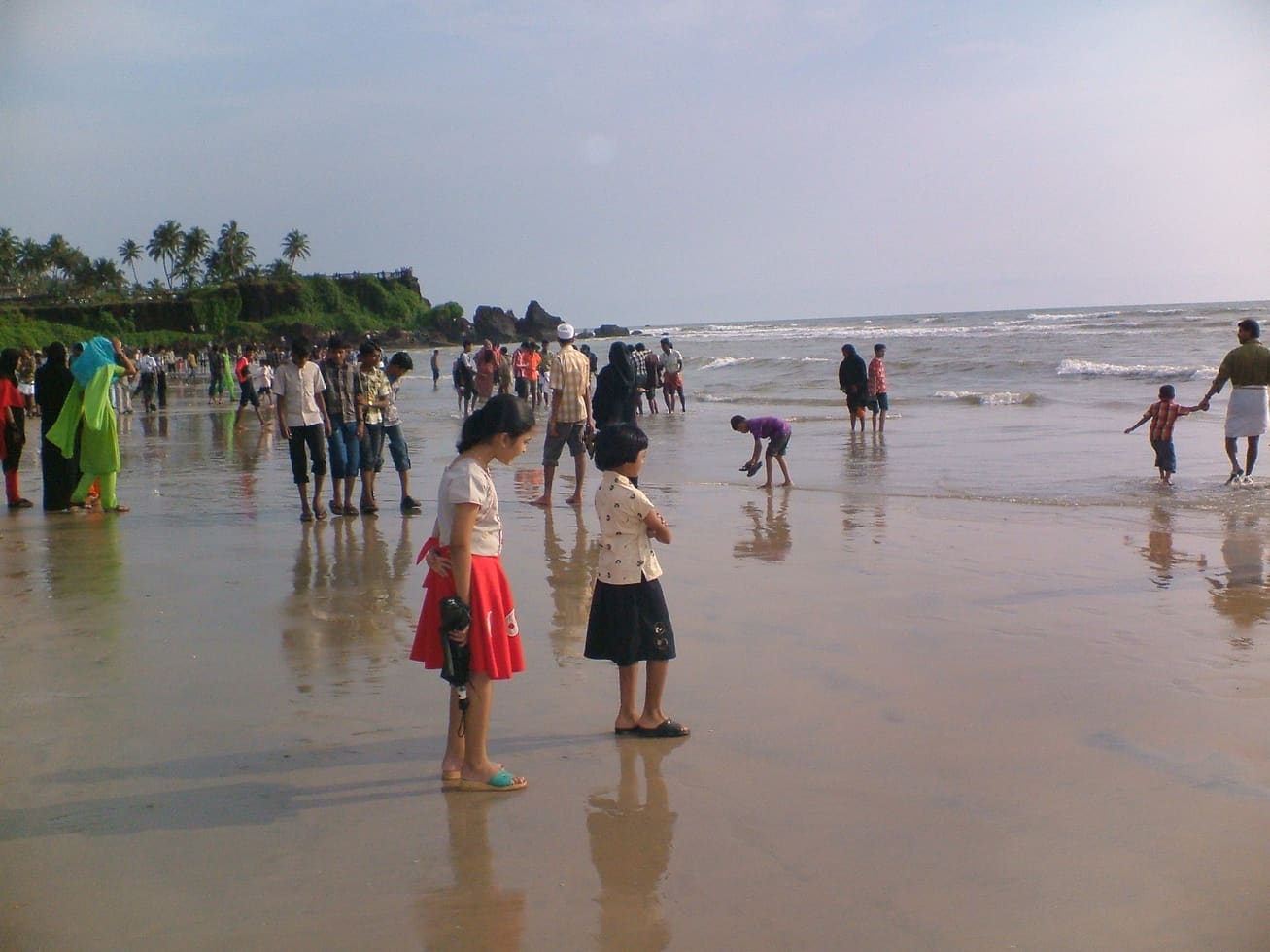
Thottada Beach is the kind of place travellers whisper about rather than shout. Roughly eight to nine kilometres south of Kannur city, it sits about two-and-a-half kilometres off the busy NH 66, so it never grew the crowds, food stalls and traffic of Kannur’s better-known Payyambalam and Muzhappilangad beaches. What you find instead is a gently curving sweep of golden sand — a little over 800 metres of it — backed by leaning coconut palms and framed at either end by weathered laterite rocks in shades of rust-red and black. It feels, on most days, like a beach the modern world simply forgot to develop.
The shore is defined by that soft red laterite. Low cliffs and boulders break the sand into intimate, sheltered pockets, so a short walk over the rocks at low tide can bring you to quieter stretches with almost no one on them — the reason Thottada is so often described as a string of secluded little coves rather than one long open strand. Water pools between the rocks, crabs scuttle across the flats, and the stone has the strange, wrinkled texture that gives the nearby outcrops their nicknames. It is a shore made for slow, barefoot wandering rather than beach games.
Thottada’s signature feature is water meeting water. A small river — the Thottada stream, only about four-and-a-half kilometres long — winds down through the village and reaches the sea at the edge of the beach, near Edakkad. Decades ago villagers built a low bund across it to keep the salt tide from pushing too far inland, and behind that barrier the stream broadens into a calm, backwater-like swamp. The result is a lovely three-way meeting of stream, backwater and open sea, with reed beds and still water that draw kingfishers, egrets, cormorants and, in season, migratory birds. Small canoes sometimes drift the quiet channels while the surf breaks just metres away.
The beach owes much of its fame on the traveller map to the homestays gathered just behind it — the little enclave that many visitors simply call the Costa Malabari area. These are family-run guest houses and beach houses rather than resorts, and word of them spread quietly through backpacker circles and guidebooks over the years. Guests wake to Keralan breakfasts, eat home-cooked Malabar seafood, and stroll five to ten minutes down a palm-shaded path to a beach that, more often than not, they have almost to themselves. It is this low-key, homestay-led character that kept Thottada unspoilt while giving it just enough of a name to find.
The moods here swing hard with the seasons. From about October to March the sea is comparatively calm and the light is gold at both ends of the day, perfect for long dawn or dusk walks. When the southwest monsoon arrives between June and September the character flips completely — grey skies, muscular surf pounding the laterite, the swollen stream rushing to the sea and the whole coast turning wild and cinematic. Beautiful to watch, but the water becomes dangerous, and Thottada, like most Malabar beaches, has no lifeguards.
All of this sits in classic North Malabar country — the land of looms and lores, where handloom-weaving cooperatives still clatter away nearby and where, through the winter months, the fierce, painted ritual dance of theyyam plays out in village shrines a short drive inland. Thottada gives you a quiet base at the sea’s edge and, all around it, one of Kerala’s most distinctive cultural landscapes to explore.
Legend & myth
A local legend clings to the laterite outcrops just south of the beach, around the rocks and the small cave the area is known for. As the tale is told, a sage is said to have lived in seclusion in the cave for some thirty years, and the spot is remembered as sacred. In one much-repeated version, brass lamps kept in the cave were guarded by king cobras, which are said to have turned back a thief who came to steal them. It is folklore rather than documented history — but it is the kind of story that gives these silent, wind-scoured rocks their slightly otherworldly reputation among locals.
History
For most of its life Thottada was simply a coastal hamlet in the weaving country south of Kannur town — a stretch of sand, coconut groves and a small stream, part of the same Malabar shoreline that carried the region’s ancient trade in spices, timber and cloth. Its beach had none of the civic prominence of Kannur’s Payyambalam or the fame of drive-on Muzhappilangad, and that relative obscurity is exactly what preserved it. Because it lay a couple of kilometres off the main Kannur–Thalassery highway, it stayed clean, quiet and largely uncommercialised while busier beaches drew the day-trippers.
The village itself is woven into Kannur’s identity as the land of looms and lores. Handloom-weaving has long been an integral livelihood here, and the neighbourhood is home to institutions tied to that craft, including a handloom and textile-technology institute, alongside colleges and schools. It was into this working, traditional landscape — not a purpose-built resort strip — that beach tourism eventually, and gently, arrived.
The turning point was the homestay story. Costa Malabari is widely credited as the pioneer that put Thottada on the traveller map: an early guest house set up in a converted old handloom factory just back from the sands, offering spotless rooms, home-cooked Keralan food and a warm, personal welcome rather than resort polish. Run for years by its well-known host and theyyam enthusiast, it grew a devoted following among independent travellers and guidebook readers looking for the authentic Malabar coast, and it drew others to open beach houses nearby.
As word spread, a small constellation of family-run stays — beach houses, cottages and guest houses such as Thottada Beach House and neighbouring properties — grew up around that first homestay, all sharing the same quiet beach. Crucially, the growth stayed modest and low-rise. Thottada became known as a place to slow down and settle in for a few nights, not a place of nightclubs or big hotels, and it has kept that unhurried, homestay-led character to this day.
The cultural setting sealed its appeal. Thottada sits in the heart of theyyam country, the North Malabar belt where the spectacular ritual dance-worship of theyyam is performed at village shrines through the winter season. Hosts here have long doubled as cultural guides, taking guests to nearby kavus (sacred groves) to witness the ceremonies. That combination — an unspoilt beach, home-cooked food and access to one of India’s most striking living traditions — is what turned a forgotten cove into a quietly celebrated corner of Kerala.
Why visit
One of North Kerala’s cleanest, most secluded beaches — an unspoilt escape from the crowds.
Dramatic red-and-black laterite rocks and low cliffs breaking the sand into intimate, cove-like pockets.
A rare three-way meeting point where the Thottada stream, a calm backwater and the open Arabian Sea come together.
Excellent gentle birdwatching around the swamp and estuary, especially in the migratory season.
A famous, warm homestay scene — home-cooked Malabar food and a genuine base rather than a resort strip.
A perfect launchpad into theyyam country, handloom villages and the wider North Malabar coast.